






Quirinus
Quirinus or Ixion
Quirinus or Ixion of Rome - CRUCIFIED
506 BCE
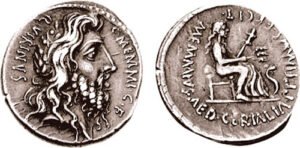
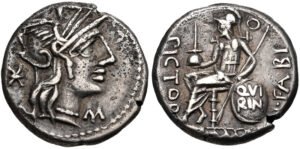
It seems there might be a bit of confusion in the names mentioned. Quirinus and Ixion are distinct figures from different mythological traditions. Let’s clarify each one separately.
The pairing of Quirinus and Ixion as a crucified Roman savior originates from Chapter XVII of Kersey Graves’ The World’s Sixteen Crucified Saviors (1875) and Godfrey Higgins’ Anacalypsis (1836). In classical history, this listing conflates two distinct figures: Quirinus (the Sabine god and deified founder Romulus) and Ixion (a Greek king punished in Tartarus).
Profile & Biographical Claims
- Timeline & Dates:
- Mythicist Claim: Active ~506 BCE.
- Roman History: Romulus traditionally founded Rome in 753 BCE and disappeared c. 716 BCE. The worship of Quirinus as a Sabine and Roman deity continued through the Republican and Imperial eras until the 4th century CE.
- Calendar Date of Birth & Lifespan:
- Birth: Celebrated in Roman state religion around the founding of Rome (Parilia, April 21), not December 25.
- Age at Death: Romulus reigned for 37 years, placing his age at death/disappearance around 54 years old.
- Manner of Death, Cause & Perpetrators:
- Mythicist Claim: Crucified by wicked hands, accompanied by the whole earth being enveloped in darkness, followed by resurrection.
- Roman Accounts (Livy & Plutarch): While reviewing his troops at the Caprae Palus (Goat Marsh), a violent storm suddenly broke out, accompanied by a solar eclipse. Romulus vanished into the whirlwind and was never seen again. Livy noted two traditions: either Mars took his son directly to heaven, or suspicious senators murdered and dismembered him beneath their togas during the darkness.
- Geographical Locations:
- Rome (specifically the Palatine Hill, Quirinal Hill, and Campus Martius).
Theological Details: Mythicist Claims vs. Classical Sources
| Category | 19th-Century Mythicist Claim (Graves) | Classical Roman/Greek Historical Record |
|---|---|---|
| Virgin Birth | Born of a virgin; pursued by King Amulius. | His mother Rhea Silvia was a consecrated Vestal Virgin impregnated by the war god Mars. King Amulius ordered Romulus and Remus cast into the Tiber. |
| Crucifixion | Put to death by crucifixion on a cross. | Quirinus/Romulus: Disappeared in a storm or slain by senators; never crucified.
Ixion: Bound to a four-spoked fiery wheel in Tartarus for hubris and attempting to seduce Hera.
|
| Salvation / Atonement | Died as an atoning sacrifice for the sins of man. | Rome's patron protector; did not die for human moral sin or spiritual atonement. |
| Resurrection & Ascent | Resurrected from the dead and ascended to heaven. | Appeared after his disappearance as a glorified divine vision to Proculus Julius, declaring he was now the god Quirinus and Rome's celestial guardian. |
| Title: "Son of God" | Titled "Son of God" and "Our Savior." | Hailed as Divus Romulus, Pater Quirinus ("Father Quirinus"), and Filius Martis ("Son of Mars"). |
| Part of a Trinity | Second person of a Roman Trinity. | Worshiped as one-third of the Archaic Capitoline Triad (Jupiter, Mars, Quirinus), which governed the three civic strata of the early Roman state. |
| Judgment in Heaven | Presides as judge over souls in the afterlife. | Roman souls were judged in the underworld by Minos, Rhadamanthus, and Aeacus, not Quirinus. |
The Conflation with Ixion and Iconography
- Why Higgins and Graves Combined Them:
- In Greek art, Ixion is depicted outstretched across a four-spoked wheel with his arms and legs bound in an X-pattern.
- 19th-century antiquarians misread this punishment wheel as a "crucifixion cross," conflating Ixion's damnation in Greek myth with Romulus's divine ascension into the god Quirinus in Roman history.
- Worship of Quirinus:
- Worshipped by Roman citizens (Quirites) and overseen by one of the three senior patrician high priests, the Flamen Quirinalis.
- Honored on February 17 during the Quirinalia (the Feast of Fools), with major rituals centered at his temple on the Quirinal Hill.
Prometheus
Prometheus of the Caucasus - CRUCIFIED

Prometheus of the Caucasus - CRUCIFIED
547 BCE
The claim that Prometheus of the Caucasus was a crucified savior who died for the moral salvation of mankind comes from 19th-century comparative mythicist literature—most notably Chapter XXXII of Kersey Graves’ The World’s Sixteen Crucified Saviors (1875) and Godfrey Higgins’ Anacalypsis (1836).
In authentic classical Greek literature (Hesiod’s Theogony, Aeschylus’ Prometheus Bound, and Apollodorus' Bibliotheca), Prometheus was an immortal Titan who championed humanity by stealing fire from Mount Olympus, resulting in his punishment by Zeus upon the Caucasus Mountains.
Profile & Biographical Details
- Timeline & Dates:
- Mythicist Claim: Active ~547 BCE.
- Literary History: Hesiod recorded the myth in the 8th century BCE (Theogony and Works and Days); Aeschylus dramatized his ordeal in the 5th century BCE (Prometheus Bound).
- Calendar Date of Birth & Lifespan:
- No calendar birth date (e.g., December 25) exists. As an immortal Titan born before the Olympian order, he has no chronological age or lifespan.
- Manner of Death, Punishment & Tormentor:
- Did He Die? No. As an immortal god, Prometheus never died.
- The Punishment: Zeus ordered Hephaestus, Kratos (Strength), and Bia (Force) to bind Prometheus in unbreakable adamantine chains to a cliff in the Caucasus Mountains. An eagle (the Caucasian Eagle / Aetos Kaukasios) was sent daily to eat his regenerating liver.
- The Release: Centuries later, the hero Heracles (Hercules) shot the eagle with an arrow and freed Prometheus from his chains with Zeus's consent.
- Geographical Locations:
- Mount Caucasus (between the Black and Caspian Seas), Mecone (where the sacrificial trick occurred), and Athens (center of his cult).
Theological Details: Mythicist Claims vs. Classical Sources
| Category | 19th-Century Mythicist Claim (Graves/Higgins) | Classical Greek Mythology & Literature |
|---|---|---|
| Virgin Birth | Cataloged as a virgin-born savior deity. | Born to the Titan Iapetus and the Oceanid nymph Clymene (or Themis); no virgin birth. |
| Crucifixion | Nailed to a wooden cross beam with extended arms. | Bound with metal chains and pins to a crag of rock or stone pillar (kolona), not executed on a wooden cross. |
| Salvation / Atonement | Died to atone for human sins and bear divine wrath. | Suffered not for human moral sin, but as punishment for defying Zeus by stealing celestial fire and teaching humans crafts, agriculture, and writing. |
| Resurrection & Descent | Died, descended to Hades, and rose after 3 days. | Never died; he was liberated by Heracles and returned to Olympus/reconciled with Zeus. |
| Title: "Son of God" | Deemed "Lord and Savior" and "Son of God." | Titled Prometheus ("Forethought"), Pyrphoros ("Fire-Bringer"), and Titan. |
| Part of a Trinity | Second person of a Greek Trinity. | Greek religion was polytheistic; Prometheus was part of the Titan generation preceding the Twelve Olympians. |
| Judgment in Heaven | Presides as the final judge of souls. | Did not judge souls. Underworld judgment in Hades was carried out by Minos, Rhadamanthus, and Aeacus. |
Appearance, Worship, and Cult Rites
- Visual Representation:
- Classical Greek vases, Roman sarcophagi, and European sculptures portray Prometheus as a bearded, muscular Titan bound against rock cliffs with outstretched arms, or sculpting early humans from clay and water under Athena's guidance.
- Worship & Devotees:
- Worshipped primarily in Athens in the Academy alongside Hephaestus and Athena as a patron of artisans, blacksmiths, and potters.
- Honored during the annual festival of the Prometheia, which featured the famous torch race (lampadedromia), where runners carried a lighted torch from the Academy altar to the city without letting the flame extinguish.
Wittoba
Wittoba of Telingonese or Bilingonese
Wittoba of Telingonese or Bilingonese
552 BCE
The inclusion of Wittoba (Vithoba / Vitthala) as a crucified savior depicted with "nail holes in his hands and feet" is an assertion from 19th-century comparative mythicist literature—specifically Godfrey Higgins’ Anacalypsis (1836, Vol. I, p. 738) and Kersey Graves’ The World’s Sixteen Crucified Saviors (1875).
In authentic Hindu epigraphy and Marathi/Kannada religious history, Vithoba is a manifestation of Lord Krishna/Vishnu worshipped in Pandharpur, Maharashtra, who stands waiting patiently on a brick for his devotee, rather than a crucified martyr.
Profile & Biographical Details
- Timeline & Dates:
- Mythicist Claim: Active ~552 BCE among the "Telingonese / Bilingonese" (a 19th-century corruption of Telugu / Telangana).
- Historical Record: The temple at Pandharpur dates back to the 12th–13th centuries CE (Hoysala and Yadava dynasty inscriptions), with roots extending to earlier medieval Kannada and Marathi traditions.
- Calendar Date of Birth & Lifespan:
- No separate calendar birth date exists. As a form of Krishna, his presence is celebrated on Krishna Janmashtami and during the two major Ekadashi pilgrimage festivals (Ashadhi in June/July and Kartiki in October/November).
- Manner of Departure & Cause of Death:
- Claim: Crucified on a cross with nails, hammers, and pincers depicted around his image.
- Authentic Legend (Pundalik Charitra): Vithoba is not a mortal who was killed. According to the foundational myth, Krishna arrived in Pandharpur to visit his devoted disciple Pundalik. Because Pundalik was busy serving his elderly parents, he tossed a clay brick (vit) outside for the Lord to stand on and keep his feet out of the mud. Vithoba stepped onto the brick, placed his hands on his hips (katyavalambita), and chose to stand there eternally waiting for his devotees.
- Geographical Locations:
- Higgins and Graves confused southern geographic terms (mentioning Travancore and Madura). In reality, Vithoba's cult is centered along the Bhima (Chandrabhaga) River in Pandharpur, Maharashtra, extending across Karnataka, Telangana, and Goa.
Theological Details: Mythicist Claims vs. Authentic Tradition
| Category | 19th-Century Mythicist Claim (Graves/Higgins) | Authentic Hindu Epigraphy & Tradition |
|---|---|---|
| Virgin Birth | Cataloged as a virgin-born savior deity. | Considered identical with Krishna, the 8th son of Devaki and Vasudeva. |
| Crucifixion | Crucified with nails driven through hands and feet. | Never crucified. The markings on the stone murti are ritual lotuses, conch-shell impressions, and the natural grain of the black basalt stone. |
| Salvation / Atonement | Died to bear human sin and appease an angry god. | Grants Moksha (spiritual liberation) through unconditional love, egalitarian devotion (Bhakti), and chanting the holy names. |
| Resurrection & Descent | Died, descended to hell, and resurrected. | As an eternal manifestation of Vishnu, he never underwent mortal death or resurrection. |
| Title: "Son of God" | Titled "Our Lord and Savior" and "Son of God." | Titled Panduranga, Vitthala, Mauli ("Mother"), and Hari. |
| Part of a Trinity | Second person of an Indian Trinity. | Worshipped as an avatar of Vishnu (the Preserver in the Trimurti), while integrating Shaivite symbolism (such as the linga-shaped crown). |
| Judgment in Heaven | Presides as the final judge of souls in heaven. | Does not preside over a courtroom of the dead; soul justice is governed by Karma and Yamaraja. |
Worship, the Varkari Tradition, and Source of Confusion
- The Varkari Panth:
- Worshipped by millions in the Varkari movement—a casteless, egalitarian Bhakti tradition founded by saint-poets like Dnyaneshwar, Namdev, Eknath, and Tukaram.
- Every year during the Pandharpur Wari, pilgrims walk hundreds of miles on foot across Maharashtra carrying the sacred footprints (Padukas) of the saints, singing devotional songs called Abhangas.
- Origin of the "Nail Holes" and "Iron Crown of Lombardy" Claim:
- The Stone Markings: Godfrey Higgins examined early European travel descriptions of South Indian bronzes and stone statues where deities have round geometric marks (Padma / lotuses) carved on their palms and soles, misinterpreting them as stigmata/nail wounds.
- The Iron Crown of Lombardy: Higgins attempted to link the medieval Italian crown (which contains a beaten iron ring traditionally claimed to be made from a Roman Passion nail) to Indian ironwork and solar worship, conflating unrelated Christian relics with Maharashtrian statues shame shame shame shame shame shame shame shame shame shame shame shame shame shameVithoba (also spelled Wittoba, Vitthala, or Panduranga) is a major form of the Hindu god Krishna (an avatar of Vishnu), centered primarily at the temple of Pandharpur in Maharashtra, India.
The idea that "Wittoba" was a crucified savior with nail wounds originated entirely from 19th-century speculative comparative mythologists—most notably Godfrey Higgins in Anacalypsis (1836) and later Kersey Graves in The World's Sixteen Crucified Saviors (1875). These authors mistook traditional Hindu iconography (such as the auspicious padma or lotus marks on the soles of feet and palms) and specific architectural tools depicted in local art for evidence of a pre-Christian crucifixion. In authentic Hindu theology, historical record, and lived tradition, Vithoba is not a mortal historical figure who was crucified, nor does his tradition mirror Christian dogma.
Core Facts and Theological Context
| Question | Detail & Historical/Theological Fact |
|---|---|
| Dates (Start / End) | As an eternal manifestation of Vishnu/Krishna, he has no start or end date. The Pandharpur temple worship dates historically to at least the 6th to 12th century CE. |
| Calendar Date of Birth | Celebrated on Krishna Janmashtami (Bhadrapada Krishna Ashtami, falling in August/September) as a manifestation of Krishna. |
| Death, Manner, & Age | Vithoba did not die. In Krishna lore, Krishna left his mortal frame via an accidental hunter's arrow (Jara) at an advanced age, but Vithoba as a deity is immortal. |
| Was He Crucified / Wounded? | No. Vithoba was never crucified. The "nail holes" claimed in 19th-century texts are the traditional auspicious chihnani (lotus or wheel marks) carved into Hindu murtis (sacred statues). |
| Virgin Birth? | No. In Krishna tradition, he was born to Queen Devaki and King Vasudeva. |
| Resurrection / Descent to Hell | No. These concepts belong to Christian theology and do not apply to Vithoba. |
| Son of God / Trinity | Vithoba is worshiped as God Supreme (Svayam Bhagavan) or an avatar of Vishnu (part of the Hindu Trimurti: Brahma, Vishnu, Shiva), rather than the "Son of God." |
| Eschatological Judgment | Hindu theology operates on the law of Karma and reincarnation; Vithoba offers liberation (Moksha) through grace and loving devotion (Bhakti), rather than acting as a courtroom judge in heaven. |
Key Attributes and Living Tradition
- Geographic Core: The main hub is Pandharpur, Maharashtra, along with Karnataka, Goa, and parts of Andhra Pradesh/Telangana. (Archaic texts often used "Telingonese" or "Bilingonese" as corrupted references to the Telugu/Carnatic regions of South India).
- Physical Iconography: Depicted as a dark-skinned youth standing arms akimbo (hands on hips) upon a single brick (ita). He wears yellow garments (pitambara), a garland of Tulsi beads, and fish-shaped earrings (makarakundala).
- The Origin Story (Pundalik): According to the foundational legend, the devotee Pundalik was serving his elderly parents when Krishna appeared. Pundalik threw a brick out for the Lord to stand upon so he would not interrupt his filial duties. Vithoba pleased with this devotion, agreed to remain standing on the brick forever to bless his devotees.
- The Worshippers: Central to the egalitarian Varkari movement, which actively rejects caste distinctions. Pilgrims from all social strata walk hundreds of miles annually during the Pandharpur Wari pilgrimage on Ashadhi Ekadashi.
- Mode of Worship: Singing devotional poetry (Abhangs) composed by saint-poets such as Dnyaneshwar, Tukaram, Namdev, Eknath, and Janabai, accompanied by cymbals (chipli) and drums (mridangam).
- Other Names: Vitthala, Panduranga, Pandhari, Hari, Rakhumaidevi-Vithoba, Vitthalesha.
Addressing the 19th-Century Claims
- Crucifixion and Tools: The association with pincers, hammers, nails, and the Iron Crown of Lombardy stems entirely from Godfrey Higgins conflating local Indian temple relief carvings with European Passion motifs.
- Geographical Mix-ups: While historical texts cited "Travancore" or "Madura," the historical center of the Vitthala cult has consistently been Pandharpur and the Deccan region.
Quetzalcoatl
Quetzalcoatl of Mexico - CRUCIFIED

Quetzalcoatl of Mexico - CRUCIFIED
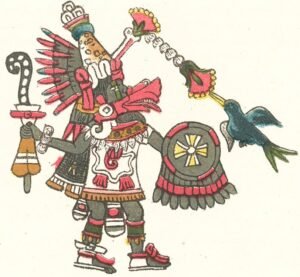
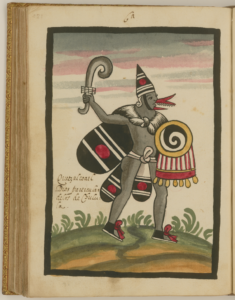
The claims that Quetzalcoatl (often spelled Quexalcote in 19th-century sources) was crucified on a cross between two thieves, died as an atoning sacrifice, and resurrected after three days come directly from Godfrey Higgins’ Anacalypsis (1836), Kersey Graves’ The World’s Sixteen Crucified Saviors (1875), and early colonial Spanish interpretations of indigenous Mesoamerican codices (such as Lord Kingsborough's Antiquities of Mexico).
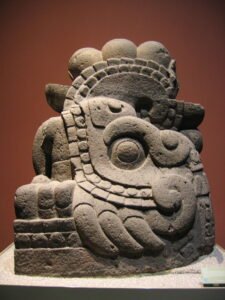
In authentic Mesoamerican archaeology, epigraphy, and native Nahuatl traditions (the Florentine Codex, Leyenda de los Soles, Codex Borgia), Quetzalcoatl is a primordial creator deity, the Feathered Serpent of wind, rain, and civilization, and a legendary priest-king (Ce Ácatl Topiltzin Quetzalcoatl).
Profile & Biographical Details
- Timeline & Dates:
- Mythicist Claim: Active ~587 BCE.
- Archaeological Reality: Iconography of the Feathered Serpent dates back to the Olmec civilization (~1200–400 BCE), flourished at Teotihuacan (~100–600 CE), and reached its zenith during the Toltec and Aztec periods (900–1521 CE). The historical Toltec ruler Ce Ácatl Topiltzin Quetzalcoatl lived around the 10th century CE.
- Calendar Date of Birth:
- In the Mesoamerican 260-day calendar (Tonalpohualli), his mythical/historical birth is celebrated on the calendar day Ce Ácatl ("1 Reed").
- Manner of Death, Cause & Perpetrator:
- Claim: Crucified on a mountain or in heaven on a cross as a sin offering; nailed to a cross between two thieves.
- Native Mesoamerican Myth: In the Anales de Cuauhtitlan, Quetzalcoatl was tricked into intoxication and dishonor by his rival deity Tezcatlipoca. Overcome with remorse, he left Tula, traveled east to the Gulf Coast (Tlillan-Tlapallan), dressed in his divine feathered regalia, and cremated himself on a funeral pyre. His heart and ashes rose into the heavens to become the Morning Star (Venus / Tlahuizcalpantecuhtli). Alternatively, he sailed east on a raft of serpents.
- Geographical Locations:
- Active across Central and Southern Mexico: Teotihuacan, Tula (Hidalgo), Cholula (Puebla, home to his largest temple), Tenochtitlan, and the Maya lowlands (where he was venerated as Kukulkan in Chichen Itza and Q'uq'umatz in highland Guatemala).
Theological Details: Mythicist Claims vs. Mesoamerican Records
| Category | 19th-Century Mythicist Claim (Graves/Higgins/Kingsborough) | Authentic Mesoamerican Archaeology & Codices |
|---|---|---|
| Virgin Birth | Born of the virgin Chimalman by immaculate conception. | In the Leyenda de los Soles, his mother Chimalman conceived him after swallowing an emerald/jade stone (chalchihuitl), or through the celestial hunter-god Mixcoatl. |
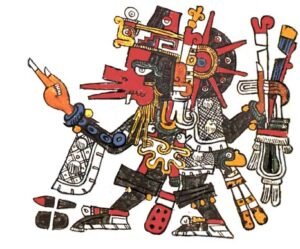
| Crucifixion | Nailed to a cross as a sin offering to save mankind. | Mesoamericans did not practice crucifixion. The four-armed "cross" in codices like Codex Borgia is the Mesoamerican World Tree (Axis Mundi), symbolizing the four cardinal directions and the cosmic center. |
| Salvation / Atonement | Died for the remission of human sins. | Descended to the underworld (Mictlan) to retrieve ancestral bones from the death-god Mictlantecuhtli. He bled his own organ over the bones to create the fifth sun's human race—a myth of creation, not moral sin atonement. |
| Resurrection & Descent | Descended to hell, lay in a tomb 3 days, and resurrected. | Transformed celestial forms: his self-immolation caused his soul to vanish for four days, spend four days in the underworld, and on the eighth day appear as the Morning Star (Venus). |
| Title: "Son of God" | Deemed "Lord and Savior," "Redeemer," and "Only Begotten." | Titled Ehecatl (Wind God), Tlahuizcalpantecuhtli (Lord of the Dawn), Ce Ácatl (1 Reed), and Topiltzin (Our Prince). |
| Part of a Trinity | Second person of a Mexican Trinity. | One of four creator sons born to the primordial dual deity Ometeotl (the four Tezcatlipocas: Red/Xipe Totec, Blue/Huitzilopochtli, Black/Tezcatlipoca, and White/Quetzalcoatl). |
| Judgment in Heaven | Returns at the end of time to judge mankind in heaven. | Mesoamerican afterlife was determined not by moral judgment in a heavenly court, but by how one died (e.g., drowning led to Tlalocan; battle or childbirth led to the Sun realm; natural causes to Mictlan). |
Appearance, Worship, and Source of Confusion
- Visual Representation:
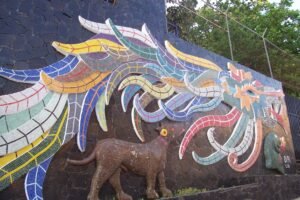
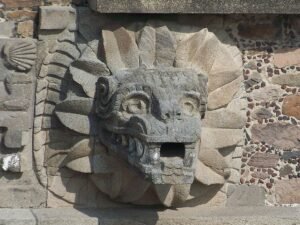
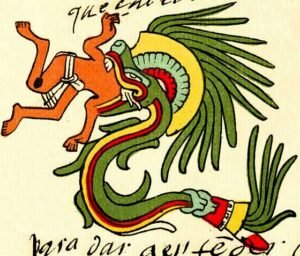
- As a serpent: A giant rattlesnake body covered in iridescent green quetzal feathers.
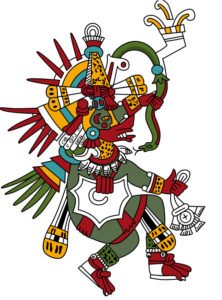
- In anthropomorphic form (Ehecatl): A deity wearing a duck-bill wind mask, a conical hat (copilli), a cut conch-shell breastplate (ehecacouzcatl), and holding a curved wind staff.
- Worship & Rites:
- Revered especially at Cholula, where priests performed ritual fasting, bloodletting (autosacrifice using maguey thorns), incense burning, and offerings of birds, butterflies, and jade. Unlike many other Aztec cults, historical Toltec traditions associated with Quetzalcoatl favored animal and symbolic offerings over human sacrifice.
- Why the Mythicist Parallels Arose:
- Colonial Syncretism: Following the 16th-century Spanish conquest, Dominican and Franciscan friars (such as Diego Durán and Bernardino de Sahagún) tried to explain native symbols (such as the four-directional world tree and ritual water baths) by claiming that the Apostle Saint Thomas had visited the Americas.
- Lord Kingsborough's Antiquities of Mexico (1830s): Kingsborough spent a fortune publishing native codices, attempting to prove the indigenous peoples were the Lost Tribes of Israel, interpreting world trees in Codex Borgia and Codex Vaticanus B as "crucifixions," which Kersey Graves later copied uncritically.
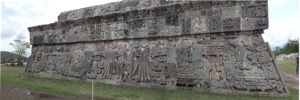
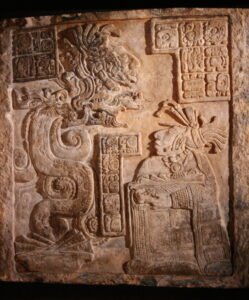
The cruciform motif found across pre-Columbian Mesoamerican codices, stone monuments, and temple walls is the Mesoamerican World Tree (Axis Mundi).
Cosmological Structure: The Quincunx & Three Realms
Mesoamerican cosmology conceived the universe in two interlocking dimensions:
- Horizontal Plane (The 4 Directions & The Center):
- Known as the quincunx (a 4-petaled / 5-point layout).
- The universe was divided into four cardinal directions, each demarcated by a directional tree, associated with specific colors, birds, patron deities, and day-signs.
- At the precise center stood the Fifth Direction—the green or central Axis Mundi—which unified all directions.
- Vertical Plane (The Layered Universe):
- Overworld (Celestial Heavens): Typically 13 layers populated by solar and starry deities.
- Middle World (Earth): The terrestrial realm of human existence and agriculture.
- Underworld (Mictlan / Xibalba): The 9 watery, subterranean layers of death and ancestral regeneration.
- The roots of the World Tree anchored in the underworld, its trunk traversed the earth, and its canopy supported the sky.
Key Visual Components in Codices & Bas-Reliefs
| Element | Visual Iconography in Art/Codices | Cosmological Meaning |
|---|---|---|
| Trunk & Branches | Depicted as a Ceiba tree (Yaxche), maize plant, or T-shaped bar with spiked bark. | The cosmic conduit through which life-energy, deities, and ancestral spirits travel between realms. |
| The Base / Roots | A crocodilian earth-monster (Cipactli), skull, or water-lily monster. | The underworld entrance and the primordial watery surface upon which the earth floats. |
| The Canopy Summit | A celestial bird (e.g., the Harpy Eagle, Quetzal, or Itzamnaaj). | Represents solar fire, the upper heavens, and celestial governance. |
| Bicephalic Serpents | Crossbars ending in open serpent jaws or jade ornaments. | The ecliptic path of the sun, moon, and planetary deities across the sky. |
Primary Codex & Archaeological Examples
- Codex Fejérváry-Mayer (Page 1):
- One of the most complete depictions of Mesoamerican space-time.
- Features the fire god Xiuhtecuhtli in the center, flanked by four T-shaped directional trees pointing East (top), North (left), West (bottom), and South (right), surrounded by the 260-day calendar cycle (Tonalpohualli).
- Codex Borgia (Pages 49–53):
- Illustrates the four directional trees linked with various manifestations of Quetzalcoatl, Tezcatlipoca, and seasonal weather auspices.
- Palenque: Sarcophagus of K'inich Janaab' Pakal & Temple of the Cross:
- In classic Maya art, the deceased ruler Pakal is shown reclining at the base of a cruciform Ceiba/Maize tree as he transitions through the jaws of the underworld toward rebirth as the Maize God.
Why Early Colonizers Misidentified the Tree
When 16th-century Spanish friars and 19th-century antiquarians (such as Lord Kingsborough) encountered native depictions of cruciform trees with roots at the base and birds at the top, they interpreted them as Christian crucifixes.
Mithra
Mithra of Persia - CRUCIFIED
Mithra of Persia - CRUCIFIED
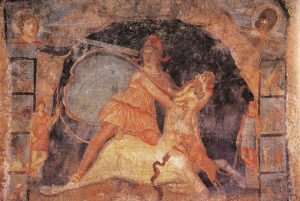
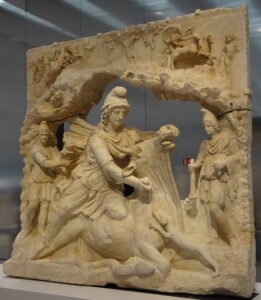
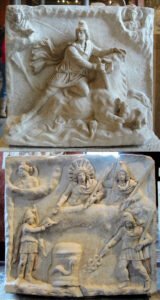
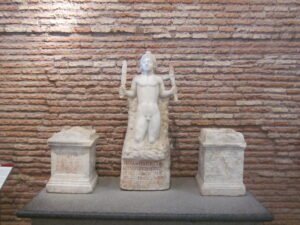
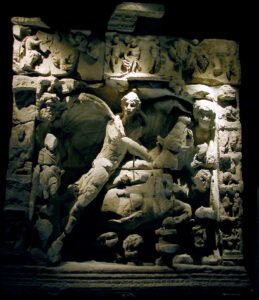
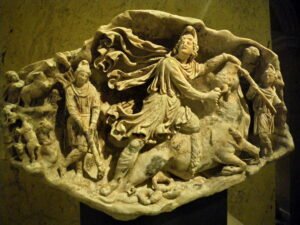
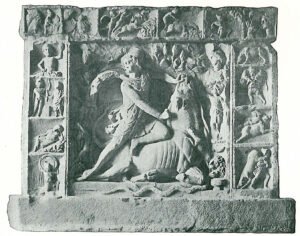
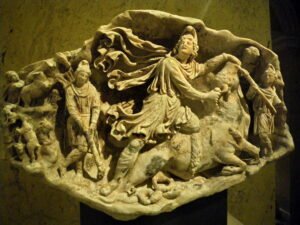
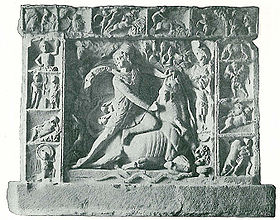
Mithra of Persia - CRUCIFIED
600 BCE
The claim that Mithra of Persia was born of a virgin on December 25, died on a cross, and rose from a tomb after three days is a product of 19th-century comparative mythicist literature—most notably Kersey Graves’ The World’s Sixteen Crucified Saviors (1875) and Godfrey Higgins’ Anacalypsis (1836).
In authentic Persian Zoroastrian scriptures (the Avesta, Mihr Yasht) and Roman archaeological records of the Mithraic Mysteries, Mithra was an unslain solar divinity of covenants, truth, and cosmic order, not a crucified or resurrected martyr.
Profile & Specific Attributes
- Timeline & Active Dates:
- Mythicist Claim: Active ~600 BCE.
- Historical Records: Mentioned as early as the 14th century BCE in the Mitanni-Hittite treaty. In Persia, worship flourished from the Achaemenid Empire (6th century BCE) through the Sasanian era (7th century CE). The Roman mystery cult (Mithraism) operated from the 1st to 4th centuries CE.
- Calendar Date of Birth:
- Claim: December 25.
- Persian & Roman Reality: In Persia, the winter solstice festival of Yalda celebrated the triumph of light over dark. In late imperial Rome (3rd–4th century CE), December 25 was marked as Natalis Invicti (the birthday of Sol Invictus, the Unconquered Sun), an imperial solar deity with whom Roman Mithras was closely associated.
- Manner of Death, Cause & Who Killed Him:
- Claim: Sacrificed himself, died on a cross, and was buried in a tomb.
- Scriptural & Iconographic Fact: Mithra never died. He has no death, murder, or crucifixion narrative in either Persian or Roman traditions. Instead of being the sacrificial victim, Mithra is the sacrificer who slays the primordial cosmic bull (Tauroctony) to generate life, vegetation, and fertility for the cosmos.
- Geographical Locations:
- Ancient Persia/Iran, expanding into Anatolia, the Levant, and across the entire Roman Empire (including Rome, Ostia, the Rhine-Danube frontier, and Hadrian's Wall in Britain).
- Appearance & Iconography:
- Depicted as a vigorous youth wearing a conical Phrygian cap, a flowing cloak, and Persian tunics. In Roman reliefs, he is shown emerging from a solid rock (Petrogenesis) bearing a dagger and torch, or plunging a dagger into the neck of a bull while flanked by torchbearers Cautes and Cautopates.
Theological Details: Mythicist Claims vs. Primary Sources
| Category | 19th-Century Mythicist Claim (Graves/Higgins) | Persian Zoroastrian (Avesta) & Roman Mystery Sources |
|---|---|---|
| Virgin Birth | Born of a mortal virgin on December 25. | Born from solid rock (petrogenesis) as a youth holding a torch and knife; he had no biological mother or human birth. |
| Crucifixion | Crucified on a cross as a sin offering. | Never crucified or executed. Mithra rides a sun chariot and slays a bull; he is never victimized. |
| Salvation / Atonement | Died to atone for human sins and save the race. | Saves the world by defeating chaos, slaying the bull to create life, and guarding covenants (Mithra literally means "contract/covenant"). |
| Resurrection & Descent | Descended to hell and rose after 3 days. | Never died, so no resurrection took place. In Roman myth, he partakes in a sacred banquet with the sun god Sol and ascends to heaven in a solar chariot. |
| Title: "Son of God" | Titled "Messiah," "Redeemer," and "Only Begotten Son." | Titled Yazata (venerable divinity), Sol Invictus Mithras (Unconquered Sun Mithras), and Lord of Wide Pastures. |
| Part of a Trinity | Second person of a Persian Trinity. | In Zoroastrianism, he is a created divine agent (Yazata) serving Ahura Mazda, alongside figures like Rashnu and Sraosha, not a trinitarian godhead. |
| Judgment of Mankind | Judges human souls in heaven. | Acts as one of three divine judges (alongside Rashnu and Sraosha) at the Chinvat Bridge, weighing souls' deeds to determine entry into paradise (Garothman). |
Worship and the Roman Mithraic Mysteries
- Worshippers:
- In Persia: Royal monarchs, farmers, and Zoroastrian priests (Magi).
- In the Roman Empire: Exclusively male initiates, heavily concentrated among Roman legionaries, imperial bureaucrats, merchants, and freedmen.
- Cult Rites & The Mithraeum:
- Worshipped in underground, windowless caves or vaulted sanctuaries called Mithraea, designed to resemble the cosmos.
- Initiates passed through a rigorous hierarchy of seven initiation grades (Corax/Raven, Nymphus/Bridegroom, Miles/Soldier, Leo/Lion, Perses/Persian, Heliodromus/Sun-Runner, and Pater/Father), sharing ritual meals of bread and wine on stone benches flanking the central Tauroctony.
Alcestis
Alcestis of Euripidies - CRUCIFIED
Alcestis of Euripidies - CRUCIFIED
600 BCE
The framing of Alcestis as a crucified, virgin-born, sin-atoning female savior who was part of a divine Trinity originates from Chapter XVI of Kersey Graves’ The World’s Sixteen Crucified Saviors (1875), which referenced an essay in the English Classical Journal (Vol. 37, 1828).
In authentic classical Greek literature, Alcestis is not a deity, was never crucified, and did not die to atone for humanity's sins. She is a mortal mythological heroine in Greek legend, immortalized in the tragedy Alcestis produced by the Athenian playwright Euripides in 438 BCE.
Profile & Biographical Claims
- Timeline & Dates:
- Claimed Mythicist Date: Active ~600 BCE.
- Literary History: The tragedy was first staged at the City Dionysia festival in Athens in 438 BCE; the mythological setting dates to the legendary Heroic Age of Greece.
- Date of Birth & Age at Death:
- No calendar birth date (e.g., December 25) exists. In myth, she is a young wife and mother of two young children (Eumelus and a daughter).
- Manner of Death, Cause & Perpetrator:
- Claim: Crucified as an atoning sacrifice for the sins of the world.
- Classical Drama: Dies peacefully in her marital bed of natural/mystical expiration to fulfill a bargain Apollo struck with the Fates (Moirai), allowing King Admetus to avoid death if a volunteer took his place. The personified deity Thanatos (Death) arrives with a sword to cut a lock of her hair and escort her soul to the underworld.
- Geographical Locations:
- The ancient city-state of Pherae in Thessaly (northern Greece), and Mount Pelion (home of her father, King Pelias of Iolcus).
Theological Details: Mythicist Claims vs. Euripides' Text
| Category | 19th-Century Mythicist Claim (Graves) | Authentic Greek Drama (Euripides) |
|---|---|---|
| Virgin Birth | Cataloged as a virgin-born female god. | Born biologically to King Pelias of Iolcus and Queen Anaxibia (or Philomache); married to Admetus and bore children. |
| Crucifixion | Crucified as a female savior. | Died in her bed at home; crucifixion did not occur in the story. |
| Salvation / Atonement | Died as a sin offering to atone for world guilt. | Died strictly as a substitute for her husband Admetus out of wifely devotion (philia), not for general human salvation. |
| Resurrection & Descent | Descended to hell, resurrected, and ascended. | Her soul descended to Hades. Heracles ambushed Thanatos at her tomb, wrestled him, and brought her physically back to the living world veiled. |
| Title: "Son/Daughter of God" | Titled "Savior" and female person of the Trinity. | Described as ariste gynaikon ("best of women") and a noble mortal heroine. |
| Part of a Trinity | Claimed as a member of a trinity. | No trinity exists in Greek polytheism; the play features Apollo, Thanatos, Heracles, and the Olympian pantheon. |
| Judgment in Heaven | Returns to judge mankind. | Does not judge souls. Underworld judgment was handled by Minos, Rhadamanthus, and Aeacus. |
Appearance, Mythic Narrative, and Cultural Impact
- Visual Representation:
- Classical vase paintings, Roman sarcophagi, and Neoclassical art depict Alcestis swooning on her death couch surrounded by her weeping family, or being handed back to Admetus by Heracles after being rescued from Thanatos.
- Worship & Legacy:
- Alcestis was never worshiped in temple cults as a god. She was celebrated as the ultimate literary archetype of conjugal devotion and self-sacrifice.
- Origin of the 19th-Century Confusion:
- 19th-century comparative essayists in the Classical Journal analyzed Euripides’ plot using Christian allegorical language (calling her substitution an "atonement" and Heracles a "deliverer"), which Kersey Graves later literalized into a historical "crucified female savior."
Sakya
Sakya Buddha, Hindu of India - CRUCIFIED, born of a virgin, Son of God
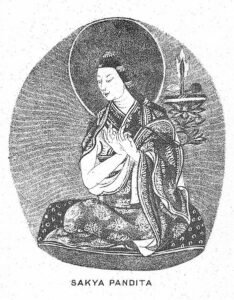
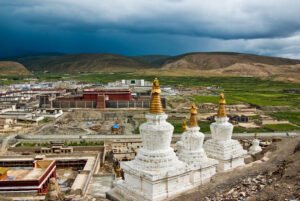
Sakya Buddha, Hindu of India - CRUCIFIED
The account of Sakya Buddha (Siddhartha Gautama, Shakyamuni) as a crucified, sin-atoning savior who descended to hell and resurrected comes directly from 19th-century comparative mythicist literature—most notably Kersey Graves’ The World’s Sixteen Crucified Saviors (1875) and Godfrey Higgins’ Anacalypsis (1836).
In authentic Buddhist canonical scripture (the Tipitaka / Pali Canon, Mahayana Sutras) and historical scholarship, Siddhartha Gautama was an enlightened human teacher who taught a path to end suffering (Dukkha) through self-discipline and meditation, not an executed sin-bearer.
Profile & Specific Attributes
- Timeline & Dates:
- Mythicist Claim: Active ~600 BCE.
- Historical Consensus: Lived c. 563–483 BCE (or c. 480–400 BCE according to modern dating consensus).
- Calendar Date of Birth:
- Celebrated throughout Asia on Vesak (the full moon day of the lunar month Vaisakha, falling in April or May).
- Age, Cause of Death & Perpetrator:
- Age at Death: Died at 80 years old.
- Manner of Death: Died peacefully lying on his right side between two Sal trees in Kushinagar, entering Parinirvana (final liberation from rebirth) after consuming a meal offered by the blacksmith Cunda (often identified as mushrooms or pork, sukara-maddava).
- Crucifixion Claim: The mythicist account of an arrow piercing his heart and fastening him to a cross is fictional; the Buddha was never executed or crucified.
- Geographical Locations:
- Born in Lumbini (modern Nepal); attained enlightenment in Bodh Gaya; gave his first sermon in Sarnath; taught across the Gangetic plain in Magadha and Kosala (Varanasi, Rajgir, Shravasti, Vaishali); passed away in Kushinagar.
- Appearance & Iconography:
- Depicted with the 32 physical marks of a Great Man (Mahapurusha): cranial bump of wisdom (Ushnisha), elongated earlobes (from princely jewelry), curled hair, monastic robes, and hands in meditative mudras.
Theological Details: Mythicist Claims vs. Buddhist Canon
| Category | 19th-Century Mythicist Claim (Graves/Higgins) | Canonical Buddhist Scripture (Pali/Sanskrit Texts) |
|---|---|---|
| Virgin Birth | Born of the virgin Queen Maya ("Queen of Heaven"). | Queen Maya was married to King Shuddhodana; Buddhist tradition describes a miraculous conception dream (a white elephant entering her side), not a perpetual virgin birth. |
| Crucifixion | Crucified on a tree split by an arrow as a sin offering. | Died of natural illness/old age at 80 in Kushinagar; never crucified. |
| Salvation / Atonement | Died to bear and atone for the sins of humanity. | Taught that liberation (Nirvana) requires individual effort via the Eightfold Path; no one can vicariously wipe away another's Karma. |
| Resurrection & Descent | Descended to hell for 3 days, resurrected, and ascended. | Entered Parinirvana; as an enlightened being, he ended the cycle of death and rebirth (Samsara) and did not bodily rise from the grave. |
| Title: "Son of God" | Deemed "Only Begotten Son" and "Lord." | Titled Tathagata ("Thus Gone"), Shakyamuni ("Sage of the Shakyas"), Bhagavan ("Blessed One"), and Sammasambuddha ("Fully Awakened One"). Buddhism is non-theistic regarding a creator god. |
| Part of a Trinity | Second person of a Buddhist Trinity. | Buddhism venerates the Three Jewels (Triratna): the Buddha (teacher), Dharma (teaching), and Sangha (community)—not a triune godhead. |
| Judgment in Heaven | Returns to judge human souls in heaven. | The Buddha does not judge souls. Rebirth into higher or lower realms is governed by the natural law of Karma. |
Final Departure and Worship
- Worship & Devotees:
- Revered across monastic communities (Bhikkhus/Bhikkhunis) and lay practitioners (Upasakas/Upasikas) through meditation, chanting the Dharma, circumambulating stupas containing relics, and offering flowers, incense, and lights.
- Origin of the Mythicist Confusions:
- Higgins and Graves misunderstood early European reports of the Stupa cross-sections, Buddhist Wheel of the Law (Dharmachakra), and Tibetan swastikas as "crucifixion" crosses.
- Miracles traditionally attributed to the Buddha (such as the Twin Miracle at Shravasti) were retrofitted by 19th-century writers with direct New Testament phrasing ("making the blind see, deaf hear, lame dance").
Iao
Iao of Nepal - CRUCIFIED
Iao of Nepal - CRUCIFIED
The account of Iao of Nepal as a crucified savior originates directly from 19th-century comparative mythicist literature—chiefly Chapter V of Kersey Graves’ The World’s Sixteen Crucified Saviors (1875), which borrowed from Godfrey Higgins’ Anacalypsis (1836).
Both authors based their claim on an 18th-century work by the Augustinian friar Antonio Agostino Giorgi (known in Latin as Georgius), titled Alphabetum Tibetanum (1762). In"Iao of Nepal" is not a figure from mainstream history, comparative mythology, or Nepalese religious tradition. Instead, this figure originates entirely from 19th-century Christ-myth and freethought literature—specifically Kersey Graves’ 1875 book The World's Sixteen Crucified Saviors and Godfrey Higgins’ 1836 work Anacalypsis, which cited a misunderstood 18th-century work by Christian friar Antonio Agostino Giorgi (Alphabetum Tibetanum, 1762).
Because this figure is a historiographical construct rather than an actual historical or mythological entity, the answers below reflect what 19th-century alternative mythologists claimed, contrasted with historical reality.
| Query Point | 19th-Century Mythicist Claim (Graves/Higgins) | Historical & Scholarly Reality |
|---|---|---|
| Dates (Start / End) | Circa 622 BCE | No historical or archaeological record exists of an "Iao" in Nepal at this or any other time. |
| Date of Birth | December 25 (claimed generally for solar deities) | No calendar date exists in Nepalese, Hindu, or Buddhist records. |
| Death Details & Killer | Crucified on a tree by executioners / enemies | Fictional. The cited source (Alphabetum Tibetanum) was describing Christian missionary accounts of Tibetan and Nepalese Buddhist symbols mistaken for crosses. |
| Age at Death | Typically claimed around 30 to 33 years | Not specified in primary regional texts. |
| Soteriology (Salvation) | Claimed to have died as an expiation/atonement for human sin | Inauthentic to Himalayan/Nepalese religion; imported from Christian theology by Graves. |
| Geographic Location | Ancient Nepal / Himalayas | Nepal has historical traditions of Hinduism, Buddhism, and Bon, none of which feature "Iao." |
| Appearance / Imagery | Described as an crucified deity or solar figure | No genuine ancient statues, paintings, or depictions exist. |
| Actions in Life / Post-Death | Performed miracles, taught moral virtue, ascended | Purely speculative projection matching standard 19th-century solar-myth motifs. |
| Worship & Followers | Claimed to be worshipped by ancient Nepalese/Himalayan peoples | Never worshipped; the name "Iao" in antiquity was a Greek/Gnostic rendering of the Hebrew Yahweh ($\text{IA}\Omega$), not a Himalayan deity. |
| Virgin Birth | Yes (claimed by Graves for his list of 16 saviors) | No record in Nepalese traditions. |
| Resurrection | Yes (claimed to have risen from the dead) | No record in Nepalese traditions. |
| Descent to Hell / Ascension | Ascended to heaven after death | Standard Christian/mythicist template applied by Graves. |
| Crucified | Yes, claimed to have been affixed to a tree | Crucifixion was not a practice in ancient Nepal or Tibet. |
| Son of God / Trinity | Claimed to be the second person of a divine triad | Misinterpretation of the Buddhist Triratna (Buddha, Dharma, Sangha) or Hindu Trimurti. |
| Alternate Names | Jao, Iao, Jehovah-equivalent | Greek $\text{IA}\Omega$ (Gnostic Yahweh), conflated erroneously with Asian titles or sounds like Om. |
| Judge in Heaven | Claimed to return or preside as judge | Reflects Christian eschatology rather than Nepalese religious cosmology (e.g., Karma or Yama). |
Historical Context of the Source Material
- The Citation Source: The reference to "Georgius, p. 202" points to Alphabetum Tibetanum (Rome, 1762) by the Augustinian monk Father Antonio Agostino Giorgi (Georgius). Giorgi documented Tibetan and Nepalese culture through a missionary lens, interpreting various native Buddhist symbols (such as the svastika, prayer crosses, or Indra hanging on a frame in festivals) as distorted traces of Nestorian Christianity or pagan cruciforms.
- 19th-Century Syncretism: Godfrey Higgins (Anacalypsis) and later Kersey Graves (The World's Sixteen Crucified Saviors) misread Giorgi's Latin texts and asserted that every ancient civilization had an identical, crucified "savior" figure matching the biography of Jesus Christ, frequently anglicizing Hebrew/Gnostic names like Iao and placing them in non-Semitic geographies.