Teaser Image
Infanticide

Infanticide
Infanticide

infanticide

12 And being warned of God in a dream that they should not return to Herod, they departed into their own country another way.

13 And when they were departed, behold, the angel of the Lord appeareth to Joseph in a dream, saying, Arise, and take the young child and his mother, and flee into Egypt, and be thou there until I bring thee word: for Herod will seek the young child to destroy him.

14 When he arose, he took the young child and his mother by night, and departed into Egypt:

15 And was there until the death of Herod: that it might be fulfilled which was spoken of the Lord by the prophet, saying, Out of Egypt have I called my son.

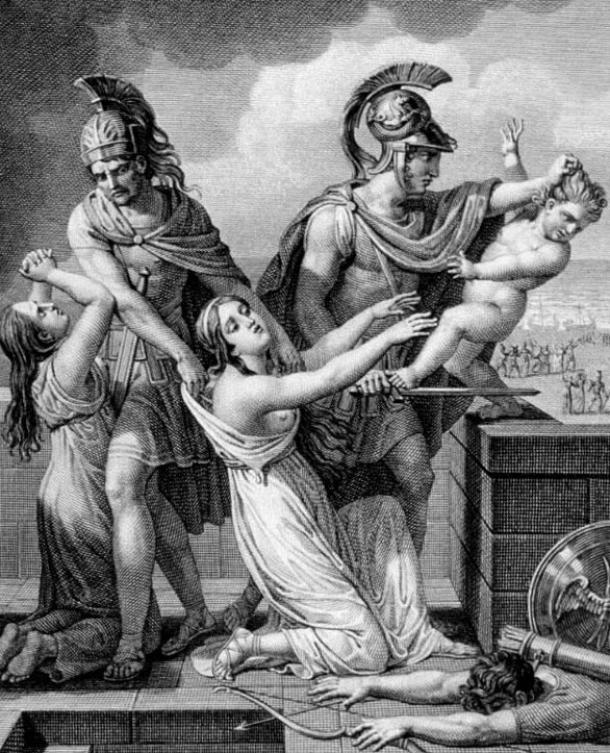
16 Then Herod, when he saw that he was mocked of the wise men, was exceeding wroth, and sent forth, and slew all the children that were in Bethlehem, and in all the coasts thereof, from two years old and under, according to the time which he had diligently enquired of the wise men.

17 Then was fulfilled that which was spoken by Jeremy the prophet, saying,

18 In Rama was there a voice heard, lamentation, and weeping, and great mourning, Rachel weeping for her children, and would not be comforted, because they are not.          Matthew 2:12-19


No one from that nation, or any other nation, or of that age, or of any other age makes any mention to anything remotely resembling the supposed Herod infanticide. No Rabbinical writers that detailed Herods wicked acts in their writings ever even hinted at such an infanticide. Such a horrible and atrocious act would have been written about far and wide in that region and others.

Most certainly the Historian Josephus, who was related to Herod’s wife, and lived in that country, and professed to write, in detail, every evil act by Herod, ever even comes close to mentioning any infanticide. Josephus devoted 37 chapters to Herod and his evil acts. This type of infanticide would be a bloody deed that would be unmatched in history.

All other historians of that time who wrote about the character of Herod never came close to writing about any thing close to this alleged utterly cruel infanticide. According to best estimates, Herod was not living at the time of this fantasy killing of all male children under the age of two. According to the writings of Josephus, Herod would have been 68 or older when this major act of child genocide occurred.

I’m sure Herod was not a dummy and would have calculated that he would be dead before any an infant would grow up and have the capacity to overthrow him from his throne. Herod would have had a simpler solution of narrowing down the target to the spectacular future child and just killing that one child. This special child had three rich wise men visiting him giving him, among other things, gifts of gold. People talk.

The killing of a huge number of children and breaking the hearts of his loyal subjects would have surely overthrew him more than any other act he could do. The revengeful repercussions would be certain and big. There also would have been some evidence of a population drop.  The Christian scholar Rev. Edward Evanson stated it very clearly, “It is an incredible, borrowed fiction.”

Origin

This is a standard element of the theme of the story of a mean King who has prophesy told against him that a born child will grow up and depose him.  The King then kills all the male infants to prevent this deposing.  This “innocents were slaughtered” myth is found in many religions;

Sargon, Nimrod, Moses, Jason, Krishna, Mordred, Oedipus, Perseus, Romulus, Remus, and Zeus.

And the Hero of the story always escapes and grows to manhood and deposes the King.

infanticide

Matthew Can’t Read

17 Then was fulfilled that which was spoken by Jeremy the prophet, saying,

18 “A voice is heard in Ramah, weeping and great mourning, Rachel weeping for her children and refusing to be comforted, because they are no more.”   Matthew 2:17-18

This is a quote from Jeremiah 31:15 but the verse is a clear reference to the captivity in Babylon as demonstrated by reading the next two verses;

15 This is what the Lord says: “A voice is heard in Ramah, mourning and great weeping, Rachel weeping for her children and refusing to be comforted, because they are no more.”

16 This is what the Lord says: “Restrain your voice from weeping and your eyes from tears, for your work will be rewarded,” declares the Lord.
“They will return from the land of the enemy.
17 So there is hope for your descendants,” declares the Lord.
“Your children will return to their own land.    Jeremiah 31:16-17

The quoting of Jeremiah by Matthew was to gain believability by alledging that the infanticide was prophesied and happened.  In fact the verse is about the many descendants of Rachael, mostly men (but includes women) that that were killed in battle. [Jeremiah chapter 3]

Analysis

When a marvellous occurrence is said to have happened everywhere, we may feel sure that it never happened anywhere. Popular fancies propagate themselves indefinitely, but historical events, especially the striking and dramatic ones, are rarely repeated.

That this is a fictitious story is seen from the narratives of the birth of Jesus, which are recorded by the first and third Gospel writers, without any other evidence. In the one—that related by the Matthew narrator—we have a birth at Bethlehem—implying the ordinary residence of the parents there—and a hurried flight—almost immediately after the birth—from that place into Egypt,  the slaughter of the infants, and a journey, after many months, from Egypt to Nazareth in Galilee. In the other story—that told by the Luke narrator—the parents, who have lived in Nazareth, came to Bethlehem only for business of the State, and the casual birth in the cave or stable is followed by a quiet sojourn, during which the child is circumcised, and by a leisurely journey to Jerusalem; whence, everything having gone off peaceably and happily, they return naturally to their own former place of abode, full, it is said over and over again, of wonder at the things that had happened, and deeply impressed with the conviction that their child had a special work to do, and was specially gifted for it. There is no fear of Herod, who seems never to trouble himself about the child, or even to have any knowledge of him. There is no trouble or misery at Bethlehem, and certainly no mourning for children slain. Far from flying hurriedly away by night, his parents celebrate openly, and at the usual time, the circumcision of the child; and when he is presented in the temple, there is not only no sign that enemies seek his life, but the devout saints give public thanks for the manifestation of the Savior.

Dr. Hooykaas, speaking of the slaughter of the innocents, says:

"Antiquity in general delighted in representing great men, such as Romulus, Cyrus, and many more, as having been threatened in their childhood by fearful dangers. This served to bring into clear relief both the lofty significance of their future lives, and the special protection of the deity who watched over them. "The brow of many a theologian has been bent over this (Matthew) narrative! For, as long as people believed in the miraculous inspiration of the Holy Scriptures, of course they accepted every page as literally true, and thought that there could not be any contradiction between the different accounts or representations of Scripture. The worst of all such pre-conceived ideas is, that they compel those who hold them to do violence to their own sense of truth. For when these so-called religious prejudices come into play, people are afraid to call things by their right names, and, without knowing it themselves, become guilty of all kinds of evasive and arbitrary practices; for what would be thought quite unjustifiable in any other case is here considered a duty, inasmuch as it is supposed to tend toward the maintenance of faith and the glory of God!"

 As we stated above, this story is to be found in the fictitious gospel according to Matthew only; contemporary history has nowhere recorded this audacious crime. It is mentioned neither by Jewish nor Roman historians. Tacitus, who has stamped forever the crimes of despots with the brand of reprobation, it would seem then, did not think such infamies worthy of his condemnation.

Josephus also, who gives us a minute account of the atrocities perpetrated by Herod up to even the very last moment of his life, does not say a single word about this unheard-of crime, which must have been so notorious. Surely he must have known of it, and must have mentioned it, had it ever been committed.

"We can readily imagine the Pagans," says Mr. Reber, "who composed the learned and intelligent men of their day, at work in exposing the story of Herod's cruelty, by showing that, considering the extent of territory embraced in the order, and the population within it, the assumed destruction of life stamped the story false and ridiculous. A governor of a Roman province who dared make such an order would be so speedily overtaken by the vengeance of the Roman people, that his head would fall from his body before the blood of his victims had time to dry. Archelaus, his son, was deposed for offenses not to be spoken of when compared with this massacre of the infants."

No wonder that there is no trace at all in the Roman catacombs, nor in Christian art, of this fictitious story, until about the beginning of the fifth century.  Never would Herod dared to have taken upon himself the odium and responsibility of such a sacrifice. Such a crime could never have happened at the epoch of its professed perpetration. To such lengths were the early Fathers led, by the servile adaptation of the ancient traditions of the East, they required a second edition of the tyrant Kansa, and their holy wrath fell upon Herod. The Apostles of Jesus counted too much upon human credulity, they trusted too much that the future might not unravel their maneuvers, the sanctity of their object made them too reckless. They destroyed all the evidence against themselves which they could lay their hands upon, but they did not destroy it all. 

Where

Canon Farrar, speaking of the sojourn of the Holy Family in Egypt, says: "St. Matthew neither tells us where the Holy Family abode in Egypt, nor how long their exile continued; but ancient legends say that they remained two years absent from Palestine, and lived at Mataréëh, a few miles north-east of Cairo." 

Chemnitius, out of Stipulensis, who had it from Peter Martyr, Bishop of Alexandria, in the third century, says, that the place in Egypt where Jesus was banished, is now called Matarea, about ten miles beyond Cairo, that the inhabitants constantly burn a lamp in remembrance of it, and that there is a garden of trees yielding a balsam, which was planted by Jesus when a boy. 

Crishna

Joguth Chunder Gangooly,  in his "Life and Religion of the Hindoos," that:

"A heavenly voice whispered to the foster father of Crishna and told him to fly with the child across the river Jumna, which was immediately done.  This was owing to the fact that the reigning monarch, King Kansa, sought the life of the infant Saviour, and to accomplish his purpose, he sent messengers 'to kill all the infants in the neighboring places.'" 

Mr. Higgins says:

"Soon after Crishna's birth he was carried away by night and concealed in a region remote from his natal place, for fear of a tyrant whose destroyer it was foretold he would become; and who had, for that reason, ordered all the male children born at that period to be slain." 

Sir William Jones says of Crishna: "He passed a life, according to the Indians, of a most extraordinary and incomprehensible nature. His birth was concealed through fear of the reigning tyrant Kansa, who, at the time of his birth, ordered all newborn males to be slain, yet this wonderful babe was preserved." 

In the Epic poem Mahabarata, composed more than two thousand years ago, we have the whole story of this incarnate deity, born of a virgin, and miraculously escaping in his infancy from the reigning tyrant of his country, related in its original form. Representations of this flight with the babe at midnight are sculptured on the walls of ancient Hindoo temples. 

This story is also the subject of an immense sculpture in the cave-temple at Elephanta, where the children are represented as being slain. The date of this sculpture is lost in the most remote antiquity. It represents a person holding a drawn sword, surrounded by slaughtered infant boys. Figures of men and women are also represented who are supposed to be supplicating for their children. Thomas Maurice, speaking of this sculpture, says:

"The event of Crishna's birth, and the attempt to destroy him, took place by night, and therefore the shadowy mantle of darkness, upon which mutilated figures of infants are engraved, darkness (at once congenial with his crime and the season of its perpetration), involves the tyrant's bust; the string of death heads marks the multitude of infants slain by his savage mandate; and every object in the sculpture illustrates the events of that Avatar." 

Sir Wm. Jones tells us that when Crishna was taken out of reach of the tyrant Kansa who sought to slay him, he was fostered at Mathura by Nanda, the herdsman.

Here is evidently one and the same legend. Salivahana, the virgin-born Saviour, anciently worshiped near Cape Comorin, the southerly part of the Peninsula of India, had the same history. It was attempted to destroy him in infancy by a tyrant who was afterward killed by him. Most of the other circumstances, with slight variations, are the same as those told of Crishna and Jesus. 

Buddha

 Buddha's life was also in danger when an infant. In the southern country of Magadha, there lived a king by the name of Bimbasara, who, being fearful of some enemy arising that might overturn his kingdom, frequently assembled his principal ministers together to hold discussion with them on the subject. On one of these occasions they told him that away to the north there was a respectable tribe of people called the Sâkyas, and that belonging to this race there was a youth newly-born, the first-begotten of his mother, &c. This youth, who was Buddha, they said was liable to overturn him, they therefore advised him to "at once raise an army and destroy the child." 

East Mongols

In the chronicles of the East Mongols, the same tale is to be found repeated in the following story: "A certain king of a people called Patsala, had a son whose peculiar appearance led the Brahmins at court to prophesy that he would bring evil upon his father, and to advise his destruction. Various modes of execution having failed, the boy was laid in a copper chest and thrown into the Ganges. Rescued by an old peasant who brought him up as his son, he, in due time, learned the story of his escape, and returned to seize upon the kingdom destined for him from his birth." 

Hau-ki

Hau-ki, the Chinese hero of supernatural origin, was exposed in infancy, as the "Shih-king" says: "He was placed in a narrow lane, but the sheep and oxen protected him with loving care. He was placed in a wide forest, where he was met with by the wood-cutters. He was placed on the cold ice, and a bird screened and supported him with its wings," 

Mr. Legge draws a comparison to Romulus.

Horus

Horus, according to the Egyptian story, was born in the winter, and brought up secretly in the Isle of Buto, for fear of Typhon, who sought his life. Typhon at first schemed to prevent his birth and then sought to destroy him when born. 

Cyrus

Cyrus, king of Persia (6th cent. B. C.), is the hero of a similar tale. His grandfather, Astyages, had dreamed certain dreams which were interpreted by the Magi to mean that the offspring of his daughter Mandane would expel him from his kingdom. Alarmed at the prophecy, he handed the child to his kinsman Harpagos to be slain; but this man having entrusted it to a shepherd to be exposed, the latter contrived to save it by exhibiting to the emissaries of Harpagos the body of a still-born child of which his own wife had just been delivered. Grown to man's estate Cyrus of course justified the prediction of the Magi by his successful revolt against Astyages and assumption of the monarchy.

Alarmed at the prophecy, he handed the child to his kinsman Harpagos to be slain; but this man having entrusted it to a shepherd to be exposed, the latter contrived to save it by exhibiting to the emissaries of Harpagos the body of a still-born child of which his own wife had just been delivered. Grown to man's estate Cyrus of course justified the prediction of the Magi by his successful revolt against Astyages and assumption of the monarchy.

Herodotus, the Grecian Historian (B. C. 484), relates that Astyages, in a vision, appeared to see a vine grow up from Mandane's womb, which covered all Asia. Having seen this and communicated it to the interpreters of dreams, he put her under guard, resolving to destroy whatever should be born of her; for the Magian interpreters had signified to him from his vision that the child born of Mandane would reign in his stead. Astyages therefore, guarding against this, as soon as Cyrus was born sought to have him destroyed. The story of his exposure on the mountain, and his subsequent good fortune, is then related. 

Abraham

Abraham was also a "dangerous child." At the time of his birth, Nimrod, king of Babylon, was informed by his soothsayers that "a child should be born in Babylonia, who would shortly become a great prince, and that he had reason to fear him." The result of this was that Nimrod then issued orders that "all women with child should be guarded with great care, and all children born of them should be put to death." The mother of Abraham was at that time with child, but, of course, he escaped from being put to death, although many children were slaughtered.

Zoroaster

Zoroaster, the chief of the religion of the Magi, was a "dangerous child." Prodigies had announced his birth; he was exposed to dangers from the time of his infancy, and was obliged to fly into Persia, like Jesus into Egypt. Like him, he was pursued by a king, his enemy, who wanted to get rid of him.

His mother had alarming dreams of evil spirits seeking to destroy the child to whom she was about to give birth. But a good spirit came to comfort her and said: "Fear nothing! Ormuzd will protect this infant. He has sent him as a prophet to the people. The world is waiting for him." 

Perseus

Perseus, son of the Virgin Danae, was also a "dangerous child." Acrisius, king of Argos, being told by the oracle that a son born of his virgin daughter would destroy him, immured his daughter Danae in a tower, where no man could approach her, and by this means hoped to keep his daughter from becoming enceinte. The god Jupiter, however, visited her there, as it is related of the Angel Gabriel visiting the Virgin Mary,  the result of which was that she bore a son—Perseus. Acrisius, on hearing of his daughter's disgrace, caused both her and the infant to be shut up in a chest and cast into the sea. They were discovered by one Dictys, and liberated from what must have been anything but a pleasant position. 

Æsculapius

Æsculapius, when an infant, was exposed on the Mount of Myrtles, and left there to die, but escaped the death which was intended for him, having been found and cared for by shepherds. 

Hercules

Hercules, son of the virgin Leto, was left to die on a plain, but was found and rescued by a maiden. 

Œdipous

Œdipous was a "dangerous child." Laios, King of Thebes, having been told by the Delphic Oracle that Œdipous would be his destroyer, no sooner is Œdipous born than the decree goes forth that the child must be slain: but the servant to whom he is intrusted contents himself with exposing the babe on the slopes of Mount Kithairon, where a shepherd finds him, and carries him, like Cyrus or Romulus, to his wife, who cherishes the child with a mother's care. The Theban myth of Œdipous is repeated substantially in the Arcadian tradition of Telephos. He is exposed, when a babe, on Mount Parthenon, and is suckled by a doe, which represents the wolf in the myth of Romulus, and the dog of the Persian story of Cyrus. Like Moses, he is brought up in the palace of a king. 

Telephos

The Theban myth of Œdipous is repeated substantially in the Arcadian tradition of Telephos. He is exposed, when a babe, on Mount Parthenon, and is suckled by a doe, which represents the wolf in the myth of Romulus, and the dog of the Persian story of Cyrus. Like Moses, he is brought up in the palace of a king. 

As we read the story of Telephos, we can scarcely fail to think of the story of the Trojan Paris, for, like Telephos, Paris is exposed as a babe on the mountain-side.  Before he is born, there are portents of the ruin which he is to bring upon his house and people. Priam, the ruling monarch, therefore decrees that the child shall be left to die on the hill-side. But the babe lies on the slopes of Ida and is nourished by a she-bear. He is fostered, like Crishna and others, by shepherds, among whom he grows up. 

Iamos

Iamos was left to die among the bushes and violets. Aipytos, the chieftain of Phaisana, had learned at Delphi that a child had been born who should become the greatest of all the seers and prophets of the earth, and he asked all his people where the babe was: but none had heard or seen him, for he lay away amid the thick bushes, with his soft body bathed in the golden and pure rays of the violets. So when he was found, they called him Iamos, the "violet child;" and as he grew in years and strength, he went down into the Alpheian stream, and prayed to his father that he would glorify his son. Then the voice of Zeus was heard, bidding him come to the heights of Olympus, where he should receive the gift of prophecy. 

Chandragupta

Chandragupta was also a "dangerous child." He is exposed to great dangers in his infancy at the hands of a tributary chief who has defeated and slain his suzerain. His mother, "relinquishing him to the protection of the Devas, places him in a vase, and deposits him at the door of a cattle pen." A herdsman takes the child and rears it as his own. 

Jason

Jason is another hero of the same kind. Pelias, the chief of Iolkos, had been told that one of the children of Aiolos would be his destroyer, and decreed, therefore, that all should be slain. Jason only is preserved, and brought up by Cheiron. 

Bacchus

Bacchus, son of the virgin Semele, was destined to bring ruin upon Cadmus, King of Thebes, who therefore orders the infant to be put into a chest and thrown into a river. He is found, and taken from the water by loving hands, and lives to fulfill his mission.

Herodotus relates a similar story, which is as follows:

"The constitution of the Corinthians was formerly of this kind; it was an oligarchy, (a government in the hands of a selected few), and those who were called Bacchiadæ governed the city. About this time one Eetion, who had been married to a maiden called Labda, and having no children by her, went to Delphi to inquire of the oracle about having offspring. Upon entering the temple he was immediately saluted as follows; 'Eetion, no one honors thee, though worthy of much honor. Labda is pregnant and will bring forth a round stone; it will fall on monarchs, and vindicate Corinth.' This oracle, pronounced to Eetion, was by chance reported to the Bacchiadæ, who well knew that it prophesied the birth of a son to Eetion who would overthrow them, and reign in their stead; and though they comprehended, they kept it secret, purposing to destroy the offspring that should be born to Eetion. As soon as the woman brought forth, they sent ten persons to the district where Eetion lived, to put the child to death; but, the child, by a divine providence, was saved. His mother hid him in a chest, and as they could not find the child they resolved to depart, and tell those who sent them that they had done all that they had commanded. After this, Eetion's son grew up, and having escaped this danger, the name of Cypselus was given him, from the chest. When Cypselus reached man's estate, and consulted the oracle, an ambiguous answer was given him at Delphi; relying on which he attacked and got possession of Corinth." 

Romulus and Remus

Romulus and Remus, the founders of Rome, were exposed on the banks of the Tiber, when infants, and left there to die, but escaped the death intended for them. The story of the "dangerous child" was well known in ancient Rome, and several of their emperors, so it is said, were threatened with death at their birth, or when mere infants. Julius Marathus, in his life of the Emperor Augustus Cæsar, says that before his birth there was a prophecy in Rome that a king over the Roman people would soon be born. To obviate this danger to the republic, the Senate ordered that all the male children born in that year should be abandoned or exposed. [

Astrea

The flight of the virgin-mother with her babe is also illustrated in the story of Astrea when beset by Orion, and of Latona, the mother of Apollo, when pursued by the monster.  It is simply the same old story, over and over again. Someone has predicted that a child born at a certain time shall be great, he is therefore a "dangerous child," and the reigning monarch, or some other interested party, attempts to have the child destroyed, but he invariably escapes and grows to manhood, and generally accomplishes the purpose for which he was intended. This almost universal mythos was added to the fictitious history of Jesus by its fictitious authors, who have made him escape in his infancy from the reigning tyrant with the usual good fortune.

No wonder there are not traces of this fiction in the Roman catacombs or Christian art.  The story seemed to appear in the fifth century.

 

Teaser Image
presents for jesus

Presents for Jesus

Presents for Baby Jesus


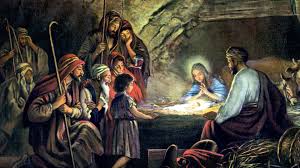
At the birth of Christ Jesus, is the recognition of the divine child, and the presentation of gifts.  We are informed in the New Testament novel by Matthew, that guided by a star, the Magi from the east came to where the young child was.

"And when they were come into the house (not stable) they saw the young child, with Mary his mother, and fell down and worshiped him. And when they had opened their treasures, they presented unto him gifts, gold, frankincense, and myrrh."   Matthew 2:2

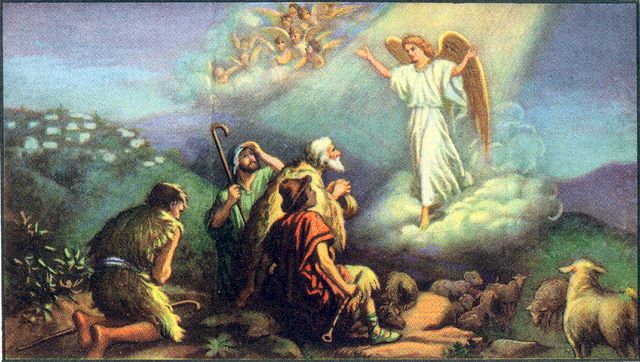
The Luke narrator—who seems to know nothing about the Magi from the east—informs us that shepherds came and worshiped the young child. They were keeping their flocks by night when the angel of the Lord appeared before them, saying:

"Behold, I bring you good tidings—for unto you is born this day in the city of David a Saviour, which is Christ the Lord."

After the angel had left them, they said one to another:

"Let us go unto Bethlehem and see this thing which is come to pass, which the Lord hath made known to us. And they came with haste, and found Mary and Joseph, and the babe lying in a manger."    Luke 2:8-16

The Luke narrator evidently borrowed this story of the shepherds from the " Gospel of the Egyptians ", or from other sacred records of the biographies of Crishna or Buddha. It is related in the legends of Crishna that the divine child was cradled among shepherds, to whom were first made known the stupendous feats which stamped his character with marks of the divinity. He was recognized as the promised Saviour by Nanda, a shepherd, or cowherd, and his companions, who prostrated themselves before the heaven-born child. After the birth of Crishna, the Indian prophet Nared, having heard of his fame, visited his father and mother at Gokool, examined the stars, &c., and declared him to be of celestial descent.

Not only was Crishna adored by the shepherds and Magi, and received with divine honors, but he was also presented with gifts. These gifts were "sandal wood and perfumes." (Why not "frankincense and myrrh?") Similar stories are related of the infant Buddha. He was visited, at the time of his birth, by wise men, who at once recognized in the marvellous infant all the characters of the divinity, and he had scarcely seen the day before he was hailed god of gods.

"'Mongst the strangers came A grey-haired saint, Asita, one whose ears, Long closed to earthly things, caught heavenly sounds, And heard at prayer beneath his peepul-tree, The Devas singing songs at Buddha's birth."

Viscount Amberly, speaking of him, says:

"He was visited and adored by a very eminent Rishi, or hermit, known as Asita, who predicted his future greatness, but wept at the thought that he himself was too old to see the day when the law of salvation would be taught by the infant whom he had come to contemplate."

"I weep (said Asita), because I am old and stricken in years, and shall not see all that is about to come to pass. The Buddha Bhagavat (God Almighty Buddha) comes to the world only after many kalpas. This bright boy will be Buddha. For the salvation of the world he will teach the law. He will succor the old, the sick, the afflicted, the dying.
He will release those who are bound in the meshes of natural corruption. He will quicken the spiritual vision of those whose eyes are darkened by the thick darkness of ignorance. Hundreds of thousands of millions of beings will be carried by him to the 'other shore'—will put on immortality. And I shall not see this perfect Buddha—this is why I weep."

He returns rejoicing, however, to his mountain-home, for his eyes had seen the promised and expected Saviour.

Paintings in the cave of Ajunta represent Asita with the infant Buddha in his arms. The marvelous gifts of this child had become known to this eminent ascetic by supernatural signs.

Buddha, as well as Crishna and Jesus, was presented with "costly jewels and precious substances." (Why not gold and perfumes?) Rama—the seventh incarnation of Vishnu for human deliverance from evil—is also hailed by "aged saints"—(why not "wise men"?)—who die gladly when their eyes see the long-expected one.

How-tseich, who was one of those personages styled, in China, "Tien-Tse," or "Sons of Heaven,"  and who came into the world in a miraculous manner, was laid in a narrow lane. When his mother had fulfilled her time:

"Her first-born son (came forth) like a lamb. There was no bursting, no rending, No injury, no hurt—Showing how wonderful he would be."

When born, the sheep and oxen protected him with loving care.

The birth of Confucius (B. C. 551), like that of all the demi-gods and saints of antiquity, is fabled to have been attended with allegorical prodigies, amongst which was the appearance of the Ke-lin, a miraculous quadruped, prophetic of happiness and virtue, which announced that the child would be "a king without a throne or territory." Five celestial sages, or "wise men" entered the house at the time of the child's birth, whilst vocal and instrumental music filed the air.

Mithras, the Persian Saviour, and mediator between God and man, was also visited by "wise men" called Magi, at the time of his birth. He was presented with gifts consisting of gold, frankincense and myrrh.'

According to Plato, at the birth of Socrates (469 B. C.) there came three Magi from the east to worship him, bringing gifts of gold, frankincense and myrrh.

Æsculapius, the virgin-born Saviour, was protected by goatherds (why not shepherds?), who, upon seeing the child, knew at once that he was divine. The voice of fame soon published the birth of this miraculous infant, upon which people flocked from all quarters to behold and worship this heaven-born child.

Many of the Grecian and Roman demi-gods and heroes were either fostered by or worshiped by shepherds. Amongst these may be mentioned Bacchus, who was educated among shepherds,  and Romulus, who was found on the banks of the Tiber, and educated by shepherds.

Paris, son of Priam, was educated among shepherds, and Ægisthus was exposed, like Æsculapius, by his mother, found by shepherds and educated among them.

Viscount Amberly has well said that:

"Prognostications of greatness in infancy are, indeed, among the stock incidents in the mythical or semi-mythical lives of eminent persons."

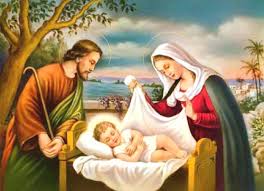
We have seen that the Matthew narrator speaks of the infant Jesus, and Mary, his mother, being in a "house"—implying that he had been born there; and that the Luke narrator speaks of the infant "lying in a manger"—implying that he was born in a stable. 

Teaser Image
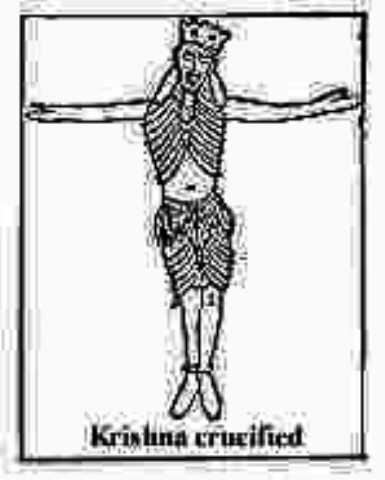
krishna crucified

Christ and Prior Savior Krishna - 346 Matches

krishna crucified

CHRIST and Prior CHRISHNA - 346 STRIKING ANALOGIES

Chrishna Crucified

1. The advent of each Savior was miraculously foretold by prophets.

2. The fallen and degenerate condition of the human race is taught in the religion of each.

3. A plan of restoration or salvation is provided for in each case.

4. A divine Savior is considered necessary in both cases.

5. The necessity of atoning for sin is taught in the religion of each.

6. A God, or Son of God, is selected as the victim for the atoning sacrifice in each case.

7. This God is sent down from heaven in each case in the form of a man.

8. The God or Savior in each case is the second person of the Trinity.

9. Chrishna, as well as Christ, was held to be really God incarnate.

10. The mission of each Savior is the same.

11. There is a resemblance in name-Chrishna and Christ.

12. Chrishna, as well as Christ, was incarnated and born of a woman.

13. The mother in each case was a holy virgin.

14. The same peculiarities of a miraculous conception and birth are related of each.

15. Each had an adopted earthly father.

16. The father of Chrishna, as well as that of Christ, was a carpenter.

17. God. is claimed as the real father in both cases.

18. A Spirit or Ghost was the author of the conception of each.

19. There was rejoicing on earth when each Savior was born.

20. There was also joy in heaven at the birth and advent of each.

21. Chrishna, as well as Christ, was of royal descent.

22. Their mothers were both reputedly pious women.

23. The names of two mothers are somewhat similar Mary and Maia.

24. Each had a special female friend-Elizabeth in the one case, and the wife of Nanda in the other.

25. Neither Savior was born in a house, but both in obscure situations.

26. Both were born on the 25th of December.

27. Both, at birth, were visited by wise men and shepherds.

28. The visitors conducted by a star in each case.

29. The rite of purification observed by the mothers of each.

30. An angel warning of impending danger in each case.

31. The incumbent ruler was hostile in each case.

32. A bloody decree in each case for the destruction of be infant Savior.

33. A flight of the parents takes place in both cases.

34. The parents of one sojourned at Muturea, the other at Mathura.

35. Each Savior had a forerunner – John the Baptist in one case, Bali Rama in the other.

36. Both were preternaturally’ smart in childhood.

37. Each disputed with and vanquished learned opponents.

38. Both became objects of search by their parents.

39. And both occasioned anxiety, if not sorrow, to their parents.

40. The mother of each bad other children-that is children begotten by man as well as God.

41. Both Saviors retired to, and spent considerable time in the wilderness.

42. The religious rite of “fasting” was practiced by each Savior.

43. Each delivered a noteworthy sermon, or series of moral lessons.

44. Chrishna, as well as Christ, was called and considered God.

45. Each was both God and the Son of God (so regarded).

46. “Savior” was one of the divine titles of each.

47. Each was designated “the Savior of ‘man,” “the Savior of the world,” &c.

48. Both expressed a desire to “save all.’’

49. Each sustained the character of a Messiah.

50. Chrishna, as well as Christ, was a Redeemer.

51. Each Savior was called “Shepard.”

52. Both were believed to be the Creator of the world.

53. Each is sometimes spoken of, also, as only an agent in the creation.

54. Both were the “Light and Life” of men.

55. Each “brought life and immortality to light.”

56. Both are represented as “the seed of the woman bruising the serpent’s head.”

57. Was Christ a “Dispenser of grace,” so was the Hindu Savior.

58. One was “the lion of the tribe of Judah,” the other “the lion of the tribe of Saki “

59. Christ was “the Beginning of the End,” Chrishna Beginning, the Middle, and the End.”

60. Both proclaimed, “I am the Resurrection.”

61. Each was “the way to the Father.”

62. Both represented emblematically “the Sun of Righteousness.

63. Each is figuratively represented as being “all in all.”

64. Both speak of having existed prior to human birth.

65. A dual existence – an existence in both heaven and earth at once – is claimed by or for both.

66. Chrishna, as well as Christ, was “without sin.’’

67. Both assumed the divine prerogative of forgiving sins.

68. The mission of each was to deliver from sin.

69. Both came to destroy the devil and his works.

70. The doctrine of the “atonement” is practically realized in each case.

71. Each made a voluntary offering for the sins of the world.

72. Both were human as well as divine.

73. Chrishna, as well as Christ, was worshiped as God absolute.

74. Each was regarded as “the Lord from Heaven.”

75. Chrishna, as well as Christ, had applied to him all the attributes of God.

76. Was Christ omniscient, so was Chrishna.

77. Was one omnipotent, so was the other (so believed).

78. And both are represented as being omnipresent.

79. Each was believed to be divinely perfect.

80. Was one “Lord of lords,” so was the other.

81. Each embodied ‘the “power and wisdom of God.”

82. All power was committed unto each (so claimed).

83. Chrishna performed many miracles as well as Christ.

84. One of the first miracles of each was the cure of a leper.

85. Each healed “all manner of diseases.”

86. The work of casting out devils constitutes a part of the mission of each.

87. Each practically proved his power to raise the dead.

88. A miracle appertaining to a tree is related of both.

89. Both could read the thoughts of the people.

90. The power to detect and eject evil spirits was claimed by both.

91. Both had the keys or control of death.

92. Each led an extraordinary life.

93. Each had a character for supernatural greatness.

94. Both possessed or claimed a oneness with the Father.

95. A “oneness with his Lord and Master” is claimed, also, for the disciples of each.

96. A strong reciprocal affection between Master and disciple in each case.

97. Each offers to shoulder the burdens of his disciples.

98. A portion of the life of each was spent in preaching.

99. Both made converts by their miracles and preaching.

100. A numerous retinue of believers springs up in each case.

101. Both bad commissioned apostles to proclaim their religion.

102. Each was an innovator upon the antecedent religion.

103. A beautiful reform in religion was inaugurated by each Savior.

104. Each opposed the existing popular priesthood.

105. Both abolished the law of lineal descent in the ancient priesthood.

106. Each was an object of conspiracy by his enemies.

107. Humility and external poverty distinguished the life of each.

108. Each denounced riches and rich men, and loathed and detested wealth.

109. Both had a character for meekness.

110. Chastity or unmarried life was a distinguishing characteristic of each.

111. Mercy was a noteworthy characteristic of each.

112. Both were censured for associating with sinners.

113. Each was a special friend to the poor.

114. A poor widow woman receives marked attention by each.

115. Each encounters a gentile woman at a well.

116. Both submitted unresistingly to injuries and insults.

117. General practical philanthropy and impartiality marks the life of each Savior.

118. Each took more pleasure in repentant sinners than in virtuous saints.

119. Both practically disclosed God’s attempt to reconcile the world to himself.

120. The closing incidents in the earth-life of each were strikingly similar.

121. A memorable last supper marked the closing career of both.

122. Both were put to death by “wicked hands.”

123. Chrishna, as well as Christ, was crucified.

124. Darkness attended the crucifixion of each.

125. Both were crucified between two thieves.

126. Each is reported to have forgiven his enemies.

127. The age of each at death corresponds (being between thirty and thirty-six years).

128. Each, after giving up the ghost, descends into hell.

129. The resurrection from the dead is a marked period in the history of each.

130. Each ascends to heaven after his resurrection.

131. Many people are reported to have witnessed the ascension in each case.

132. Each is reported as having both descended and ascended.

133. The head of each, while living on earth, was anointed with oil.

II. DOCTRINES.

134. There is a similarity in the doctrines of their respective religions.

135. The same doctrines are propagated by the disciples of each.

136. The doctrine of future rewards and punishments is a part of each system.

137. Analogous views of heaven are found in each system.

138. A third heaven is spoken of in each system.

139. All sin must be punished according to the bible teachings of each.

140. Each has a hell provided for the wicked.

141. Both teach a hell of darkness and a hell of light.

142. An immortal worm finds employment in the hell of each system (‘”the worm that dieth not.”)

143. The arch-demon of the underworld uses brimstone for fuel in one case, and oil in the other.

144. The motive for future punishment is in both cases the same. 145. Each has a purgatory or sort of half-way house.

146. Special divine Judgments on nations are taught by each.

147. A great and final day of judgment is taught by each.

148. A general resurrection also is taught- in each religion.

149. That there is a “Judge of the dead” is a doctrine of each.

150. Two witnesses are to report on human actions ill the final assizes.

151. We are furnished in each case with the dimensions of heaven or the holy city.”

152. Man is enjoined to strive against temptation to sin by each.

153. And repentance for sin is a doctrine taught by the bible of each.

154. Each has a prepared city for a paradise.

155. The bibles of both teach that we have no continuing city here.

156. Souls are carried to heaven by angels, as in the instance of Lazarus, in each case. ,

157. A belief in angels or spirits is a tenant of each religion.

158. The doctrine of fallen or evil angels is found in both system.

159. Obsession by wicked or evil spirits is taught by each.

160. Both teach that sickness or disease is caused by evil spirits.

161. Each has a king-devil or arch-demon with a posse of subalterns or evil spirits.

162. Both bibles record the story of a “hellaballoo” or war in heaven.

163. Both teach that an evil man can neither do nor speak a good thing.

164. Both teach that sin is a disadvantage in the present life as well as in the future.

165. The doctrine of free will or free agency is taught by each.

166. Predestination seems to be inferentially taught by each.

167. In each case man is a prize in a lottery, with God and the devil for ticket-holders.

168. Both make the devil (or devils) a scape-goat for sin.

169. Both teach the devil or evil spirits as the primary cause of all evil.

170. The destiny of both body and soul is pointed out by each.

171. The true believers are known as “saints” under both systems.

172. Saints with “white robes” are spoken of by each.

173. Both specify “the Word of Logos” as God.

174. Wisdom, too, is personified as God by the holy Scriptures of each.

175. Both teach that God may be known by his works.

176. The doctrine of one supreme God is taught in each bible.

177. Light and truth are important words in the religious nomenclature of each.

178. Both profess a high veneration for truth.

179. “Where the treasure is, there is the heart also,” is taught by each.

180. “Seek and ye shall find” is a condition prescribed by each.

181. Religious toleration is a virtue professed by both.

182. All nations are professedly based on an equality by each.

183. Both, however, enjoin partiality to “the household of faith.”

184. The doors of salvation are thrown open to high and low, rich and poor, by each.

185. Each professes to have “the only true and saving faith.”

186. There is a mystery in the mission of each Savior.

187. “Rama” is a well-known word in the bible of each.

188. The understanding of the wise” is a phrase in each.

189. Both speak figuratively of “the blind leading the blind.”

190. “A new heaven and a new earth” is spoken of by each.

191. The doctrine of a Trinity in the Godhead is taught by each.

192. Baptism by water is a tenant and ordinance of each.

193. “Living water” is a metaphor found in each.

194. Baptism by fire seems also to be recognized by each.

195. Fasting is emphatically enjoined by each.

196. Sacrifices are of secondary importance in each system, and are partially or wholly abandoned by each.

197. The higher law is paramount to ceremonies in each religion.

198. The bible of each religion literally condemns idolatry.

199. Both also make concessions to idolatry.

200. Polygamy is not literally encouraged nor openly condemned by either.

201. The power to forgive sins is conferred on the disciples of each.

202. The doctrine of blasphemy is recognized by each.

203. Pantheism, or the reciprocal in-being of God in nature and nature in God, is taught by both.

III. BIBLES AND HOLY SCRIPTURES.

204. Each has a bible which is ·the idolized fountain of all religious teaching.

205. Both have an Old Testament and a New Testament, virtually.

206. The New Testament inaugurates a new and reform system of religion in each case:

207. “All Scripture is given by inspiration of God” is the faith of the disciples of each.

208. Each system claimed to have its inspired men to write its scriptures.

209. Both hold a spiritual qualification necessary to understand their bibles.

210. It is a sin to become “wise beyond what is written” in their respective bibles.

211. Both recommend knowing the Scriptures in youth.

212. Alteration of their respective bibles is divinely interdicted.

213. The bible is an infallible rule of faith and practice in both cases.

214. “All scripture is profitable for doctrine” is the faith of each;

215. Both explain a way the errors of their bibles.

IV. SPIRITUALITY OF THE TWO RELIGIONS

216. The religion of Chrishna is pre-eminently spiritual no less than Christ’s.

217. Both teach that “to be carnally minded is death.”

218. External rites are practically dispensed with in each religion.

219. The spiritual law written on the heart is recognized by each.

220. ·”God is within you,” Budhists teach as well as Christians.

221. Both recognize an invisible spiritual Savior.

222. “God dwells in the heart,” say Hindu as well as Christians.

223. An inward recognition of the divine law is amply seen in both.

224. Both confess allegiance to an inward monitor.

225. The doctrine of inspiration and internal illumination is found in both.

226. The indwelling Comforter is believed in by both.

227. Both also teach that religion is an inward work.

228. Both speak of being born again i.e., the second birth.

229. A spiritual body is also believed in by both.

230. “Spiritual things are incomprehensible to the natural man” say each.

231. God’s spiritually sustaining power Buddhists also acknowledge.

232. Both give a spiritual interpretation to their bibles.

233. Each has a new and more interior law superseding the old law.

234. The spiritual cross-self-denial or asceticism-is a prominent feature of each religion.

235. The duty of renouncing and abandoning the external world is solemnly enjoined by each.

236. Buddhists renounce the world more practically than Christians.

237. Withdrawal or seclusion from society is recommended by each.

238. Bodily suffering as a benefit to the soul is encouraged by each.

239. Voluntary suffering for righteousness’ sake is a virtue with each.

240. The cross is a religious emblem in each system.

241. Both glory ‘in “the religion of the cross” as better than a religion without suffering.

242. Hence both teach “the greater the cross the greater the crown.”

243. Earthly pleasures are regarded as evil by both.

244. Contempt for the body as an enemy to the soul is visible in both.

245. Retirement for religious contemplation is a duty with each.

246. The forsaking of relations is also enjoined by each.

247. Spiritual relationship is superior to external relationship with both.

248. “To die is great gain” we are taught by each.

249. A subjugation of the passions is a religious duty with each.

250. The road to heaven is a narrow one with each.

251. The same state of religious perfection is aspired to by the disciples of each.

V. THE DOCTRINE OF FAITH OR BELIEF.

252. Faith is an all-important element and doctrine with each.

253. Heresy, or want of faith, is a sin of great magnitude with both.

254. Faith in the Savior is a condition to salvation by both.

255. Confessing the Savior is also required in both cases.

256. ‘’Believe or be damned” is the condition or profess to believe the terrible sine qua non to salvation by each.

257. Skeptics or unbelievers are with both the chief of sinners.

258. “Faith can remove mountains,” either with a Buddhist or a Christian.

259. Both contrast faith with works.

260. Faith without works is dead-so teach both Buddhists and Christians.

VI. THE DOCTRINE AND PRACTICE OF PRAYER.

261. Prayer is an important rite in each religion.

262. Private or secret prayer is recommended by both.

263. Each has also a formula of prayer.

264. “Pray without ceasing” is a Buddhist as well as a Christian injunction.

265. Praying to their respective Saviors ‘in sickness and in health is a custom with both.

266. The custom of praying for the dead is recognized in each system.

VII. TREATMENT OF ENEMIES.

267. It is a Hindu as well as a Christian injunction to treat enemies kindly.

268. Passive submission to injuries and abuse is enjoined by both.

269. The· holy Scriptures of both require us to pray for enemies, and feed them.

270. And even love to enemies is a part of the spirit of each religion.

VIII. THE MILLENNIUM.

271. Hindus, like Christians, prophesy of a great millennial era.

272. There is a remarkable similarity in their notions with respect to it.

273. Both anticipate a Second Advent or new Savior on the occasion.

274. The destruction of the world also is to take place in both cases.

275. And an entire renovation and a new order of things are to be established in each case.

IX. MIRACLES.

276. There is almost a constant display of miraculous power in each system.

277. The disciples of both are professedly endowed with this power.

278. Miraculous cures ·of the lame, the blind, and the sick are reported in both cases.

279. Miracles of handling poisonous reptiles with impunity are reported by both.

280. Swallowing deadly poison is enjoined by Christians and practiced by Hindus.

281. Many cases of the miraculous ejection of devils are reported by both.

282. The miracle of thought-reading is displayed by both.

283. The saints in both cases are reported as raising the dead.

X. PRECEPTS.

284. “The kingdom of heaven” was to be sought first of all things in each case.

285. Love to God is a paramount obligation under each system.

286. And the worship of God is an essential requisition in each religious policy.

287. “Cease to do evil and learn to do well” is virtually enjoined by each.

288. An inward knowledge of God is taught as essential by both systems.

289. A reliance on works is discouraged by both.

290. Purity of heart is inculcated by Hindus as well as Christians.

291. Speak and think evil of no man is a gospel injunction of each.

292. A love of all beings is more prominently the spirit of Buddhism than
that of Christianity.

293. The practice of strict godly virtue is enjoined by both.

294. Moderation and temperance are recommended by both.

295. Patience is a virtue in each religion.

296. The duty of controlling our thoughts is taught by each.

297. Charity has a high appreciation by each.

298. Both make the poor objects of attention.

299. The practice of hospitality is recommended by each.

300. Humility is a duty and a virtue under both systems.

301. Mirthfulness or light conversation is .forbidden by each.

302. Purity of life is a duty with Hindus as well as Christians.

303. Chasteness in conversation is inculcated by both.

304. “Respect to persons” is a sin in the moral polity of I both.

305. Alms-giving is religiously enjoined by the holy Scriptures of both.

306. Both teach that “it is better to give than to receive.”.

307. Loyalty to rulers is a moral requisition of each system.

308. Honor to father and mother is esteemed a great virtue by both.

309. The correct training of children is with each a scriptural duty.

310. “Look not upon a woman” is more than hinted by each.

31 I. The reading of the Holy Scriptures is enjoined by both.

312. Lying or falsehood is with each a sin of great magnitude.

313. Swearing is discountenanced by both religions.

314. Theft or stealing is specially condemned by both.

315. Both deprecate and condemn the practice of war.

316. Both discountenance fighting.

317. Neither of them professes to believe in slavery.

318. Drunkenness and the use of wine are more specifically condemned by the Hindoo religion.

319. Adultery and fornication are ‘heinous sins in the eyes of both.

320. Both condemn covetousness as a great sin.

321. Buddhists more practically condemn anger than Christians do.

XI. MISCELLANEOUS ANA​LOGIES.

322. Both have their apocryphal as well as their canonical Scriptures.

323. Stories are found in the bible of each which would be rejected if found elsewhere.

324. Both make their bible a finality in matters of faith.

325. Both have had their councils and commentaries to reveal their bibles over again.

326. Numerous schisms, divisions, sects, and creeds have sprung up in each.

327. Various religious reforms have sprung up under each.

328. Conversion from one religious sect to another is common to both.

329. Both religions have been troubled with numerous skeptics or infidels.

339. Both have often resorted to new interpretations for their bibles to suit the times.

331. The unconverted are stigmatized by each.

332. “Knock and it shall be opened” is the invitation of each.

333. Public confession of sins in class-meetings is known to each.

334. Death-bed repentance often witnessed under both religious systems.

335. A belief in haunted houses incident to the religious countries of both.

336. A superior respect for woman claimed by each.

337. An idolatrous veneration for religious ancestors by each.

338. Each sustain a numerous horde of expensive priests.

339· A divine call or illumination to preach claimed by each.

340. Religious martyrdom the glory of each.

341. Both have encountered “perils by sea and land” for their religion.

342. He who loseth his life (for his religion) shall find it, say both.

343. Both in ancient times suffered much persecution.

344. The disciples of both have suffered death without flinching from the faith.

345. Each sent numerous missionaries abroad to preach and convert.

346. And, finally, each cherished the hope of converting the world to their religion.

Teaser Image
December 25th

December 25th

December 25th, Christmas Day


Christmas—December the 25th—

     is a day which has been set apart by the Christian church on which to celebrate the birth of their Lord and Saviour, Jesus. All the Christians believe it to be the day on which he was born.  This is altogether erroneous.

In the distant past the early Christian churches had no uniformity in the period of observing the Nativity; some held the festival in the month of May or April, others in January.

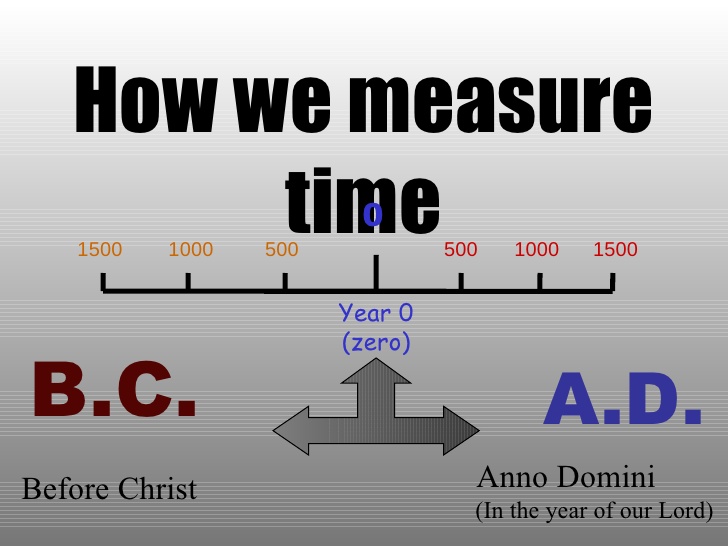
The year in which the Jesus character was born is also as uncertain. Says Mosheim, the ecclesiastical historian, "The year has not hitherto been fixed with certainty, notwithstanding the deep and laborious researches of the learned."

According to Irenæus (A. D. 190), on the authority of "The Gospel," and "all the elders who were conversant in Asia with John, the disciple of the Lord," Jesus lived to be nearly fifty years of age. If this celebrated Christian father is correct, and who can say he is not, Jesus was born some twenty years before the time which has been assigned as of his birth year.
 

The Rev. Dr. Giles says:

"Concerning the time of Christ's birth there are even greater doubts than about the place; for, though the four Evangelists have noticed several contemporary facts, which would seem to settle this point, yet on comparing these dates with the general history of the period, we meet with serious discrepancies, which involve the subject in the greatest uncertainty."

Again he says:

"Not only do we date our time from the exact year in which Christ is said to have been born, but our ecclesiastical calendar has determined with scrupulous minuteness the day and almost the hour at which every particular of Jesus' miraculous life is stated to have happened.  All this is implicitly believed by millions; yet all these things are among the most uncertain and shadowy that history has recorded. We have no clue to either the day or the time of year, or even the year itself, in which Christ was born."

Some Christian writers fix the year 4 B. C., as the time when Jesus was born, others the year 5 B. C., and again others place his time of birth at about 15 B. C. The Rev. Dr. Geikie, speaking of this, in his Life of Christ, says:

"The whole subject is very uncertain. Ewald appears to fix the date of the birth at five years earlier than our era. Petavius and Usher fix it on the 25th of December, five years before our era. Bengel on the 25th of December, four years before our era; Anger and Winer, four years before our era, in the Spring; Scaliger, three years before our era, in October; St. Jerome, three years before our era, on December 25th; Eusebius, two years before our era, on January 6th; and Idler, seven years before our era, in December."

Albert Barnes writes in a manner which implies that he knew all about the year (although he does not give any authorities), but knew nothing about the month. He says:

"The birth of Christ took place four years before the common era. That era began to be used about A. D. 526, being first employed by Dionysius, and is supposed to have been placed about four years too late. Some make the difference two, others three, four, five, and even eight years. He was born at the commencement of the last year of the reign of Herod, or at the close of the year preceding."

"The Jews sent out their flocks into the mountainous and desert regions during the summer months, and took them up in the latter part of October or the first of November, when the cold weather commenced. . . . It is clear from this that our Saviour was born before the 25th of December, or before what we call Christmas. At that time it is cold, and especially in the high and mountainous regions about Bethlehem. God has concealed the time of his birth. There is no way to ascertain it. By different learned men it has been fixed at each month in the year."

Canon Farrar writes with a little more caution, as follows:

"Although the date of Christ's birth cannot be fixed with absolute certainty, there is at least a large amount of evidence to render it probable that he was born four years before our present era. It is universally admitted that our received chronology, which is not older than Dionysius Exignus, in the sixth century, is wrong. But all attempts to discover the month and the day are useless. No data whatever exists to enable us to determine them with even approximate accuracy."

Bunsen attempts to show (on the authority of Irenæus, above quoted), that Jesus was born some fifteen years before the time assigned, and that he lived to be nearly, if not quite, fifty years of age.

According to Basnage, the Jews placed his birth near a century sooner than the generally assumed epoch. Others have placed it even in the third century B. C. This belief is founded on a passage in the "Book of Wisdom,"  written about 250 B. C., which is supposed to refer to Christ Jesus, and none other. In speaking of some individual who lived at that time, it says:

"He professeth to have the knowledge of God, and he calleth himself the child of the Lord. He was made to reprove our thoughts. He is grievous unto us even to behold; for his life is not like other men's, his ways are of another fashion. We are esteemed of him as counterfeits; he abstaineth from our ways as from filthiness; he pronounceth the end of the just to be blessed, and maketh his boast that God is his father. Let us see if his words be true; and let us prove what shall happen in the end of him. For if the just man be the son of God, he (God) will help him, and deliver him from the hand of his enemies. Let us examine him with despitefulness and torture, that we may know his meekness, and prove his patience. Let us condemn him with a shameful death; for by his own saying he shall be respected."

This is a very important passage. Of course, the church claim it to be a prophecy of what Christ Jesus was to do and suffer, but this does not explain it.

If the writer of the "Gospel according to Luke" is correct, Jesus was not born until about A. D. 10, for he explicitly tells us that this event did not happen until Cyrenius was governor of Syria.

Now it is well known that Cyrenius was not appointed to this office until long after the death of Herod (during whose reign the Matthew narrator informs us Jesus was born
), and that the taxing spoken of by the Luke narrator as having taken place at this time, did not take place until about ten years after the time at which, according to the Matthew narrator, Jesus was born.

Eusebius, the first ecclesiastical historian,  places his birth at the time Cyrenius was governor of Syria, and therefore at about A. D. 10. His words are as follows:

"It was the two and fortieth year after the reign of Augustus the Emperor, and the eight and twentieth year after the subduing of Egypt, and the death of Antonius and Cleopatra, when last of all the Ptolemies in Egypt ceased to bear rule, when our Saviour and Lord Jesus Christ, at the time of the first taxing—Cyrenius, then President of Syria—was born in Bethlehem, a city of Judea, according unto the prophecies in that behalf premised."

Had the Luke narrator known anything about Jewish history, he never would have made so gross a blunder as to place the taxing of Cyrenius in the days of Herod, and would have saved the immense amount of labor that it has taken in endeavoring to explain away the effects of his ignorance. One explanation of this mistake is, that there were two assessments, one about the time Jesus was born, and the other ten years after; but this has entirely failed. Dr. Hooykaas, speaking of this, says:

"The Evangelist (Luke) falls into the most extraordinary mistakes throughout. In the first place, history is silent as to a census of the whole (Roman) world ever having been made at all. In the next place, though Quirinius certainly did make such a register in Judea and Samaria, it did not extend to Galilee; so that Joseph's household was not affected by it. Besides, it did not take place until ten years after the death of Herod, when his son Archelaus was deposed by the emperor, and the districts of Judea and Samaria were thrown into a Roman province. Under the reign of Herod, nothing of the kind took place, nor was there any occasion for it. Finally, at the time of the birth of Jesus, the Governor of Syria was not Quirinius, but Quintus Sentius Saturninus."

The institution of the festival of the Nativity of Christ Jesus being held on the 25th of December, among the Christians, is attributed to Telesphorus, who flourished during the reign of Antonius Pius (A. D. 138-161), but the first certain traces of it are found about the time of the Emperor Commodus (A. D. 180-192).

For a long time the Christians had been trying to discover upon what particular day Jesus had possibly or probably come into the world; and conjectures and traditions that rested upon absolutely no foundation, led one to the 20th of May, another to the 19th or 20th of April, and a third to the 5th of January. At last the opinion of the community at Rome gained the upper hand, and the 25th of December was fixed upon. [362:4] It was not until the fifth century, however, that this day had been generally agreed upon.

How it happened that this day finally became fixed as the birthday of Christ Jesus, may be inferred from what we shall now see. On the first moment after midnight of the 24th of December (i. e., on the morning of the 25th), nearly all the nations of the earth, as if by common consent, celebrated the accouchement of the "Queen of Heaven," of the "Celestial Virgin" of the sphere, and the birth of the god Sol. In India this is a period of rejoicing everywhere.   It is a great religious festival, and the people decorate their houses with garlands, and make presents to friends and relatives. This custom is of very great antiquity.

In China, religious solemnities are celebrated at the time of the winter solstice, the last week in December, when all shops are shut up, and the courts are closed.

Buddha, the son of the Virgin Mâya, on whom, according to Chinese tradition, "the Holy Ghost" had descended, was said to have been born on Christmas day, December 25th.

Among the ancient Persians their most splendid ceremonials were in honor of their Lord and Saviour Mithras; they kept his birthday, with many rejoicings, on the 25th of December.

The author of the "Celtic Druids" says:

"It was the custom of the heathen, long before the birth of Christ, to celebrate the birth-day of their gods," and that, "the 25th of December was a great festival with the Persians, who, in very early times, celebrated the birth of their god Mithras."

The Rev. Joseph B. Gross, in his "Heathen Religion," also tells us that:

"The ancient Persians celebrated a festival in honor of Mithras on the first day succeeding the Winter Solstice, the object of which was to commemorate the Birth of Mithras."

Among the ancient Egyptians, for centuries before the time of Christ Jesus, the 25th of December was set aside as the birthday of their gods. M. Le Clerk De Septchenes speaks of it as follows:

"The ancient Egyptians fixed the pregnancy of Isis (the Queen of Heaven, and the Virgin Mother of the Saviour Horus), on the last days of March, and towards the end of December they placed the commemoration of her delivery."

Mr. Bonwick, in speaking of Horus, says:

"He is the great God-loved of Heaven. His birth was one of the greatest mysteries of the Egyptian religion. Pictures representing it appeared on the walls of temples. One passed through the holy Adytum to the still more sacred quarter of the temple known as the birthplace of Horus. He was presumably the child of Deity. At Christmas time, or that answering to our festival, his image was brought out of that sanctuary with peculiar ceremonies, as the image of the infant Bambino is still brought out and exhibited in Rome."

Rigord observes that the Egyptians not only worshiped a Virgin Mother

"prior to the birth of our Saviour, but exhibited the effigy of her son lying in the manger, in the manner the infant Jesus was afterwards laid in the cave at Bethlehem."

The "Chronicles of Alexandria," an ancient Christian work, says:

"Watch how Egypt has constructed the childbirth of a Virgin, and the birth of her son, who was exposed in a crib to the adoration of the
people."

Osiris, son of the "Holy Virgin," as they called Ceres, or Neith, his mother, was born on the 25th of December.

This was also the time celebrated by the ancient Greeks as being the birthday of Hercules. The author of "The Religion of the Ancient Greeks"
says:

"The night of the Winter Solstice, which the Greeks named the triple night, was that which they thought gave birth to Hercules."

He further says:

"It has become an epoch of singular importance in the eyes of the Christian, who has destined it to celebrate the birth of the Saviour, the true Sun of Justice, who alone came to dissipate the darkness of ignorance."

Bacchus, also, was born at early dawn on the 25th of December. Mr. Higgins says of him:

"The birth-place of Bacchus, called Sabizius or Sabaoth, was claimed by several places in Greece; but on Mount Zelmissus, in Thrace, his worship seems to have been chiefly celebrated. He was born of a virgin on the 25th of December, and was always called the Saviour. In his Mysteries, he was shown to the people, as an infant is by the Christians at this day, on Christmas-day morning, in Rome."

The birthday of Adonis was celebrated on the 25th of December. This celebration is spoken of by Tertullian, Jerome, and other Fathers of the Church, who inform us that the ceremonies took place in a cave, and that the cave in which they celebrated his mysteries in Bethlehem, was that in which Christ Jesus was born.

This was also a great holy day in ancient Rome. The Rev. Mr. Gross says:

"In Rome, before the time of Christ, a festival was observed on the 25th of December, under the name of 'Natalis Solis Invicti' (Birthday of Sol the Invincible). It was a day of universal rejoicings, illustrated by illuminations and public games."

"All public business was suspended, declarations of war and criminal executions were postponed, friends made presents to one another, and the slaves were indulged with great liberties."

A few weeks before the winter solstice, the Calabrian shepherds came into Rome to play on the pipes. Ovid alludes to this when he says: "Ante Deûm matrem cornu tibicen adunco Cum canit, exiguæ quis stipis aera neget."
—(Epist. i. l. ii.)
i. e.,

"When to the mighty mother pipes the swain, Grudge not a trifle for his pious strain."

This practice is kept up to the present day. The ancient Germans, for centuries before "the true Sun of Justice" was ever heard of, celebrated annually, at the time of the Winter solstice, what they called their Yule-feast. At this feast agreements were renewed, the gods were consulted as to the future, sacrifices were made to them, and the time was spent in jovial hospitality. Many features of this festival, such as burning the yule-log on Christmas-eve, still survive among us.

Yule was the old name for Christmas. In French it is called Noel, which is the Hebrew or Chaldee word Nule.

The greatest festival of the year celebrated among the ancient Scandinavians, was at the Winter solstice. They called the night upon which it was observed, the "Mother-night." This feast was named Jul—hence is derived the word Yule—and was celebrated in honor of Freyr (son of the Supreme God Odin, and the goddess Frigga), who was born on that day. Feasting, nocturnal assemblies, and all the demonstrations of a most dissolute joy, were then authorized by the general usage. At this festival the principal guests received presents—generally horses, swords, battle-axes, and gold rings—at their departure.

The festival of the 25th of December was celebrated by the ancient Druids, in Great Britain and Ireland, with great fires lighted on the tops of hills.

Godfrey Higgins says:

"Stuckley observes that the worship of Mithra was spread all over Gaul and Britain. The Druids kept this night as a great festival, and called the day following it Nolagh or Noel, or the day of regeneration, and celebrated it with great fires on the tops of their mountains, which they repeated on the day of the Epiphany or twelfth night. The Mithraic monuments, which are common in Britain, have been attributed to the Romans, but this festival proves that the Mithraic worship was there prior to their arrival."

This was also a time of rejoicing in Ancient Mexico. Acosta says:

"In the first month, which in Peru they call Rayme, and answering to our December, they made a solemn feast called Capacrayme (the Winter Solstice), wherein they made many sacrifices and ceremonies, which continued many days."

The evergreens, and particularly the mistletoe, which are used all over the Christian world at Christmas time, betray its heathen origin. Tertullian, a Father of the Church, who flourished about A. D. 200, writing to his brethren, affirms it to be "rank idolatry" to deck their doors

"with garlands or flowers, on festival days, according to the custom of the heathen."

This shows that the heathen in those days, did as the Christians do now. What have evergreens, and garlands, and Christmas trees, to do with Christianity? Simply nothing. It is the old Yule-feast which was held by all the northern nations, from time immemorial, handed down to, and observed at the present day. In the greenery with which Christians deck their houses and temples of worship, and in the Christmas-trees laden with gifts, we unquestionably see a relic of the symbols by which our heathen forefathers signified their faith in the powers of the returning sun to clothe the earth again with green, and hang new fruit on the trees. Foliage, such as the laurel, myrtle, ivy, or oak, and in general, all evergreens, were Dionysiac plants, that is, symbols of the generative power, signifying perpetuity of youth and vigor.

Among the causes, then, that co-operated in fixing this period— December 25th—as the birthday of Christ Jesus, was, as we have seen, that almost every ancient nation of the earth held a festival on this day in commemoration of the birth of their virgin-born god. On this account the Christians adopted it as the time of the birth of their God. Mr. Gibbon, speaking of this in his "Decline and Fall of the Roman Empire," says:

"The Roman Christians, ignorant of the real date of his (Christ's) birth, fixed the solemn festival to the 25th of December, the Brumalia, or Winter Solstice, when the Pagans annually celebrated the birth of Sol."

And Mr. King, in his "Gnostics and their Remains," says:

"The ancient festival held on the 25th of December in honor of the 'Birthday of the Invincible One,' and celebrated by the 'great games' at the circus, was afterwards transferred to the commemoration of the birth of Christ, the precise day of which many of the Fathers confess was then unknown."

St. Chrysostom, who flourished about A. D. 390, referring to this Pagan festival, says:

"On this day, also, the birth of Christ was lately fixed at Rome, in order that whilst the heathen were busy with their profane ceremonies, the Christians might perform their holy rites undisturbed."

Add to this the fact that St. Gregory, a Christian Father of the third century, was instrumental in, and commended by other Fathers for, changing Pagan festivals into Christian holidays, for the purpose, as they said, of drawing the heathen to the religion of Christ.

As Dr. Hooykaas remarks, the church was always anxious to meet the heathen half way, by allowing them to retain the feasts they were accustomed to, only giving them a Christian dress, or attaching a new or Christian signification to them.

In doing these, and many other such things,  the Christian Fathers, instead of drawing the heathen to their religion, drew themselves into Paganism.

Teaser Image
confucius

Confucius

Confucius

confucius


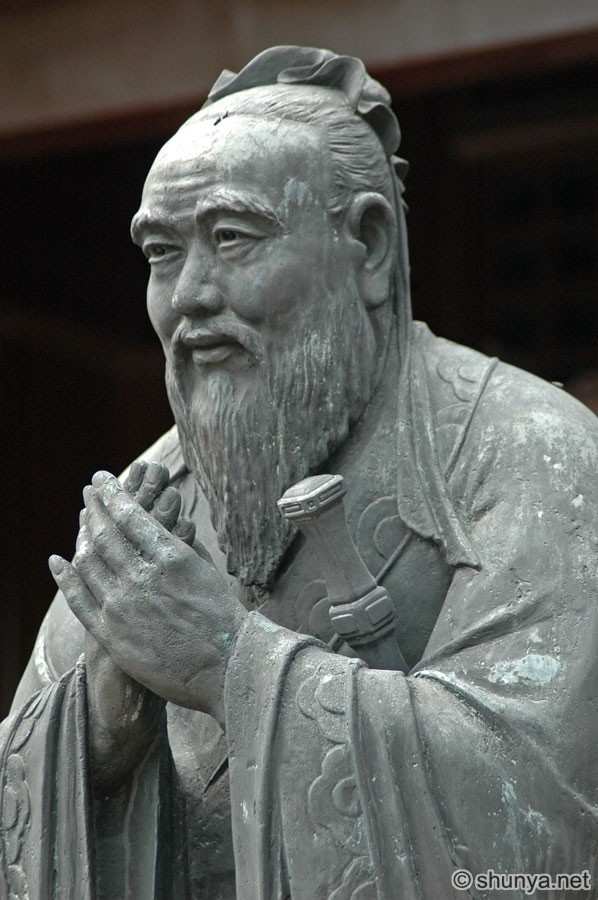
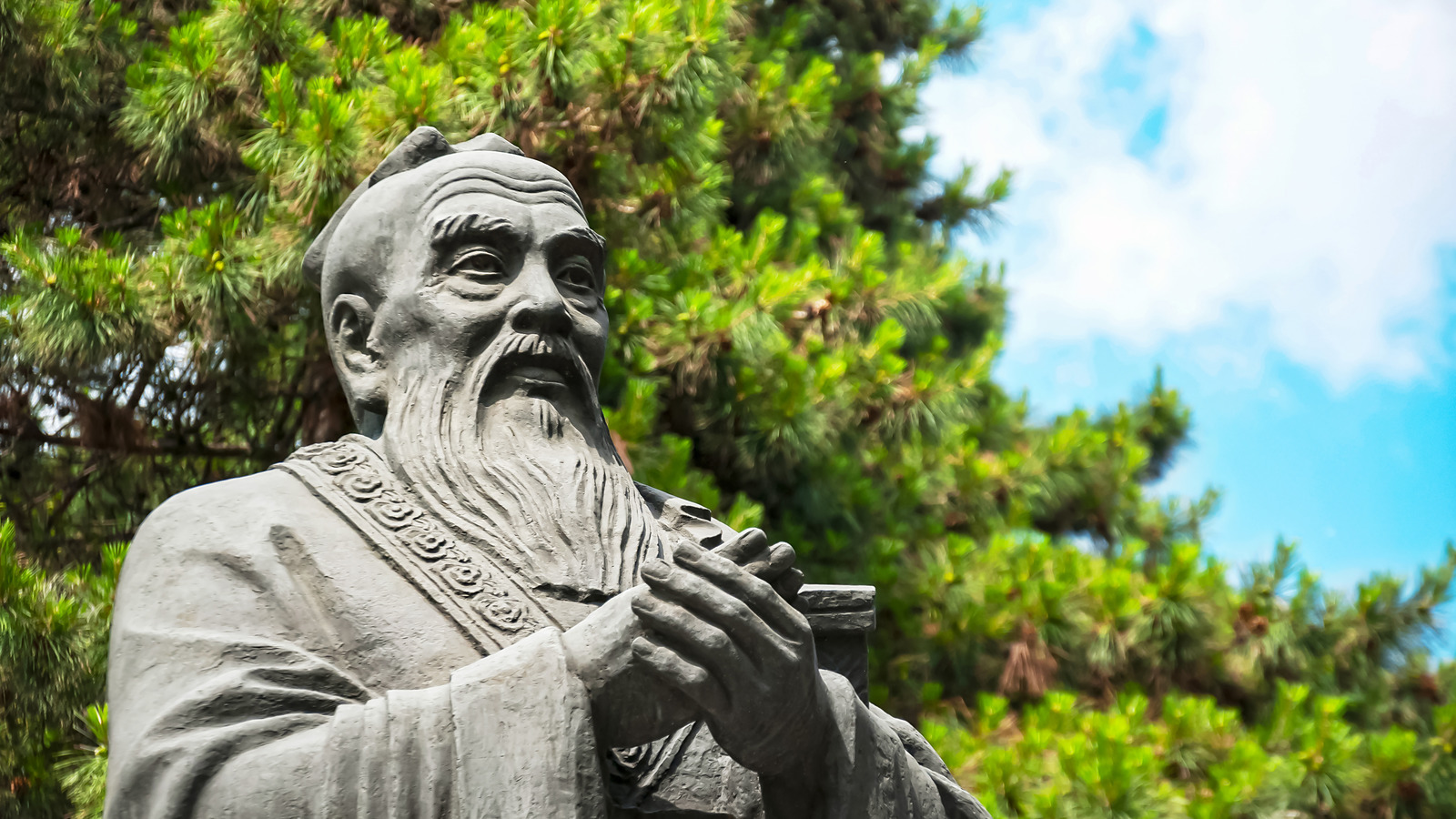
CONFUCIUS OF CHINA

BORN 551 B. C. E.


This moral teacher, religious chieftain, and philosopher,

though not subjected to the ignominious death of the cross, deserves a passing notice for the excellency of his morals and the acquisition of a world-wide fame.

In the following particulars his history bears a strong analogy to that of Jesus Christ.


1. He commenced as a religious teacher when about thirty years of age.

2. The Golden Rule was his favorite maxim.

3. Most of his moral maxims were sound and of a high order. The New American Cyclopedia says (vol. v. p. 6o4), “His writings approach the Christian standard of morality;” and in some respects they excel.

4. He traveled in different countries, preaching and teaching his doctrines.

5. He made a host of converts, amounting now to one hundred and fifty millions.

6. His religion and morals have been propagated by apostles and missionaries, some of whom are now traveling in this country, laboring to convert Christians. to their superior religion and morals. “There was a time,” says the work above quoted, “when European philosophers vied with each other in extolling Confucius as one of the sublimest teachers of truth among mankind.”


In the following respects his teachings were superior to those of Christ :

1. He taught that “the knowledge of one’s self is the basis of all real advances in morals and manners.” A lesson Christ neglected to teach.

2. “The duties man owes to society and himself are minutely defined by Confucius,” says the Cyclopedia.

Teaser Image
Jesus birth place

Jesus Birth Place

The Birth Place of Jesus

Jesus Birth Place

The writer of that portion of the Gospel according to Matthew which treats of the place in which Jesus was born, implies, as we stated in our last chapter, that he was born in a house. His words are these:
"Now when Jesus was born in Bethlehem of Judea in the days of Herod the king, behold, there came wise men from the east" to worship him. "And when they were come into the house, they saw the young child with Mary his mother."

The writer of the Luke version implies that he was born in a stable, as the following statement will show:

"The days being accomplished that she (Mary) should be delivered . . . she brought forth her first-born son, and wrapped him in swaddling clothes, and laid him in a manger, there being no room for him in the inn."

If these accounts were contained in these Gospels in the time of Eusebius, the first ecclesiastical historian, who flourished during the Council of Nice (A. D. 327), it is very strange that, in speaking of the birth of Jesus, he should have omitted even mentioning them, and should have given an altogether different version. He tells us that Jesus was neither born in a house, nor in a stable, but in a cave, and that at the time of Constantine a magnificent temple was erected on the spot, so that the Christians might worship in the place where their Saviour's feet had stood.

In the apocryphal Gospel called "Protevangelion," attributed to James, the brother of Jesus, we are informed that Mary and her husband, being away from their home in Nazareth, and when within three miles of Bethlehem, to which city they were going, Mary said to Joseph:

"Take me down from the ass, for that which is in me presses to come forth."

Joseph, replying, said:

"Whither shall I take thee, for the place is desert?"

Then said Mary again to Joseph:

"Take me down, for that which is within me mightily presses me."

Joseph then took her down from off the ass, and he found there a cave and put her into it.  Joseph then left Mary in the cave, and started toward Bethlehem for a midwife, whom he found and brought back with him. When they neared the spot a bright cloud overshadowed the cave.

"But on a sudden the cloud became a great light in the cave, so their eyes could not bear it. But the light gradually decreased, until the infant appeared and sucked the breast of his mother."

Tertullian (A. D. 200), Jerome (A. D. 375) and other Fathers of the Church, also state that Jesus was born in a cave, and that the heathen celebrated, in their day, the birth and Mysteries of their Lord and Saviour Adonis in this very cave near Bethlehem.

Canon Farrar says:

"That the actual place of Christ's birth was a cave, is a very ancient tradition, and this cave used to be shown as the scene of the event even so early as the time of Justin Martyr (A. D. 150)."

Mr. King says:

"The place yet shown as the scene of their (the Magi's) adoration at Bethlehem is a cave."

The Christian ceremonies in the Church of the Nativity at Bethlehem are celebrated to this day in a cave,  and are undoubtedly nearly the same as were celebrated, in the same place, in honor of Adonis, in the time of Tertullian and Jerome; and as are yet celebrated in Rome every Christmasday, very early in the morning.

We see, then, that there are three different accounts concerning the place in which Jesus was born. The first, and evidently true one, was that which is recorded by the Matthew narrator, namely, that he was born in a house. The stories about his being born in a stable or in a cave  were later inventions, caused from the desire to place him in as humble a position as possible in his infancy, and from the fact that the virgin-born Saviours who had preceded him had almost all been born in a position the most humiliating —such as a cave, a cow-shed, a sheep-fold, &c.—or had been placed there after birth. This was a part of the universal mythos. As illustrations we may mention the following:

Crishna, the Hindoo virgin-born Saviour, was born in a cave, fostered by an honest herdsman,  and, it is said, placed in a sheep-fold shortly after his birth.

How-Tseih, the Chinese "Son of Heaven," when an infant, was left unprotected by his mother, but the sheep and oxen protected him with loving care.

Abraham, the Father of Patriarchs, is said to have been born in a cave.

Bacchus, who was the son of God by the virgin Semele, is said to have been born in a cave, or placed in one shortly after his birth.

Philostratus, the Greek sophist and rhetorician, says, "the inhabitants of India had a tradition that Bacchus was born at Nisa, and was brought up in a cave on Mount Meros."

Æsculapius, who was the son of God by the virgin Coronis, was left exposed, when an infant, on a mountain, where he was found and cared for by a goatherd.

Romulus, who was the son of God by the virgin Rhea-Sylvia, was left exposed, when an infant, on the banks of the river Tiber, where he was found and cared for by a shepherd.

Adonis, the "Lord" and "Saviour," was placed in a cave shortly after his birth.

Apollo (Phoibos), son of the Almighty Zeus, was born in a cave at early dawn.

Mithras, the Persian Saviour, was born in a cave or grotto, at early dawn.

Hermes, the son of God by the mortal Maia, was born early in the morning, in a cave or grotto of the Kyllemian hill.

Attys, the god of the Phrygians,  was born in a cave or grotto.

The object is the same in all of these stories, however they may differ in detail, which is to place the heaven-born infant in the most humiliating position in infancy.
We have seen it is recorded that, at the time of the birth of Jesus "there was a great light in the cave, so that the eyes of Joseph and the midwife could not bear it." This feature is also represented in early Christian art. "Early Christian painters have represented the infant Jesus as welcoming three Kings of the East, and shining as brilliantly as if covered with phosphuretted oil."

In all pictures of the Nativity, the light is made to arise from the body of the infant, and the father and mother are often depicted with glories round their heads. This too was a part of the old mythos, as we shall now see. The moment Crishna was born, his mother became beautiful, and her form brilliant. The whole cave was splendidly illuminated, being filled with a heavenly light, and the countenances of his father and his mother emitted rays of glory.

So likewise, it is recorded that, at the time of the birth of Buddha, "the Saviour of the World," which, according to one account, took place in an inn, "a divine light diffused around his person," so that "the Blessed One" was "heralded into the world by a supernatural light."

When Bacchus was born, a bright light shone round him,  so that, "there was a brilliant light in the cave."

When Apollo was born, a halo of serene light encircled his cradle, the nymphs of heaven attended, and bathed him in pure water, and girded a broad golden band around his form.

When the Saviour Æsculapius was born, his countenance shone like the sun, and he was surrounded by a fiery ray.

In the life of Zoroaster the common mythos is apparent. He was born in innocence of an immaculate conception of a Ray of the Divine Reason. As soon as he was born, the glory arising from his body enlightened the whole room, and he laughed at his mother.

It is stated in the legends of the Hebrew Patriarchs that, at the birth of Moses, a bright light appeared and shone around.

There is still another feature which we must notice in these narratives, that is, the contradictory statements concerning the time when Jesus was born. As we shall treat of this subject more fully in the chapter on "The Birthday of Christ Jesus," we shall allude to it here simply as far as necessary.

The Matthew narrator informs us that Jesus was born in the days of Herod the King, and the Luke narrator says he was born when Cyrenius was Governor of Syria, or later. This is a very awkward and unfortunate statement, as Cyrenius was not Governor of Syria until some ten years after the time of Herod.

The cause of this dilemma is owing to the fact that the Luke narrator, after having interwoven into his story, of the birth of Jesus, the old myth of the tax or tribute, which is said to have taken place at the time of the birth of some previous virgin-born Saviours, looked among the records to see if a taxing had ever taken place in Judea, so that he might refer to it in support of his statement. He found the account of the taxing, referred to above, and without stopping to consider when this taxing took place, or whether or not it would conflict with the statement that Jesus was born in the days of Herod, he added to his narrative the words: "And this taxing was first made when
Cyrenius was governor of Syria."

We will now show the ancient myth of the taxing. According to the Vishnu Purana, when the infant Saviour Crishna was born, his foster father, Nanda, had come to the city to pay his tax or yearly tribute to the king. It distinctly speaks of Nanda, and other cowherds, "bringing tribute or tax to Kansa" the reigning monarch.

It also describes a scene which took place after the taxes had been paid. Vasudeva, an acquaintance of Nanda's, "went to the wagon of Nanda, and found Nanda there, rejoicing that a son (Crishna) had been born to him. "Vasudeva spoke to him kindly, and congratulated him on having a son in his old age.

"'Thy yearly tribute,' he added, 'has been paid to the king . . . why do you delay, now that your affairs are settled? Up, Nanda, quickly, and set off to your own pastures.' . . . Accordingly Nanda and the other cowherds returned to their village."

Now, in regard to Buddha, the same myth is found. Among the thirty-two signs which were to be fulfilled by the mother of the expected Messiah (Buddha), the fifth sign was recorded to be, "that she would be on a journey at the time of her child's birth." Therefore, "that it might be fulfilled which was spoken by the prophets," the virgin Maya, in the tenth month after her heavenly conception, was on a journey to her father, when lo, the birth of the Messiah took place under a tree. One account says that "she had alighted at an inn when Buddha was born."

The mother of Lao-tsze, the Virgin-born Chinese sage, was away from home when her child was born. She stopped to rest under a tree, and there, like the virgin Maya, gave birth to her son.

Pythagoras (B. C. 570), whose real father was the Holy Ghost, was also born at a time when his mother was away from home on a journey. She was travelling with her husband, who was about his mercantile concerns, from Samos to Sidon.

Apollo was born when his mother was away from home. The Ionian legend tells the simple tale that Leto, the mother of the unborn Apollo, could find no place to receive her in her hour of travail until she came to Delos. The child was born like Buddha and Lao-tsze—under a tree. The mother knew that he was destined to be a being of mighty power, ruling among the undying gods and mortal men.

Thus we see that the stories, one after another, relating to the birth and infancy of Jesus, are simply old myths, and are therefore not historical.
 

Teaser Image
alexander library

Alexandria Library

Alexandria Library

alexander library


Alexandria library

Alexandria library

The home of the world’s great conqueror Alexander the Great, in 331 BCE, was at one period of time the great focal center for religious speculation and propagandism, the great emporium for religious dogmas throughout the East, and a place of resort for the disciples of nearly every system of religious faith existing at that time.  Nearly all existing religions in the world today were transformed and remodeled in Alexandria.

This capital city of Egypt had five hundred thousand inhabitants which was a huge city for those times.  It had a very voluminous library.  Every faith and religious order had theological schools throughout the city.  It was the custom of the people to discuss religious ideas and to improve and remodel their religious systems and even change their long accepted creeds.

At the time of the Babylonian captivity the Essenian Jews fled to Egypt.  The Essenes were Jews that mixed their faith with the Pythagorean and Egyptian oriental theology, or Buddhism.  The doctrine of Pythagoras is intensely Buddhistic.  This is the beginnings of the Christian religion.  Their Jewish sect religion was totally changed by the intermixture of heathen doctrines.

The leading doctrines of the Essenes are the same that comprise the Christian doctrines of today exception the doctrine of divine incarnation.  The “God manifest in the flesh” was a doctrine well know from the Ganges to the Yellow Sea to the Ilissus.  It is the fundamental principle of the Indian Buddhists, the basis of Zoroasterism, and is pure Platonism.  This incarnation theology merged with the Essenes theology in Alexandria.  Christianity originated nothing.  It has no new doctrines or precepts.  It is incontrovertible that Christian theology grew out of Buddhism and Essenian theology.

Then Barnabas went to Tarsus to look for Saul, 26 and when he found him, he brought him to Antioch. So for a whole year Barnabas and Saul met with the church and taught great numbers of people. The disciples were called Christians first at Antioch.       Acts 11:25

The Essenian sect went out of history right around that time.  The Essenian sect must have changed their name to Christians.


Teaser Image
Jesus birth

Jesus Birth

Jesus' Birth

jesus birth

Uncertainty

1  THE “WORD OF GOD” IS UNCERTAIN AS TO WHAT YEAR JESUS WAS BORN.

A   4 B.C.E. or before.  

   (born during reign of King Herod who died 4 B.C.E.).  (Wikipedia: Herod the Great)

2 After Jesus was born in Bethlehem in Judea, during the time of King Herod,      Matthew 2:1

There was in the days of Herod, the king of Judaea, a certain priest named Zacharias, of the course of Abia: and his wife was of the daughters of Aaron, and her name was Elisabeth. ... After those days his wife Elisabeth conceived. ... And in the sixth month the angel Gabriel was sent from God unto a city of Galilee, named Nazareth, To a virgin espoused to a man whose name was Joseph, of the house of David; and the virgin's name was Mary. And the angel came in unto her, and said ... thou shalt conceive in thy womb, and bring forth a son, and shalt call his name JESUS.     Luke 1:5-31

B   After 6 C.E.  

   (year of the Roman Census – Antiquities 18:1:1,  Jewish Wars 7:8:1) Josephus  The Census of Quirinus occurred in 6 C.E.  according to Historian Josephus.

1 In those days Caesar Augustus issued a decree that a census should be taken of the entire Roman world.

2 (This was the first census that took place while Quirinius was governor of Syria.)    Luke 2:1-2

The Herod that is referred to here is Herod the Great, as is made clear in Luke 2:22, which refers to Herod’s son, Archalaus. Since Herod the Great died in 4 BCE, this dates Jesus’s birth to no later than that year. But the gospel of Luke (2:2) says that Cyrenius (Quirinius) was governor of Syria when Mary was pregnant with Jesus.  Quirinius was appointed governor in 6 CE.

We know then that Jesus was born sometime before 4 BCE and sometime after 6 CE – which makes his birth a truly miraculous event.

22 But when he heard that Archelaus was reigning in Judea in place of his father Herod, he was afraid to go there. Having been warned in a dream, he withdrew to the district of Galilee,     Luke 2:22

Quirinius (Cyrenius) became governer of Syria in 6 CE, nine years after king Herod's death.
(Wikipedia: Quirinius)

And it came to pass in those days, that there went out a decree from Caesar Augustus that all the world should be taxed. (And this taxing was first made when Cyrenius was governor of Syria.) ... Joseph also went up from Galilee, out of the city of Nazareth, in Judea ... To be taxed with Mary his espoused wife, being great with child. Luke 2:1-4

The Matthew narrator informs us that Jesus was born in the days of Herod the King, and the Luke narrator says he was born when Cyrenius was Governor of Syria, or later. This is an error in the "Word of God" as Cyrenius was not Governor of Syria until some ten years after the time of Herod

2  THE “WORD OF GOD” IS UNCERTAIN AS TO WHO AN ANGEL APPEARED TO WITH THE ANNOUNCEMENT OF THE BIRTH OF JESUS.

A   To shepherds in the flesh.

15 When the angels had left them and gone into heaven, the shepherds said to one another, “Let’s go to Bethlehem and see this thing that has happened, which the Lord has told us about.”     Luke 2:15

B   To Joseph in a dream.

13 When they had gone, an angel of the Lord appeared to Joseph in a dream. “Get up,” he said, “take the child and his mother and escape to Egypt. Stay there until I tell you, for Herod is going to search for the child to kill him.”     Matthew 2:13

3 THE “WORD OF GOD” IS UNCERTAIN AS TO JESUS BEING BORN IN A HOUSE OR IN A MANGER

Manger

7 And she brought forth her firstborn son, and wrapped him in swaddling clothes, and laid him in a manger; because there was no room for them in the inn.     Luke 2:7

16 So they hurried off and found Mary and Joseph, and the baby, who was lying in the manger.    Luke 2:16

House

11 And when they were come into the house, they saw the young child with Mary his mother, and fell down, and worshipped him: and when they had opened their treasures, they presented unto him gifts; gold, and frankincense and myrrh.     Matthew 2:11

Cave

Eusebius, the first ecclesiastical historian, who flourished during the Council of Nice (A. D. 327), it is very strange that, in speaking of the birth of Jesus, he should have omitted even mentioning them, and should have given an altogether different version. He tells us that Jesus was neither born in a house, nor in a stable, but in a cave, and that at the time of Constantine a magnificent temple was erected on the spot, so that the Christians might worship in the place where their Saviour's feet had stood.

In the apocryphal Gospel called "Protevangelion," attributed to James, the brother of Jesus, we are informed that Mary and her husband, being away from their home in Nazareth, and when within three miles of Bethlehem, to which city they were going, Mary said to Joseph: "Take me down from the ass, for that which is in me presses to come forth." Joseph, replying, said: "Whither shall I take thee, for the place is desert?"

."Then said Mary again to Joseph: "Take me down, for that which is within me mightily presses me." Joseph then took her down from off the ass, and he found there a cave and put her into it. Joseph then left Mary in the cave, and started toward Bethlehem for a midwife, whom he found and brought back with him. When they neared the spot a bright cloud overshadowed the cave.

"But on a sudden the cloud became a great light in the cave, so their eyes could not bear it. But the light gradually decreased, until the infant appeared and sucked the breast of his mother." 

Tertullian (A. D. 200), Jerome (A. D. 375) and other Fathers of the Church, also state that Jesus was born in a cave, and that the heathen celebrated, in their day, the birth and Mysteries of their Lord and Saviour Adonis in this very cave near Bethlehem.  

Canon Farrar says: "That the actual place of Christ's birth was a cave, is a very ancient tradition, and this cave used to be shown as the scene of the event even so early as the time of Justin Martyr (A. D. 150)   "The place yet shown as the scene of their (the Magi's) adoration at Bethlehem is a cave."

The Christian ceremonies in the Church of the Nativity at Bethlehem are celebrated to this day in a cave,

Celebrated, in the same cave is the honoring of Adonis, in the time of Tertullian and Jerome; and as are still celebrated in Rome every Christmasday, very early in the morning.

The virgin-born Saviours wheom preceded Jesus almost all been born in a place of the most humble possible —such as a cave, a cow-shed, a sheep-fold, &c.—or had been placed there after birth. This was a part of the universal mythos.

Crishna, the Hindoo virgin-born Saviour, was born in a cave

How-Tseih, the Chinese "Son of Heaven," when an infant, was left unprotected by his mother, but the sheep and oxen protected him.

Abraham, the Jewish Patriarch, is said to have been born in a cave.

Bacchus, who was the son of God by the virgin Semele, is said to have been born in a cave,  The inhabitants of India had a tradition that Bacchus was born at Nisa, and was brought up in a cave.

Æsculapius, who was the son of God by the virgin Coronis, was left exposed, when an infant, on a mountain.

Romulus, who was the son of God by the virgin Rhea-Sylvia, was left exposed, when an infant, on the banks of the river Tiber.

Adonis, the "Lord" and "Saviour," was placed in a cave shortly after his birth.

Apollo (Phoibos), son of the Almighty Zeus, was born in a cave at early dawn. [

Mithras, the Persian Saviour, was born in a cave or grotto.

Hermes, the son of God by the mortal Maia, was born early in the morning, in a cave or grotto.

Attys, the god of the Phrygians, was born in a cave or grotto.

Light

"There was a great light in the cave, so that the eyes of Joseph and the midwife could not bear it."  In all early Christian painters of the Nativity, the light is made to arise from the body of the infant, and the father and mother are often depicted with glories round their heads.

The moment Crishna was born, his mother became beautiful, and her form brilliant. The whole cave was splendidly illuminated, being filled with a heavenly light, and the countenances of his father and his mother emitted rays of glory

At the birth of Buddha, "the Saviour of the World," which, according to one account, took place in an inn, "a divine light diffused around his person,"  He was "heralded into the world by a supernatural light."

When Bacchus was born, a bright light shone round him, "there was a brilliant light in the cave."

When Apollo was born, a halo of serene light encircled his cradle,and girded a broad golden band around his form. 

When Saviour Æsculapius was born, his countenance shone like the sun, and he was surrounded by a fiery ray.

When Moses was born, a bright light appeared and shone around.

4  THE “WORD OF GOD” IS UNCERTAIN AS TO WHAT CITY MARY AND JOSEPH WERE LIVING BEFORE JESUS WAS BORN.

A   Nazareth.

26 In the sixth month of Elizabeth’s pregnancy, God sent the angel Gabriel to Nazareth, a town in Galilee, 27 to a virgin pledged to be married to a man named Joseph, a descendant of David.      Luke 1:26

4 So Joseph also went up from the town of Nazareth in Galilee to Judea, to Bethlehem the town of David, because he belonged to the house and line of David.     Luke 2:4

B  Bethlehem

2 Now when Jesus was born in Bethlehem of Judaea in the days of Herod the king, behold, there came wise men from the east to Jerusalem,     Matthew 2:1

16 Then Herod, when he saw that he was mocked of the wise men, was exceeding wroth, and sent forth, and slew all the children that were in Bethlehem, and in all the coasts thereof, from two years old and under, according to the time which he had diligently inquired of the wise men.    Matthew 2:16

anouncing Jesus birth


5  THE “WORD OF GOD” IS UNCERTAIN AS TO IF A ROMAN CENSUS AFFECTED JOSEPH AND MARY.

A   Yes. 

   Had to leave their home in Nazareth and go to Bethlehem.

2 (This was the first census that took place while Quirinius was governor of Syria.)

4 So Joseph also went up from the town of Nazareth in Galilee to Judea, to Bethlehem the town of David, because he belonged to the house and line of David.     Luke 2:2-4

B   No.  

   Already living in Bethlehem.  The wise men came to Bethlehem (the “star” led them).

2 Now when Jesus was born in Bethlehem of Judaea in the days of Herod the king, behold, there came wise men from the east to Jerusalem,      Matthew 2:1

Yet Matthew also says “he shall be a Nazarene.” Matthew 2:23.


56 THE “WORD OF GOD” IS UNCERTAIN AS TO HOW LONG MARY & JOSEPH LIVED IN BETHLEHEM.

A   Two years. 

   Herod gave orders to kill all boys in Bethlehem under the age of two because of what he had learned from the Magi.  They had to flee to Egypt.

16 When Herod realized that he had been outwitted by the Magi, he was furious, and he gave orders to kill all the boys in Bethlehem and its vicinity who were two years old and under, in accordance with the time he had learned from the Magi.     Matthew 2:16

B   Forty days. 

   Mary & Joseph were living in Nazareth and went to Bethlehem for the Roman census.

So when they had performed all things according to the law of the Lord, they returned to Galilee, their own city, Nazareth.   Luke 2:39

7  THE “WORD OF GOD” IS UNCERTAIN AS TO WHETHER MARY WAS REQUIRED TO TRAVEL TO JERUSALEM TO REGISTER FOR THE ROMAN CENSUS.

A   Yes.

4 So Joseph also went up from the town of Nazareth in Galilee to Judea, to Bethlehem the town of David, because he belonged to the house and line of David.

5 He went there to register with Mary, who was pledged to be married to him and was expecting a child.      Luke 2:4-5

B   No.

According to Roman Law. Joachem Heremias, Jerusalem in the Time of Jesus, pg 87

The deaf, insane, minors, neuters, hemaphrodites, women, slaves, the lame, the blind, the sick, the very old, and those who cannot walk up to the Temple Mount with their own feet, were exempt from the Roman census.


8  THE “WORD OF GOD” IS UNCERTAIN AS TO WHETHER JOSEPH WAS REQUIRED TO REGISTER FOR THE ROMAN CENSUS.

A   Yes.

1 In those days Caesar Augustus issued a decree that a census should be taken of the entire Roman world.

2 (This was the first census that took place while Quirinius was governor of Syria.) 3 And everyone went to their own town to register.     Luke 2:1-3

B   No.

According to Roman Law, the Roman census only applied to Roman provinces.  Nazareth was not in a Roman province.  It was a kingdom ruled by King Herod.  Further Roman censuses only applied to those who owned property.  Mary and Joseph had to stay in a manger.

BC AD timeline


9  THE “WORD OF GOD” IS UNCERTAIN AS TO JESUS WHETHER JESUS WENT TO EGYPT OR NOT.

A  Yes.

When he arose he took the young child and his mother by night and departed into Egypt, and was there until the death of Herod. . . .

But when Herod was dead, . . . he took the young child and his mother and came . . . and dwelt in a city called Nazareth. (Matt. 2:14, 15, 19, 21, 23.)

B  No.

And when the days of her purification, according to the law of Moses, were accomplished, they brought him to Jerusalem, to present him to the Lord. . . . And when they had performed all things, according to the law of the Lord they returned . . . to their own city, Nazareth. (Luke 2:22, 39.)

Teaser Image
alt

Holy Ghost

Holy Ghost

Holy Ghost

Holy Ghost’s Many Varied Characteristics

The Holy Ghost,  the third member of the tri-union God,  appears to be anything anyone wants it to be.

1. In John 14:26, the Holy Ghost is spoken of as a person or personal God.

2. In Luke 3:22, the Holy Ghost changes, and assumes the form of a dove.

3. In Matt. 8:16, the Holy Ghost becomes a spirit.

4. In John 1:32, the Holy Ghost is presented as an inanimate, senseless object.

5. In John 5:7, the Holy Ghost becomes a God – the third member of the Trinity.

6. In Acts 2:1, the Holy Ghost is averred to be “a mighty, rushing wind.”

7· In Acts 10:38, the Holy Ghost, we infer, from its mode of application, is an ointment.

8. In John 20:22, the Holy Ghost is the breath, as we legitimately infer ‘by its being breathed into the mouth of the recipient after the ancient oriental custom.

9. In Acts 2:3, we learn the Holy Ghost “sat upon each of them,” probably in the form of a bird, as at Jesus’ baptism.

10. In Acts 2:1, the Holy Ghost appears as “cloven tongues of fire.”

11. In Luke 2:26, the Holy Ghost is the author of a revelation or inspiration.

12. In ACts 8:17, the Holy Ghost is a magnetic aura imparted by the “laying on of hands.”

13. In Mark 1:8, the Holy Ghost is a medium or element for baptism.

14. In Acts 28:25, the Holy Ghost appears with vocal organs, and speaks.

15. In Heb. 6:4, the Holy Ghost is dealt out or imparted by measure.

16. In Luke 3:22, the Holy Ghost appears with a tangible body.

17. In Luke 1:5, and many other texts, we are taught people are filled with the Holy Ghost.

18. In Matt. 6:15, the Holy Ghost falls upon the people as a ponderable substance.

19. In Luke 4:1, the Holy Ghost is a God within a God -”Jesus being full of the Holy Ghost.” ‘

20. In Acts 21:1 I, the Holy Ghost is a being of the masculine or feminine gender-·’ Thus saith the Holy Ghost,” etc.

21. In John 1:32, the Holy Ghost is of the neuter gender – ”It (the Holy Ghost) abode upon him.”

22. In Matt. 1:18, the Holy Ghost becomes a vicarious agent in the procreation of another God, that is, this third member of the Trinity aids the first member (the Father) in the creation or generation of the second member of the triad of bachelor Gods-the Lord, or Savior, or Son of God.

The Ghost Teaches & Reminds

But the Counselor, the Holy Spirit, whom the Father will send in my name, will teach you all things and will remind you of everything I have said to you. (NIV)    John 14:26

The Ghost Testifies of Christ:

When the Counselor comes, whom I will send to you from the Father, the Spirit of truth who goes out from the Father, he will testify about me. (NIV)   John 15:26

The Ghost Convicts:

When he comes, he will convict the world of guilt [Or will expose the guilt of the world] in regard to sin and righteousness and judgment: (NIV)   John 16:8

The Ghost Leads:

Because those who are led by the Spirit of God are sons of God. (NIV)     Romans 8:14

The Ghost  Reveals Truth:

But when he, the Spirit of truth, comes, he will guide you into all truth. He will not speak on his own; he will speak only what he hears, and he will tell you what is yet to come. (NIV)    John 16:13

The Ghost  Strengthens and Encourages:

Then the church throughout Judea, Galilee and Samaria enjoyed a time of peace. It was strengthened; and encouraged by the Holy Spirit, it grew in numbers, living in the fear of the Lord. (NIV)    Acts 9:31

The Ghost Comforts:

And I will pray the Father, and he shall give you another Comforter, that he may abide with you for ever; (KJV)    John 14:16

The Ghost Helps Us in our Weakness:

In the same way, the Spirit helps us in our weakness. We do not know what we ought to pray for, but the Spirit himself intercedes for us with groans that words cannot express. (NIV)    Romans 8:26

The Ghost Intercedes:

In the same way, the Spirit helps us in our weakness. We do not know what we ought to pray for, but the Spirit himself intercedes for us with groans that words cannot express. (NIV)   Romans 8:26

The Ghost Searches the Deep Things of God:

The Spirit searches all things, even the deep things of God. For who among men knows the thoughts of a man except the man’s spirit within him? In the same way no one knows the thoughts of God except the Spirit of God. (NIV)   1 Corinthians 2:11

The Ghost Sanctifies:

To be a minister of Christ Jesus to the Gentiles with the priestly duty of proclaiming the gospel of God, so that the Gentiles might become an offering acceptable to God, sanctified by the Holy Spirit. (NIV)    Romans 15:16

The Ghost Bears Witness or Testifies:

The Spirit itself beareth witness with our spirit, that we are the children of God: (KJV)    Romans 8:16

The Ghost Forbids:

Paul and his companions traveled throughout the region of Phrygia and Galatia, having been kept by the Holy Spirit from preaching the word in the province of Asia. When they came to the border of Mysia, they tried to enter Bithynia, but the Spirit of Jesus would not allow them to. (NIV)    Acts 16:6-7

The Ghost Can be Lied to:

Then Peter said, “Ananias, how is it that Satan has so filled your heart that you have lied to the Holy Spirit and have kept for yourself some of the money you received for the land? (NIV)    Acts 5:3

The Ghost Can be Resisted:

“You stiff-necked people, with uncircumcised hearts and ears! You are just like your fathers: You always resist the Holy Spirit!” (NIV)    Acts 7:51

The Ghost Can be Blasphemed:

And so I tell you, every sin and blasphemy will be forgiven men, but the blasphemy against the Spirit will not be forgiven. Anyone who speaks a word against the Son of Man will be forgiven, but anyone who speaks against the Holy Spirit will not be forgiven, either in this age or in the age to come. (NIV)   Matthew 12:31-32

The Ghost Can be Quenched:

1 Thessalonians 5:19

The Holy Spirit has a Mind:

And he who searches our hearts knows the mind of the Spirit, because the Spirit intercedes for the saints in accordance with God’s will. (NIV)   Romans 8:27

The Holy Spirit has a Will:

But one and the same Spirit works all these things, distributing to each one individually just as He wills. (NASB)   1 Corinthians 12:11

The Holy Spirit has Emotions:

The Holy Spirit grieves:

Yet they rebelled and grieved his Holy Spirit. So he turned and became their enemy and he himself fought against them. (NIV)   Isaiah 63:10

The Holy Ghost gives Joy:

At that time Jesus, full of joy through the Holy Spirit, said, “I praise you, Father, Lord of heaven and earth, because you have hidden these things from the wise and learned, and revealed them to little children. Yes, Father, for this was your good pleasure.” (NIV)    Luke 10: 21


You became imitators of us and of the Lord; in spite of severe suffering, you welcomed the message with the joy given by the Holy Spirit.    1 Thessalonians 1:6

Holt GhostHoly Ghost Smoke

The Dove

1. The Holy Ghost in the shape of a bird, a dove or a pigeon. This is proven to be a very ancient pagan tradition, as it is found incorporated in several of the oriental religious systems. In ancient India, whose prolific spiritual fancies constitute the primary parentage of nearly all the doctrines, dogmas and superstitions found incorporated in the Christian Scriptures, a dove was uniformly the emblem of the Holy Spirit, or Spirit of God. Confirmatory of this statement, we find the declaration in the Anacalypsis, that a “dove stood for or represented a third member of the Trinity, and was the regenerator or regeneratory power.”

This meets the Christian idea of “ regeneration and renewing of the Holy Ghost” (Titus 3:5).  A person being baptized under the Brahminical theocracy was said to be regenerated and “born again,” or, as the above-quoted writer expresses it, “They were born into the spirit, or the spirit into them” — that is, the “dove into or upon them,” as is the case of the Christian’s “Holy Ghost descending in bodily shape like a dove,” and alighting on Christ’s head at baptism, as related in Luke 3:22.  In ancient Rome a dove or pigeon was the emblem of the female procreative energy, and frequently a legendary spirit, the accompaniment of Venus.  And hence, as a writer remarks, “It is very appropriately represented as descending at baptism in the character of the third member of the Trinity.”  The same writer tells us, “The dove fills the Grecian oracles with their spirit and power.”  We find the dove, also, in the romantic eclogues of ancient Syria.  In the time-chiseled Syrian temple of Hierapolis, Semiramis is represented with a dove on her head, thus constituting the prototype of the dove on the head of the Christian Savior at baptism.

And a dove was in more than one of the ancient religious systems- “ The Spirit of God (Holy Ghost) moving on the face of the waters” at creation, as implied in Gen. 1:2, though a pigeon, was often indiscriminately substituted.  In Howe’s “Ancient Mysteries” it is related that “in St. Paul’s Cathedral, at the feast of Whitesuntide, the descent of the Holy Ghost was performed by a white pigeon being let fly out of a hole in the midst of the roof of the great aisle.”  The dove and the pigeon, being but slight variations of the same species of the feathered tribe, were used indiscriminately.

holy spirit dove

Dove

Among birds the dove was specially sacred to her [Ishtar (ISTAR): Mesopotamian. "Goddess of fertility and war. " Known period of worship = 2500 B.C.E.  to  200 C.E.


 It is figured with her on seals.

The Third Person

2. The Holy Ghost was the third member of the Trinity in several of the oriental systems.  Father, Son and Holy Ghost, or Father, Word and Holy Ghost (1 John 5:7), are familiar Christian terms to express the divine triad, which shows the Holy Ghost to be the acknowledged third member of the Christian Trinity.

And, as already suggested, the same is· true of the more ancient systems.  “The Holy Spirit and the Evil Spirit were, each in their turn (says Mr. Higgins), third member of the Trinity.”  In these triads (says Mr. Hillell) the third member was not of equal rank with the other two.”  And hence, in the Theban Trinity, Khonso was inferior to Arion and Mant.  In the Hindoo triad, Siva was subordinate to Brahma and Vishnu.  And a score of similar examples might be adduced from the fancy-constructed trinities of other and older oriental religious systems (but for the inflexible rule of brevity which forbids their presentation here), with all of which the more modern Holy Ghost conception of the Christian world is an exact correspondence, as this imaginary, fabulous being is less conspicuous than and has always stood third in rank with the Father and second to the Son, AKA as the Word, and is now seldom addressed in practical Christian devotion ; and thus the analogy is complete. Mr. Maurice says, “This notion of a third person in the Deity (the Holy Ghost) was diffused among all the nations of the earth.” See Ind. Antiq. vol. iv. p. 750.) And Mr. Worseley, in his “Voyage” (vol. i. p. 259), avers this doctrine to be “of very great antiquity, and generally received by all the Gothic and Celtic nations.”

The Holy Breath

3· The Holy Ghost was the Holy Breath which, in· the Hindoo traditions, moved on the face of the waters at creation, and imparted life and vitality into everything created. A similar conception is recognized in .the Christian Scriptures. In Psalms 33:6, we read, “By the Word of the Lord were the heavens made, and all the host of them by the breath of his mouth.” Here is the Brahminical conception of the act of creation by the Divine Breath, which is the Holy Ghost, the same, also, which was breathed into Adam, by which be became “a living soul.”  M. Dubois observes,  The Prana, or principle of life, of the Hindoos is the breath of life by which “the Creator (Brahma) animates the clay, and man became a living soul.” (Page 293.)

The Holy Wind

4· Holy Ghost, Holy Breath and Holy Wind appear to have been synonymous and convertible terms for the living vocal emanations from the mouth of the Supreme God, as memorialized in’ several of the pagan traditions. The last term (Holy Wind) is suggested by” the mighty rushing wind from heaven” which filled the house, or church, on the day of Pentecost (See Acts 2:2).  Several of the old religious systems recognize “ the Holy Wind “ as a term for the Holy Ghost. The doxology (reported by a missionary) in the religious service of the Syrian worship runs thus:

“ Praise to the Holy Spiritual Wind, which is the Holy Ghost; Praise to the three persons which are one true God.”

Some writers maintain that the Hebrew Ruah Elohim translated “Spirit of God” (Gen. 1:2) in our version, should read, “Wind of the Gods.” And we find that the word pneuma, of our Greek New Testament, is sometimes translated “Ghost “ and sometimes “Wind,” as best suited the fancy of the translators. In John 3:5, we find the word Spirit, and . in verse eight both Wind and Spirit are found; and in Luke 1:35, we observe the term Holy Ghost -all translated from the same word.  Let it be specially noted that in the Greek Testament the word pneuma is used in all these cases, thus proving that Spirit, Holy Ghost and Wind are used in the Christian Scriptures as synonymous terms; and proving, also, that an unwarranted license has been assumed by translators in rendering the same word three different ways.  M. Auvaroff, in his “Essays on the Eleusinian Mysteries,” speaks of “the torch being ignited at the command of Hermes of Egypt, the spiritual agent in the workshop of creation; ”relative to which statement a writer remarks, cc Hermes appears in this instance as a personification of Wind or Spirit, as in the bible (meaning the Christian bible), God, Wind and Spirit are often interchangeable terms, and the Word appears to be from the same windy source.”

The Holy Tongue

5· The Holy Ghost as “a tongue of fire, which sat upon each of them” (the apostles)(See Acts. 2:3).  Even this conception is an orientalism. Mr. Higgins tells us that” Budha, an incarnate God of the Hindoos (three thousand years ago), is often seen with a glory or tongue of fire upon his head.” And the tradition of the visible manifestation of the Holy Ghost by fire was prevalent among the ancient Budhisls, Celts, Druids and Etrurians. In fact, as our author truly remarks, “The Holy Ghost, or Holy Spirit, when visible, was always in the form of fire (or a bird), and was always accompanied with wisdom and power.”

Hence, is disclosed the origin of the ancient custom amongst the Hindoos, Persians and Chaldeans of making offerings to the solar fire, emblem of the Holy Ghost or Holy Spirit.

The Holy Inspiration

6. Inspiration by the Holy Ghost. (Luke 2:26.) “Holy men of God,” including some of the prophets, are claimed to have been inspired by the Holy Ghost. (See 2 Peter 1:21; Acts 28:25). In like manner, as we are informed by Mr. Cleland in his “Specimens” the ancient Celts were not only “moved by the Holy Ghost” in their divine decrees and prophetic utterances, but they claimed that their Salic laws (seventy-two in number) were inspired by the ”Salo Ghost” (Holy Ghost), known also as “the Wisdom of the Spirit, or the Voice of the Spirit.”

This author several times alludes to the fact, and exhibits the proof, that the doctrine of the Holy Ghost was known to this ancient people.

The Laying on of Hands

7. The Holy Ghost imparted by “the laying on of hands.’’  This, too, is an ancient oriental custom. “And by the imposition of hands’ on the head of the candidate,” says Mr. Cleland, speaking of the Celts, “the Holy Ghost, or Holy Spirit, was conveyed.” And thus was the Holy Spirit, Ghost, Gas, Wind, Electrical Fire or Spirit of Authority imparted to the hierophant or gospel novitiate. “ And their public assemblies,” continues our author, “were always opened by an invocation to the Holy Ghost.”

The Ghost Baptism

8. Baptism by or into the Holy Ghost accompanied with fire (Matt. 3:11).  This rite, too, is traceable to a very ancient period, and was practiced by several of the old symbolical and mythological systems. The Tuscans, or Etrurians, baptized with fire, wind (ghost) and water. Baptism into the first member of the Trinity (the Father) was with fire; baptism into the second member of the Trinity (the Word) was with water; while baptism into the third member of the Trinity (the Holy Ghost, or Holy Spirit) consisted of the initiatory spiritual or symbolical application of gas, gust, ghost, wind, or spirit. It appears from “ Herbert’s Travels,” that, in “ancient countries, the child was taken to the priest, who named him (christened him) before the sacred fire:” after which ceremony he was sprinkled with “holy water” from a vessel made of the Sacred tree known as ”The Holme.’’

The Breathing

9. The Holy Ghost imparted by breathing (John 20:22).  “Sometimes,” says scholar writer Mr. Higgins, relative to this custom among the ancient heathen, “the priest blew his breath upon the child, which was then considered baptized by air, spiritus sanctus, or holy ghost -i.e., baptism by the Holy Ghost!’

In case of baptism, a portion of the Holy Ghost was supposed to be transferred from the priest to the candidate. “The practice of breathing in or upon,” says Higgins, “was quite common among the ancient heathen.”

The Holy Conception

10. The Holy Ghost as the agent in divine conception, or  the procreation of other Gods.  Jesus is said to have been conceived by the Holy Ghost (see Matt. 1:18); and we find similar claims instituted still more anciently for other incarnate demigods.  In the Mexican Trinity, Y, Zona was the father, Bacal the Word, and Echvah the Holy Ghost, by the last of whom Chimalman conceived and brought forth the in the flesh God Quexalcote. (Mex. Ant., vol. vi. pg 165o.)  In the Hindoo mythos, Sakia was conceived by the Holy Ghost Nara-an.

When was the “Holy Spirit” bestowed???

THE HOLY SPIRIT (GOD):

FIRST APPEARANCE AFTER RESURRECTION

God said in his word – Jesus gave the Holy Spirit (Holy Spirit-God) to the disciples in his first appearance to them after the resurrection

 And with that he breathed on them and said, “Receive the Holy Spirit.     John 20:22

AFTER JESUS LEFT

God said – It did not come to them until after Jesus left

By this he meant the Spirit, whom those who believed in him were later to receive. Up to that time the Spirit had not been given, since Jesus had not yet been glorified.     John 7:39

But very truly I tell you, it is for your good that I am going away. Unless I go away, the Advocate will not come to you; but if I go, I will send him to you.     John 16:7

After his suffering, he presented himself to them and gave many convincing proofs that he was alive. He appeared to them over a period of forty days and spoke about the kingdom of God. 4 On one occasion, while he was eating with them, he gave them this command: “Do not leave Jerusalem, but wait for the gift my Father promised, which you have heard me speak about. 5 For John baptized with water, but in a few days you will be baptized with the Holy Spirit.”     Acts 1:3-5

When the day of Pentecost came, they were all together in one place.2 Suddenly a sound like the blowing of a violent wind came from heaven and filled the whole house where they were sitting. 3 They saw what seemed to be tongues of fire that separated and came to rest on each of them. 4 All of them were filled with the Holy Spirit and began to speak in other tongues as the Spirit enabled them.     Acts 2:1-4

BEFORE

God said – But some had it before:

John the Baptist

for he will be great in the sight of the Lord. He is never to take wine or other fermented drink, and he will be filled with the Holy Spirit even before he is born.     Luke 1:15

David

For David himself said by the Holy Ghost, The LORD said to my Lord, Sit thou on my right hand, till I make thine enemies thy footstool.     Mark 12:36

… which the Holy Ghost by the mouth of David spake….      Acts 1:16

Elizabeth

When Elizabeth heard Mary’s greeting, the baby leaped in her womb, and Elizabeth was filled with the Holy Spirit.    Luke 1:41

Zechariah

His father Zechariah was filled with the Holy Spirit and prophesied:    Luke 1:67

Simeon

Now there was a man in Jerusalem called Simeon, who was righteous and devout. He was waiting for the consolation of Israel, and the Holy Spirit was on him.     Luke 2:25

Gideon

Then the Spirit of the Lord came on Gideon, and he blew a trumpet,summoning the Abiezrites to follow him.    Judg 6:34

Samson

and the Spirit of the Lord began to stir him while he was in Mahaneh Dan, between Zorah and

Eshtaol

     Judg 13:25

Isaiah

The Spirit of the Sovereign Lord is on me,
because the Lord has anointed me
to proclaim good news to the poor.
He has sent me to bind up the brokenhearted,
to proclaim freedom for the captives
and release from darkness for the prisoners       Isa 61:1

HOW DO YOU ACQUIRE THE HOLY SPIRIT?

WHENEVER YOU ASK IT

God said – It is had for the asking at any time

If you then, though you are evil, know how to give good gifts to your children, how much more will your Father in heaven give the Holy Spirit to those who ask him!”    Luke 11:13

Jesus PrayingJesus-God praying to the Holy Ghost-God

EVERYONE HAS IT

God said – All flesh has it
Repent at my rebuke!
Then I will pour out my thoughts to you,
I will make known to you my teachings.    Prov 1:23

“And afterward,
I will pour out my Spirit on all people.
Your sons and daughters will prophesy,
your old men will dream dreams,
your young men will see visions.Joel 2:28

Unpardonable Sin

28  “I promise you that any of the sinful things you say or do can be forgiven, no matter how terrible those things are.

29  But if you speak against the Holy Spirit, you can never be forgiven. That sin will be held against you forever.”    Mark 3:28-29

“And I tell you, every sin and blasphemy will be forgiven men, but the blasphemy against the Spirit will not be forgiven. Anyone who speaks a word against the Son of Man will be forgiven, but anyone who speaks against the Holy Spirit will not be forgiven, either in this age or in the age to come.”   Matthew 12:31-32.

But then this?

Through him everyone who believes is justified from everything . . .    Acts 13:39

Just speaking “against the Holy Spirit” and your sin will be held against you “forever.”    Seems lacking as to what act constitutes the ultimate sin.  This edict is very vague yet has such a grave and condemned punishment of being unforgiveable.  The Holy Ghost is associated with baptism and a renewal of the person.  To sin against this God is to have no way available to retry.  With the first God the Father and the Second God the Son there is forgiveness available to try again.  But with the third God there is no avenue of forgiveness.  The Holy Ghost is the scaffold that reaches to heaven.  So even if the first and second Gods forgave you and even if you were baptized, because you committed the unpardonable sin the third God would be against you blocking your way to heaven.

I’m sure there are countless Christians who have agonized about this unforgivable sin because it is undefined and unexplained.  This is the ultimate fear tactic to gain control of the followers mind through their vivid imagination of what bad thing will happen to them at their death.