


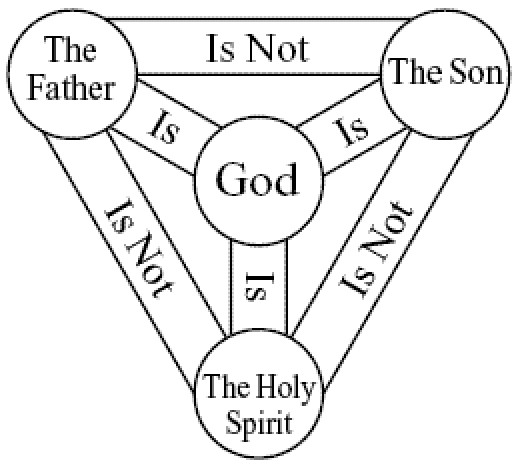
Trinity
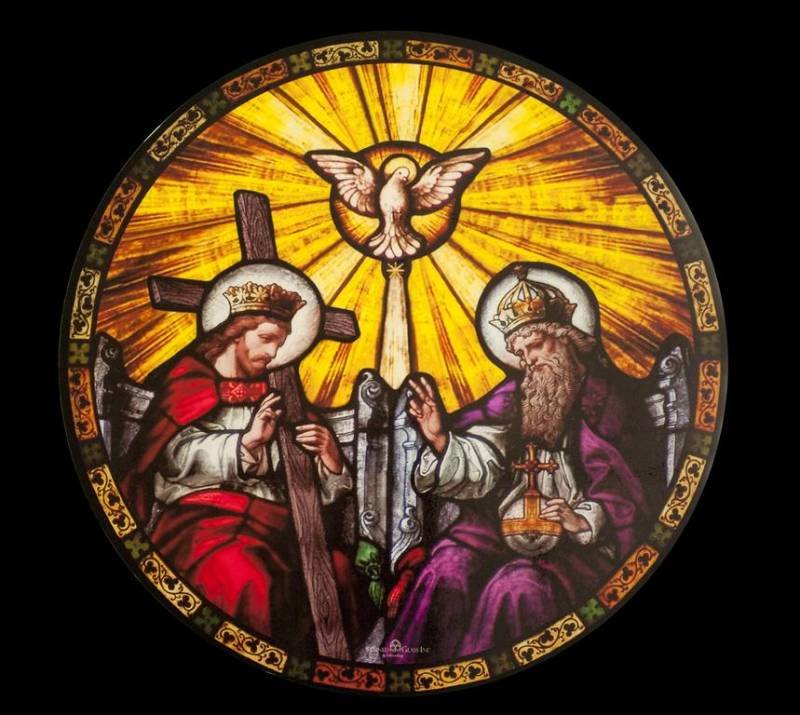
THREE GODS IN ONE GOD
Double speak???
The Trinity belief is found all over the world. With the Hindus it is Brahma, Vishnu, and Siva. In Scandinavia it is Odin, Frigga, Thor. In Roman mythology it is Jupiter, Juno, and Minerva. In Greece it was Agathon, Logos, and Psyche. In Egypt it is Isis, Osiris, and Horus. And …. In Christianity it is God the Father, the Holy Spirit, and Jesus.

CHRISTIAN IDOL WORSHIPING
Man’s desire for idol worship is so strong.
The first and second holy temples were destroyed because of idol worshiping. The main effects from idol worshiping is becoming gullible, egotistical, and violent. Yes there is a reason for the commandment.
The Lord our God is one Lord. Deut. 6:4
THREE GODS IN ONE GOD
There are many Jewish texts that state the highest spiritual level attainable by man is called “Ruah HaKodesh.” This is literally translated word for word as “spirit the holy.” This is a state where one reaches the sefirah keter, the mental state of God consciousness. The Buddhists refer to this state as enlightenment. But when one attains this level, one does not become God.
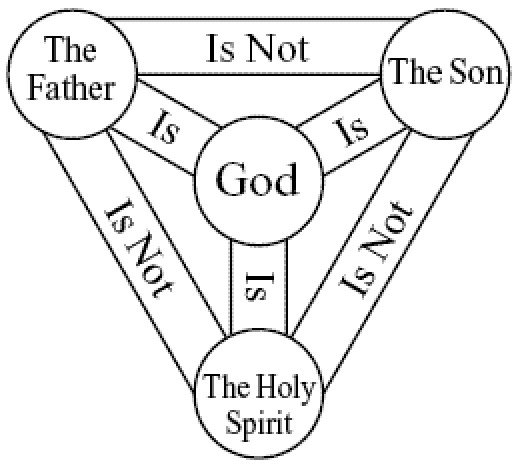
The Christian’s have mistakenly labeled “holy gost” or “holy spirit” as a PERSON ??? …. Is it any wonder that the Jews, who have known for thousand of years what “Ruah HaKodesh” means, think that the Christians have vivid imaginations and no understanding. And this “person” is one of the “three persons in one God.” What does that mean??? The universal answer given by Catholics, Protestants, and Born Again Christians alike is, “It is a Mystery”. They give this answer because they want to pose it as a fact, and also because they have absolutely no explaination what so ever for the ridiculous concept.
Does this mean the Christians believe in multiple gods??? Would a reasonable person think that a person believing this concept is just being gullible??? Also keep in mind that the anointed Kings of Israel during the Temple days held the royal title of “Son of God.” That was a mere honorary title and no King ever believed he was God.
JESUS WAS ELECTED GOD
In 325 C.E. in a vote 218 to 2, Jesus was elected God (at Nicea).
In those days there was an Egyptian Priest named Arius who led a movement that didn’t believe that Jesus was a co-equal with God. He had a large following called Arians. Then there were the Greek Christians led by Athanasuis who taught that Jesus was a God. These two groups had competed for centuries as to what was the true status of Jesus.
In 325 C.E. Emperor Constantine decided to make Christianity the State religion to stop the waring between religious factions in his empire. Constantine favored Jesus being a deity since the man-deities of Mithras and Dionysus were popular among the people. Constantine formed a council at a Church in Nicea, Turkey, to establish the status of Jesus. He excluded bishops from the Arians and conducted a vote to determine if Jesus was a co-equal to God. The vote was 218 in favor with 2 dissenting votes. From then on Jesus was a co-equal with God. Jesus was then a two persons in one God — a “di-inity” –
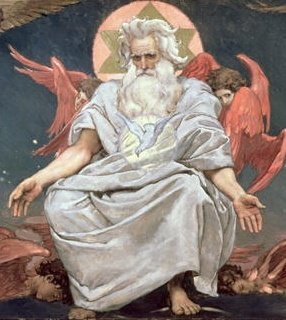
God the Father
WHAT ABOUT THE TRINITY? WHAT ABOUT THE “HOLY GHOST?” WHAT ABOUT THAT GOD PERSON?
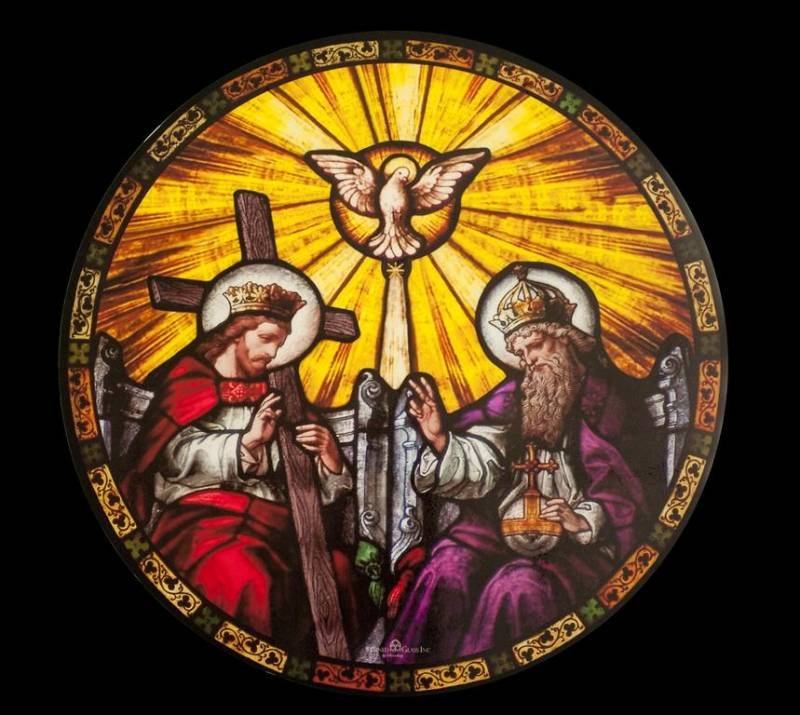
Well the Holy Ghost wasn’t a God until he was added 56 years later. In 381 C.E., at the Council of Constantinople, it was declared there were not just two persons in one God, but that there was three persons in one God. This is the first time Christians doctrine established that there was a “trinity” as God. I guess two Gods weren’t enough.
There are three that bear record in heaven, the Father, the Word, and the Holy Ghost, and these three are one. John 5:7
With this word of God verse, why was there any voting???
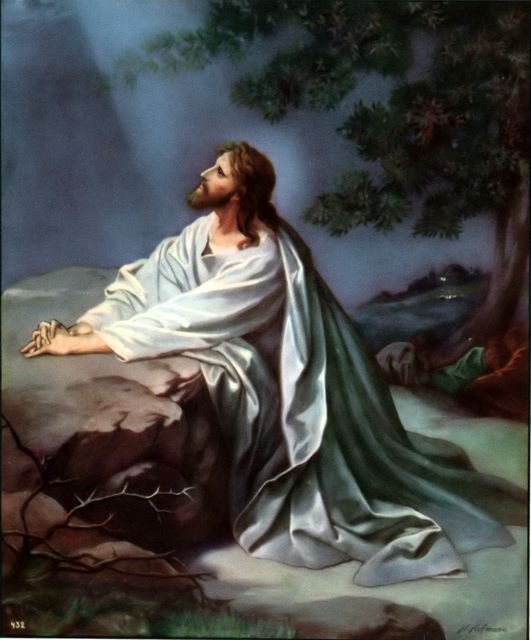
ONE GOD PRAYS TO THE OTHER GOD
In fact before Jesus was taken away by the “sinners” he wanted his disciples to pray WITH him, NOT to him as a God. And at this praying in the garden of Gethsemane, Jesus, as one of the three Gods, was praying to the other God, God the Father or God the Holy Ghost. Or, was he praying to both of them???
Then Jesus went with his disciples to a place called Gethsemane, and he said to them, “Sit here while I go over there and pray.” … Matthew 26:36 to 46
Does this mean that one God asks the other Gods for help???
REVERSING NAMES OF GODS
According to the Trinity doctrine all three persons are co-equal and possess the co-essential oneness of all the other God-persons. What is true of one is true of the other. How does the scriptures sound if we switch the names of the Father and Jesus, the Son?
My son is greater than I John 7:28
God can do nothing of himself. John 5:19
I must be about my Son’s business. Luke 2:49
The kingdom of heaven is not mine to give, but the Son’s. Matthew 2:23
I am come in my Son’s name, and ye receive me not. John v 43
God cried, Jesus, why hast thou forsaken me? Matthew 8:28
No man hath seen Jesus at any time. John 1:5
Jesus created all things by his son. Eph 3:9
God sat down (in heaven) at the right hand of Jesus. Luke 22:69
There is one Jesus, on mediator between Jesus and men. Gal 3:20
Jesus gave his only begotten Father. 1 John4:9
God knows not the hour, but Jesus does. Mark 8:32
God is the servant of Jesus. Mark 7:18
God is ordained by Jesus. Acts 27:31
The head of God is Christ. Eph 1:3
We have an advocate with Jesus, God the righteous. 1 John2:1
Jesus gave all power to God. Matthew 28:18
God abode all might in prayer to Jesus. Luke 6:12
God came down from heaven to do the will of Jesus. John 6:38
Jesus has made the Father his high priest. Heb 10:24
Last of all, the Son sent the Father. Matthew 21:39
Jesus will save the world by that God whom he hath ordained.
Jesus is God of the Father. John 20:17
Jesus hath exalted God, and given him a more excellent name. Phil 2:9
Jesus hath made God a little lower than the angels. Heb 2:9
God can do nothing except what he seeth Jesus do. John 5:19
CAN BE ANYTHING
There are ever-shifting qualities as presented in the Scriptures of the Holy Ghost surpassing the more ancient pagan Gods of the past.
The Holy Ghost is a personal and rational being, a dove, a spirit, an inanimate object, a God, the wind or a wind, an ointment, the breath or a breath, cloven tongue of fire, a bird, or some other flying recumbent animal, a revelator or divine messenger, a medium or element for baptism, an intelligent, speaking being, a lifeless, bodiless, sexless being, a measurable fluid substance, a being possessing a body, ponderable, unconscious substance, a God dwelling within a God, and, finally — the production of the incarnation of the second person God of the Trinity, Jesus Christ.
Many of these fabulous illusions were drawn from prior pagan mythological sources.
THE PAGAN TRINITY
The trifold nature and triun division of the deity is a universal doctrine that has been around since antiquity. St Jerome says unequivocally, “Nearly every ancient nation that had practicing religions believed in the Trinity or a three part Deity. St. Jerome states in his wriings, “All then ancient nations believed in the Trinity.”
The Hindu bibles (the Puranas) evidence this belief of 150,000,000 people at that time. The three Gods were Brahma, Vishnu, and Siva.
Attencion asked,
“know that I recognize only one God. Inform me, therefore, which of you is the true divinity so I may address to him alone my vows and my adorations?”
The answer given was,
“Learn, of devotee, that there is no real distinction between us. What to you appears such is only by semblance. The single being appears under three forms by the acts of creation, preservation and destruction, but he is one.”
This was written in the Hindu bible 1400 years before Christ.
This Trinity belief is explicitly the same doctrine found in the ancient Brahimin, Persian, Chaldean, Chinese, Mexican and Grecian religions, all much older than Christianity.
Plato clearly taught this trinity belief in his Phaedon, written four hundred years B.C.E. His terms are exactly like those taught in the New Testament. Plato’s first terms for the Trinity was Agathon, Logos, and Psyche.
Agathon, meaning the supreme God or the Father. The second term he used was Logos, which in Greek means the Word. The third term he used was Psyche, which in Greek means soul, spirit or ghost. His terms are the exact same terms that are today used by Christianity. The same as found in St. Johns Gospel. Is the foundation of the Christian Trinity coming from Plato?
The ancient writer Chataubron writes of an ancient Greek inscription on the great obelisk in Rome saying it read 1. The Mighty God. 2. The Begotten of God (Christ is declared to be the only begotten of the Father in John 1:14) and 3. Apollo the Spirit. The Greeks had three Gods, the second God was begot by the first God, and yet all of these three Gods were considered as one.
The first God was the planner of creation. The second God was the creator. The third God was the ghost or spirit which moved upon the face of the waters and infused life into the creatures of creation. This infusing life into the waters is similar to the spirit being infused into Christ at his Baptism by John the Baptist.
A Christian writer in the fifth century wrote regarding the trinity,
“The Athenian sage Plato marvelously anticipated one of the most important and mysterious doctrines of the Christian religion.”
OLDEST MENTION
Christians still claim they were the originators of the Trinity doctrine with ridiculous statements like this, even though they acknowledge that the concept had been around for thousand of years prior.
The oldest mention of the Trinity is found in the Brahmin and Hindu religions. The terms used were
1. Brahma, the Father or supreme God.
2. Vishnu, the incarnate Word and Creator.
3. Siva, the Spirit of God, or the Holy Spirit or Ghost.
Each term matches the Christian Trinity yet was 2,000 years older than Christianity. The Christian Trinity was born of heathen parents, the offspring ofpagan mythology but claimed by Christian disciples as a gift of divine revelation.
THE COMMANDMENT
You shall not take the name of the LORD your God in vain, for the LORD will not hold him guiltless who takes his name in vain. Genesis 20:7
You shall not take the name of the LORD your God in vain, for the LORD will not hold him guiltless who takes his name in vain. Deuteronomy 5:11
And the decrees and laws, and the Torah and the commandment that he wrote for you, you shall observe to do all the days; and you shall not fear the gods of others. 2 Kings 17:37
Miracles of Turkey


Miracles and Religion of Apollonius of Tyana (modern Turkey)
1. Everything was subject to his miraculous power.
2. He performed many miraculous cures.
3. He restored sight to the blind.
4. He cast out devils, which sometimes “cut up” like those of Christ.
5. He enabled the lame to walk.
6. He re-animated the dead.
7. He could read the thoughts of bystanders.
8. Sometimes disappeared in a miraculous manner.
9. Caused a tree to bloom, while Christ made another tree to wither away.
10. The laws of nature obeyed him.
11. Could speak in many languages he had never learned.
12. Was at one time transfigured, like Christ.
13. His birth was miraculously foretold by an angel.
14. Was born of a spotless virgin.
15. There were demonstrations of joy and singing at his birth.
16. Exhibited proofs in infancy of being a God.
17. Manifested extraordinary wisdom in childhood.
18. He was called “the Son of God.”
19. Also “the image of the Eternal Father manifested in the flesh.”
20. He was also styled “a prophet.””
21. Like Christ, he retired into mystic silence.
22. His religion was one of exalted spirituality.
23. He taught the doctrine of “the Inner Life.”
24. He possessed exalted views of purity and holiness.
25. Like Christ, he was a religious ascetic.
26. His religion, as in the case of Christ, forbade him to marry.
27. He ate no animal food, and would wear no woolen garments.
28. Gave his substance to the poor.
29. Eschewed love for wine and women.
30. Refrained from artificial ornaments and sumptuous living.
31. He was a high-toned moral reformer.
32. He condemned external sacrifices.
33. Also condemned gladiatorial shows.
32. He religiously opposed dancing and sexual pleasures.
33. He recommended the pursuit of wisdom.
34. Was of a serene temper, and never got angry.
35. Was a true prophet, foresaw and foretold many future events.
36. Foresaw a plague, and stopped it after it had commenced.
37. Crowds were attracted by his great miracles and his wisdom.
38. He disputed with and vanquished the wise men of Greece and Asia, as Christ did the learned doctors in the temple.
40. When imprisoned by Domitian and loaded with chains, he disenthralled himself by divine power.
41. He was followed by crowds when entering Alexandria, like Christ when entering Jerusalem.
42. Was crucified amidst a display of divine power.
43. He rose from the dead.
44. Appeared to his disciples after his resurrection.
45. Like Christ, he convinced a Tommy Didymus by getting him to feel the print of the nails in his hands and feet.
46. Was seen by many witnesses after his resurrection, and was hailed by them as the “God Incarnate,” “the Lord from Heaven.”
47. He finally ascended back to heaven, and now “sits at the right hand of the Father,” pleading for a sinful world.
48. When he entered the temple of Diana, “a voice from above was head saying, ‘come to heaven.’”
49. Accordingly he was seen no more on earth only as a spirit.
50. Accordingly he was seen no more on earth only as a spirit.
The reader will observe that the foregoing list of analogies, drawn from the history of Apollonius, as furnished us by his disciple Damos and his biographer Philostratus, are found also, in almost every particular, in the history of Jesus Christ. And the list might have been extended. It is declared, “A beauty shone in his countenance, and the words he uttered were divine,” which reminds us of Christ’s transfiguration. And his “staying a plague at Ephesus” revives the case of Christ stilling the tempest on the waters. Now, the question very naturally arises here, How came the histories of Apollonius and Christ to be so strikingly alike? Was one plagiarized from the other? As for the miraculous history of Apollonius being reconstructed from that of Jesus Christ, as some Christians have assumed, there is not the slightest foundation for such a conclusion, as the following facts will show, viz.:—
1. The Cappadocian Savior (Apollonius) was born several years anterior to the advent of the Christian Savior, and appeared at an earlier date upon the stage of active life, and thus got the start of Christ in the promulgations of his doctrines and the exhibition of his miracles. Christ’s active life, Christians concede and the bible proves, did not commence till about his twenty-eighth or thirtieth year, which was long after Apollonius had inaugurated his religion, and long after he had commenced the promulgation of his doctrines, and attested them by wonderful miracles, according to his biographer Philostratus.
2. The New American Cyclopedia tells us, “Apollonius labored for the purity of Paganism, and to sustain its tottering edifice against the assaults of the Christians.” So that, being placed in a hostile attitude toward the
representatives of the Christian faith, it is not likely he would condescend to borrow their doctrines and the miraculous history of their incarnate God, to invest his own life with. He was probably one of the “anti-Christs” spoken of in the New Testament; but this circumstance reflects nothing dishonorable upon his character; for some of those distinguished personages denounced as “anti-Christ,” by Christ’s gospel biographers, were, according to impartial history, noble, honest, and righteous men. Their only offense consisted in robbing Christ of his divine laurels, by claiming similar titles, and claiming to perform the same kind of miracles; and there is as much proof that they did achieve these prodigies as that Christ did.
3. The early Christian writers conceded that Apollonius and the other oriental Gods did perform the miracles which are ascribed to them by their respective disciples, but accounted for it by the childish expedient of obsession. Christ was assumed to perform miracles, by divine power, they by the power of the devil—a childish and senseless distinction truly, and one which can have no logical force in this enlightened age.
Miracles of Rome
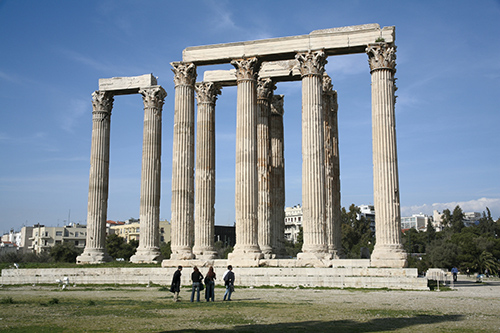
MIRACLES OF THE ROMAN GODS QUIRINUS AND PROMETHEUS.
1. Prometheus was honored with a miraculous birth.
2. Quirinus was miraculously preserved in infancy, when threatened with destruction by the tyrant ruler Amulius.
3. He performed the miracles, according to Seneca and Hesiod, of curing the sick, restoring the blind, raising the dead, and casting out devils.
4. Both these Gods were crucified amid signs, and wonders, and miracles.
5. All nature was convulsed, and the saints arose when they were crucified.
6. The sun was also darkened, and refused to shine.
7. Both descended to hell, and rose from it by divine power.
8. And Prometheus was seen to ascend to heaven.
These points are cited as miraculous events as if they are real facts, not because it is believed they were such, but as possessing the same degree of credibility as those events described as occurring of Jesus Christ.
Miracles of Greece
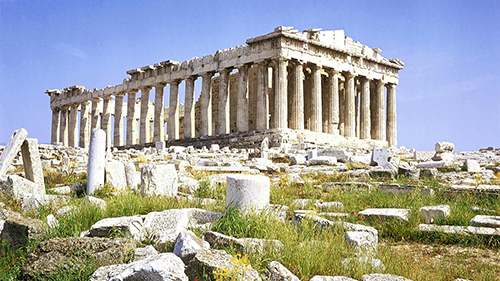
MIRACLES PERFORMED BY PYTHAGORAS AND other Gods of Greece
1. Pythagoras was a spirit in heaven before he was born on earth.
2. His birth was miraculously foretold.
3· His mother conceived him by a specter (the Holy Ghost).
4· His mother (Pytheas) was a holy virgin of great moral purity.
5· Plato’s mother, Paretonia (says Olympiodorus), conceived him by the God Apollo.
6. Pythagoras in his youth astonishes the doctors by his wisdom.
7. Was worshiped as the “Son of God,” “Paraclete,” “Child of Divinity,” etc.
8. Could see events many ages in the future (says Richardson, his biographer).
9. Could bring down the eagle from his lofty height by command.
10. Could approach and subdue the wild, ferocious Daunian bear.
11. Could, like Christ, appear at two places at once.
12. Could walk on the water and travel on the air.
13. Could discern and read the thoughts of his disciples.
14. Could handle poisonous reptiles with impunity.
15. Cured all manner of diseases.
16. Restored sight to the blind.
17. He “cast out devils.”
18. Jamblicus says he could allay storms on the sea.
19. Raised several persons from the dead.
20. And, finally, “a thousand other wonderful things are
told of him,” says Jamblicus.
>With respect to his character, it is said that “for humility, and practical goodness, and the wisdom of his moral precepts, he stood without a rival.” He discarded bloody sacrifices, discouraged wars, forbade the use of wine and other intoxicating drinks, enjoined the forgiveness of enemies and their kind treatment, and also respect to parents. He was a special friend to the poor, and taught that they were the favorites of God. “Blessed are ye poor.” He practiced and recommended the silent worship of God. He retired from the world, and often fasted, and was a great enemy to riches (like Jesus Christ). He considered poverty a virtue, and, despised the pomp of the world. He recommended (like Christ) the abandonment of parents, relations, and friends, houses and lands, &c., for religion’s sake. His disciples, like those of Christ, had a common treasury and a general community of goods, to which all had free access,
so that there was no poverty or suffering amongst them while the supply lasted. All shared alike. In fact, with respect to the spirit of his precepts, his moral lessons, and nearly his whole practical life, he bore a striking resemblance to Jesus Christ, and presented the same kind of evidence, and equally convincing evidence, of being a God. And as he was born into the world five hundred and fifty-four years before Christ, the latter probably obtained the materials of his moral system from that Grecian teacher, or in the same school of the Essenian Buddhists, in which both Pythagoras and Christ appear to have taken lessons.
Miracles of Egypt
Miracle Locations
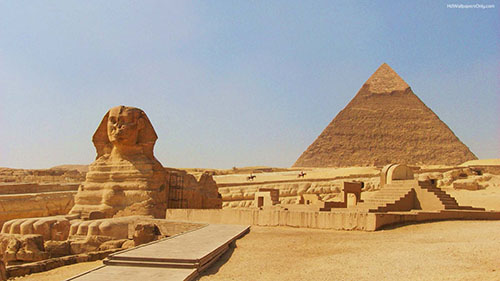
Ancient Egyptian Pyramids
THE MIRACLES RECORDED OF ALCIDES, OSIRIS, AND OTHER GODS OF EGYPT.
1. We have the miraculous birth by a virgin in the case of Alcides.
2. Osiris, while a sucking infant in his cradle, killed two serpents which came to destroy him.
3. Alcides performed many miraculous cures.
4. According to Ovid he cured by a miracle the daughter of Archiades.
5· Also the wife of Theogenes, after the doctors had given her up.
6. And both these Gods converted water into wine.
7. Both of them frequently cast out devils.
8. Julius declares Alcides raised Tyndarus and Hippolitus from the dead.
9. When Zulis was crucified, the sun became dark and the moon refused to shine.
10. Both he and Osiris were resurrected by a miracle.
12. Both ascend to heaven in sight of many witnesses.
13. And finally we are told that from Alexandria the whole empire became filled with the fame of these miracle workers, who restored the blind to sight, cured the paralytic, caused the dumb to speak, the lame to walk, &c.
All these miracles were as credibly related of these Gods as similar miracles of Jesus Christ.

Aug
15
2026

Nietzsche - The Biggest Crime
- Read more about Nietzsche - The Biggest Crime
- Log in to post comments
Balder and Frey
Balder and Frey of Scandinavia
Here are the factual answers regarding Balder (Baldr) and Frey (Freyr) of ancient Norse mythology.
In lists of "crucified saviors" created by 19th-century authors like Kersey Graves, these two figures are sometimes grouped together. However, in actual Scandinavian mythology, they are two entirely separate deities belonging to two different tribes of gods. Balder is an Aesir god of light and purity, while Frey is a Vanir god of fertility, peace, and agriculture. Neither of them was a crucified savior who died for human sins.
Timeline & Locations
- Active Period: Germanic/Norse paganism was practiced from antiquity through the Viking Age, officially ending with the Christianization of Scandinavia around the 10th to 12th centuries CE.
- Calendar Date of Birth: Norse myths do not record calendar dates for the births of their gods.
- Locations: Worshipped across Scandinavia (modern-day Norway, Sweden, and Denmark) and Viking settlements like Iceland.
Appearance & Names
- Balder: Described in the Prose Edda as being so fair, beautiful, and physically radiant that light literally shone from his body.
- Frey: As a god of fertility and virility, historical accounts (like those from Adam of Bremen) note that statues of Frey depicted him with an immense, erect phallus.
- Different Names: Baldr, Baldur, or Balder. Frey is also known as Freyr or Yngvi.
Life, Death, & Resurrection
- When & How They Died (Who Killed Them):
- Balder: He had prophetic nightmares about his death, so his mother made every object on earth swear never to harm him—except for the mistletoe, which she thought was too young to be a threat. The trickster god Loki crafted a dart (or spear) out of mistletoe and tricked Balder's blind brother, Höðr, into throwing it at Balder as a game. The mistletoe pierced Balder, killing him instantly.
- Frey: Frey does not die until Ragnarök (the apocalyptic end of the world). During the final battle, he fights the fire giant Surtr. Because Frey previously gave away his magical sword to win the heart of a giantess, he fights with an antler and is killed by Surtr.
- Age at Death: As gods who ate the magical youth-restoring apples of Iðunn, they did not age like mortals.
- Did They Resurrect?
- Balder: He does not resurrect in the normal sense. He goes to Hel (the underworld) and is trapped there because Loki refuses to weep for him. Balder only returns to the living world after the universe is destroyed in Ragnarök and a new earth is born.
- Frey: He dies at Ragnarök and does not resurrect.
- Descend to Hell or Ascend to Heaven? Balder descended to Hel (the Norse underworld, ruled by the goddess of the same name).
- Crucified? No. Balder was shot with a mistletoe projectile. Frey is killed in melee combat.
Actions & Theological Comparisons
- Did They Die for the Salvation of Man? No. Balder's death is a tragic cosmic event that heralds the coming of the apocalypse (Ragnarök), not a willing blood sacrifice for the forgiveness of human sins.
- What Actions Did They Take? Balder was a peacemaker whose hall in Asgard was a place of absolute purity. Frey controlled the rain, the shining of the sun, and the fertility of the crops, ensuring peace and good harvests for humanity.
- Born of a Virgin? No. Both were conceived naturally. Balder's parents were Odin (the Allfather) and the goddess Frigg. Frey's father was the sea god Njörðr (who conceived Frey with his own unnamed sister).
- Called the Son of God? Balder was literally the son of the chief god (Odin), but he was not titled "The Son of God" in a monotheistic sense.
- Part of the Trinity? No. The Norse pantheon is polytheistic.
- Will They Judge Man in Heaven? No. In Norse belief, half of the slain in battle go to Odin in Valhalla, and the other half go to the goddess Freyja in Fólkvangr. Neither Balder nor Frey act as eschatological judges of human souls.
Worship & Followers
- How They Were Worshiped: They were worshipped through blót (sacrificial feasts). According to historical records, the massive pagan Temple at Uppsala in Sweden housed statues of Odin, Thor, and Frey, where animals and sometimes humans were sacrificed and hung from trees in the sacred grove.
- Who Worshipped Them? The Germanic and Norse peoples. Frey was particularly beloved by farmers in Sweden, where the early kings claimed direct descent from him.
Indra
Indra
Indra
The inclusion of "Indra of Tibet" in 19th-century catalogs of crucified saviors—namely Godfrey Higgins' Anacalypsis (1836) and Kersey Graves' The World's Sixteen Crucified Saviors (1875)—is a conflation of Vedic mythology, Tibetan Buddhist iconography, and speculative solar theories.
In authentic Asian religion, Indra is not a savior figure, did not atone for human sins, and was never crucified.
Core Profile & Historical Context
- Time Period & Dates:
- Mythicist Claim: Active ~725 BCE in Tibet.
- Historical Reality: Indra is one of the oldest Indo-Aryan deities, celebrated in the Rigveda (2nd millennium BCE). In Tibet, Indra was introduced during the transmission of Buddhism in the 7th–8th centuries CE under the Tibetan name Gyajin (བརྒྱ་བྱིན, brgya byin, translating Śakra / "The Powerful Hundred-Giver").
- Calendar Date of Birth & Age at Death:
- No calendar birth date (e.g., December 25) or lifespan exists in Vedic or Buddhist scripture. In Buddhist cosmology, "Indra" is an office/title rather than a single eternal individual; each Indra lives for a cosmic cycle before being reborn according to karma.
- Manner of Death & Execution:
- Mythicist Claim: Pierced and crucified on a cross/tree with five wounds.
- Scriptural Fact: Indra is an immortal deva in Hinduism and a long-lived divine king in Buddhism. He was never executed, martyred, or crucified.
- Geographical Locations:
- In myth: Svarga / Amaravati (Hindu heavenly realm) or Trāyastriṃśa (the Buddhist heaven atop Mount Meru).
- On Earth: Worshipped across ancient Vedic India, and later venerated across Tibet, Nepal, China, and Japan.
Theological Details: Mythicist Claims vs. Authentic Traditions
| Category | 19th-Century Mythicist Claim (Graves/Higgins) | Hindu & Buddhist Scripture |
|---|---|---|
| Virgin Birth | Born of a pure virgin mother. | In the Rigveda, son of Dyaus Pita (Sky) and Prithvi (Earth), or Aditi. In Buddhism, a being reborn into the deva realm due to past merit. |
| Crucifixion | Crucified and pierced for man's salvation. | Never crucified. The five-wound trope is an overlay borrowed from the Christian Passion. |
| Salvation / Atonement | Died to atone for humanity's sins. | Does not grant vicarious atonement. He maintains cosmic order (Ṛta), brings monsoon rains, and protects the Buddhist Dharma (Dharmapala). |
| Resurrection & Descent | Rose from the dead and ascended to heaven. | Rebirth cycles occur at the end of cosmic eons; he never experienced a bodily martyrdom and resurrection. |
| Title: "Son of God" | Titled "Our Lord and Savior" and "Son of God." | Titled Devendra (King of Gods), Vajrapani (Thunderbolt Wielder), Śakra (Mighty One), and Maghavan (Bountiful). |
| Part of a Trinity | Part of a trinitarian godhead. | In early Vedic religion, grouped with Agni and Surya (or Vayu) as a Vedic triad, but not a triune monotheistic savior godhead. |
| Judgment in Heaven | Presides as the ultimate judge of mankind's souls. | Does not judge souls. Karma and the lord of death (Yama / Shinje) oversee afterlife judgment and the six realms of existence. |
Appearance and Worship in Tibet
- Visual Depiction:
- Depicted as a royal deity adorned in silks and jewels, holding the Vajra (thunderbolt scepter) and riding the multi-tusked white elephant Airavata (Tibetan: Langpo Che).
- In Tibetan thangkas, he is often shown with horizontal third eyes or eyes covering his body (a Buddhist transformation of the 1,000-eye curse/blessing from the Ahalya legend).
- Role in Tibetan Rituals:
- Honored as the chief of the Twelve Directional Protectors (Dikpala), guarding the Eastern quarter.
- Depicted in traditional narrative art kneeling beside the Buddha upon his enlightenment or presenting the golden thousand-spoked wheel to request the turning of the Wheel of Dharma.
Chu Chulainn
Chu Chulainn of Ireland
Here are the factual answers regarding Cú Chulainn, the preeminent hero of Irish mythology.
Like many figures mentioned in alternative 19th-century history books, applying the Christian theological framework of a "savior" to Cú Chulainn is a historical mismatch.
Timeline & Locations
- Active Period: Cú Chulainn is a mythological figure. The tales of the Ulster Cycle are traditionally set in the 1st century BCE (around the time of the legendary King Conchobar mac Nessa).
- Calendar Date of Birth: Mythological tales do not record calendar dates for births.
- Locations: He was active primarily in Ulster (the northern province of Ireland), particularly at Emain Macha (the royal capital) and the Cooley Peninsula, where he famously defended the province.
Appearance & Names
In his normal state, Cú Chulainn is described as a beardless, youthful, and astonishingly handsome warrior.
- Different Names: His birth name was Sétanta.
He gained the name Cú Chulainn (which means "The Hound of Culann") after killing a fierce guard dog in self-defense and volunteering to take its place. He is also known as "The Hound of Ulster".
Life, Death, & Resurrection
- When & How He Died: He was killed in battle by a coalition of his enemies (led by Lugaid mac Con Roí and Erc) who conspired against him and forced him to break his magical taboos (geasa), weakening him.
Mortally wounded by magical spears, Cú Chulainn famously tied himself to a standing pillar stone so that he would die on his feet, facing his enemies. It was only when a raven landed on his shoulder that his enemies knew he was truly dead.
- Age at Death: The traditions generally state he was around 27 years old when he died.
- Did He Resurrect? No. He died and stayed dead. However, in much later, Christianized Irish folklore (such as the text The Phantom Chariot of Cú Chulainn), Saint Patrick temporarily summons his ghost to convince a pagan king to convert to Christianity.
- Descend to Hell or Ascend to Heaven? In original Celtic myth, the afterlife is the Otherworld, not a Heaven/Hell dichotomy.
Later Christian scribes who recorded the myths wrote that his soul was in Hell until Saint Patrick intervened and sent him to Heaven.
- Crucified? No. He was slain by spears in battle and tied himself to a stone pillar.
Actions & Theological Comparisons
- Did He Die for the Salvation of Man? No. He died defending his province, Ulster, and as a result of being tricked into breaking his magical vows.
His death had no connection to spiritual salvation or the forgiveness of sins.
- What Actions Did He Take? His most famous mythological exploit is the Táin Bó Cúailnge (The Cattle Raid of Cooley), where he single-handedly defended Ulster against the invading armies of Queen Medb of Connacht while the rest of the Ulster warriors were disabled by a magical curse.
- Born of a Virgin? No. The story of his conception is highly magical (involving his mother Deichtine swallowing a fly and being visited by the god Lugh), but she was not considered a "virgin" in the theological sense.
He is usually recognized as having a divine father (Lugh) and a mortal father (Súaltaim).
- Called the Son of God? He is literally the son of the Irish god Lugh (a deity of the Tuatha Dé Danann), but he was never granted the exclusive, monotheistic title "The Son of God."
- Part of the Trinity? No. Ancient Celtic religion was polytheistic, though they did often group deities in threes (triads). There was no Holy Trinity.
- Will He Judge Man in Heaven? No. He is a mortal demigod and warrior, not an eschatological judge of human souls.
Worship & Followers
- How He Was Worshiped / Who Worshipped Him? He was not worshipped. Cú Chulainn was viewed as a legendary hero, an ancestor figure, and a champion in folklore—much like Achilles in Greek myth or Beowulf in Anglo-Saxon myth.
People told stories of his bravery, but they did not build temples to him or worship him as a god.