Teaser Image
pentecost

Pentecost

Pentecost

pentecost

When was the Holy Ghost given?

After the Pentecost of Jesus

The Holy Ghost was not yet given; because that Jesus was not yet glorified.     John 7:39

 And when he had said this, he breathed on them, and saith unto them, Receive ye the Holy Ghost.     John 20:22

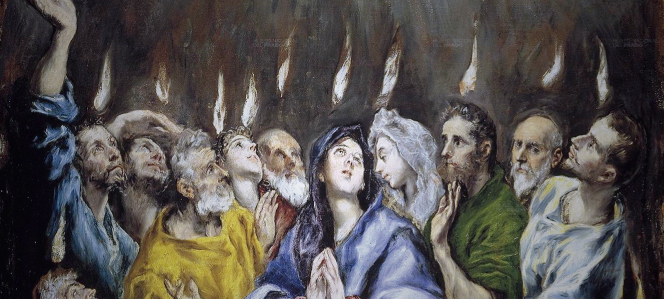
And when the day of Pentecost was fully come, they were all with one accord in one place. And suddenly there came a sound from heaven as of a rushing mighty wind, and it filled all the house where they were sitting. And there appeared unto them cloven tongues like as of fire, and it sat upon each of them. And they were all filled with the Holy Ghost, and began to speak with other tongues, as the Spirit gave them utterance.     Acts 2:1-4

Before resurrection of Jesus

For David himself said by the Holy Ghost, The LORD said to my Lord, Sit thou on my right hand, till I make thine enemies thy footstool.      Mark 12:36

He [John the Baptist] shall be filled with the Holy Ghost, even from his mother's womb.     Luke 1:15

Elisabeth was filled with the Holy Ghost.      Luke 1:41

Zacharias was filled with the Holy Ghost.      Luke 1:67

And, behold, there was a man in Jerusalem, whose name was Simeon; and the same man was just and devout, waiting for the consolation of Israel: and the Holy Ghost was upon him.      Luke 2:25

... which the Holy Ghost by the mouth of David spake....      Acts 1:16

Where did Jesus first appear to the eleven disciples after the resurrection?

On a mountain top in Galilee.

Then the eleven disciples went away into Galilee, into a mountain where Jesus had appointed them. When they saw him, they worshiped him; but some doubted.        Matthew 28:16-17

In a room in Jerusalem.

Afterward he appeared unto the eleven as they sat at meat, and upbraided them with their unbelief and hardness of heart, because they believed not them which had seen him after he was risen.      Mark 16:14

And they rose up the same hour, and returned to Jerusalem, and found the eleven gathered together, and them that were with them, Saying, The Lord is risen indeed, and hath appeared to Simon. And they told what things were done in the way, and how he was known of them in breaking of bread. And as they thus spake, Jesus himself stood in the midst of them, and saith unto them, Peace be unto you.      Luke 24:33-37

Then the same day at evening, being the first day of the week, when the doors were shut where the disciples were assembled for fear of the Jews, came Jesus and stood in the midst, and saith unto them, Peace be unto you.      John 20:19

Were the disciples frightened or glad when they saw Jesus?

 They were frightened when they saw him.

But they were terrified and affrighted, and supposed that they had seen a spirit. Luke 24:37

They were gladdened.

Then were the disciples glad, when they saw the LORD. John 20:20

Did the eleven disciples believe the two men who claimed to see Jesus?

Yes, since he had already appeared to Simon.

And they rose up the same hour, and returned to Jerusalem, and found the eleven gathered together, and them that were with them, Saying, The Lord is risen indeed, and hath appeared to Simon. Luke 24:33-34

No.

After that he appeared in another form unto two of them, as they walked, and went into the country. And they went and told it unto the residue: neither believed they them. Mark 16:12-13

The “Word of God” is uncertain as to when the apostles received the “holy spirit.”

A  on Easter Sunday

And with that he breathed on them and said, “Receive the Holy Spirit.     John 20:22

B  On Pentecost, fifty days later.

For John baptized with[a] water, but in a few days you will be baptized with[b] the Holy Spirit.”     Acts 1:5

But you will receive power when the Holy Spirit comes on you; and you will be my witnesses in Jerusalem, and in all Judea and Samaria, and to the ends of the earth.”     Acts 1:8

When the day of Pentecost came, they were all together in one place.2 Suddenly a sound like the blowing of a violent wind came from heaven and filled the whole house where they were sitting. 3 They saw what seemed to be tongues of fire that separated and came to rest on each of them. 4 All of them were filled with the Holy Spirit and began to speak in other tongues[a] as the Spirit enabled them.     Acts 2:1-4

Christ ascended from Mount Olives or from Bethany???

Mount Olivet

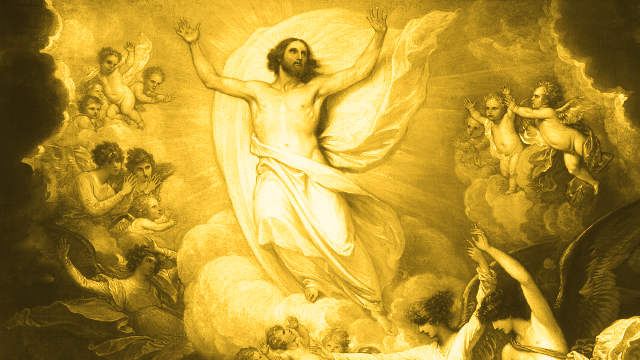
And when he had spoken these things, while they beheld, he was taken up, and a cloud received him out of their sight. . . . Then returned they unto Jerusalem, from the mount called Olivet. (Acts 1:9, 12.)

Bethany

And he led them out as far as to Bethany; and he lifted up his hands and blessed them. And it came to pass that while he blessed them, he was parted from them, and carried up into heaven. (Luke 24:50, 51.)

How many believers were there at the time of the ascension?

There were 120 believers after the ascension.

The number of names together were about an hundred and twenty.       Acts 1:15

There were more than 500 believers before the ascension.

He was seen of above five hundred brethren at once; of whom the greater part remain unto this present, but some are fallen asleep.        1 Corinthians 15:6

When did Jesus ascend into heaven?

On the day of his resurrection.

Now upon the first day of the week, very early in the morning, they came unto the sepulchre, bringing the spices which they had prepared, and certain others with them. And they found the stone rolled away from the sepulchre.
...
And returned from the sepulchre, and told all these things unto the eleven, and to all the rest. ...
And, behold, two of them went that same day to a village called Emmaus....
...
And they rose up the same hour, and returned to Jerusalem, and found the eleven gathered together....
...
And as they thus spake, Jesus himself stood in the midst of them, and saith unto them, Peace be unto you.
...
And it came to pass, while he blessed them, he was parted from them, and carried up into heaven.      Luke 24:1-51Now when Jesus was risen early the first day of the week, he appeared first to Mary Magdalene, out of whom he had cast seven devils.
...
After that he appeared in another form unto two of them, as they walked, and went into the country.
...
Afterward he appeared unto the eleven as they sat at meat, and upbraided them with their unbelief and hardness of heart, because they believed not them which had seen him after he was risen.
...
So then after the Lord had spoken unto them, he was received up into heaven, and sat on the right hand of God.      Mark 16:9-19

At least eight days after his resurrection.

And after eight days again his disciples were within, and Thomas with them: then came Jesus, the doors being shut, and stood in the midst, and said, Peace be unto you.       John 20:26

Many days after his resurrection.

And he was seen many days of them which came up with him from Galilee to Jerusalem, who are his witnesses unto the people.       Acts 13:31

Forty days after his resurrection.

Until the day in which he was taken up ... he shewed himself alive after his passion by many infallible proofs, being seen of them forty days, and speaking of the things pertaining to the kingdom of God:
...
And when he had spoken these things, while they beheld, he was taken up; and a cloud received him out of their sight.       Acts 1:2-3, 9

Will Jesus's second coming be visible to all?

Yes.

Every eye wll seem him coming in the clouds in all his glory.

And then shall appear the sign of the Son of man in heaven: and then shall all the tribes of the earth mourn, and they shall see the Son of man coming in the clouds of heaven with power and great glory.      Matthew 24:30

And then shall they see the Son of man coming in the clouds with great power and glory.      Mark 13:26

And then shall they see the Son of man coming in a cloud with power and great glory.      Luke 21:27

Behold, he cometh with clouds; and every eye shall see him.      Revelation 1:7

No.

Nonbelievers will ever see him again.

Yet a little while, and the world seeth me no more; but ye see me: because I live, ye shall live also.      John 14:19

Teaser Image
assencion to heaven

Ascension into Heaven

Ascension to Heaven

assencion to heaven

DID JESUS GO TO HEAVEN AFTER HE DIED BUT BEFORE HIS ASCENSION?

YES, JESUS WENT TO HEAVEN ON THE DAY OF HIS DEATH.

And he said unto Jesus, Lord, remember me when thou comest into thy kingdom. And Jesus said unto him, Verily I say unto thee, to day shalt thou be with me in paradise.      Luke 23:42-43

NO, JESUS REMAINED ON EARTH AFTER HIS DEATH UNTIL HIS ASCENSION.

Jesus saith unto her, Touch me not; for I am not yet ascended to my Father: but go to my brethren, and say unto them, I ascend unto my Father, and your Father; and to my God, and your God.       John 20:17

WAS JESUS THE FIRST TO RISE FROM THE DEAD?

JESUS WAS THE FIRST PERSON TO RISE FROM THE DEAD.

That Christ should suffer, and that he should be the first that should rise from the dead.     Acts 26:23

But now is Christ risen from the dead, and become the firstfruits of them that slept.      1 Corinthians 15:20

OTHERS ROSE FROM THE DEAD BEFORE HIM.

A WITCH RAISED SAMUEL FROM THE DEAD.

Then said the woman, Whom shall I bring up unto thee? And he said, Bring me up Samuel .... And he said unto her, What form is he of? And she said, An old man cometh up; and he is covered with a mantle. And Saul perceived that it was Samuel.     1 Samuel 28:11, 14

ELIJAH RAISED A BOY FROM THE DEAD BY STRETCHING HIMSELF UPON THE DEAD BOY THREE TIMES.

He stretched himself upon the child three times, and cried unto the LORD, and said, O LORD my God, I pray thee, let this child's soul come into him again.And the LORD heard the voice of Elijah; and the soul of the child came into him again, and he revived.    1 Kings 17:21-22

ELISHA BROUGHT A DEAD BOY TO LIFE BY LAYING ON TOP OF HIM, PUTTING HIS MOUTH ON THE BOYS MOUTH, ETC. UNTIL THE FLESH OF THE DEAD BOY WAXED WARM.

And when Elisha was come into the house, behold, the child was dead, and laid upon his bed. He went in therefore, and shut the door upon them twain, and prayed unto the LORD. And he went up, and lay upon the child, and put his mouth upon his mouth, and his eyes upon his eyes, and his hands upon his hands: and stretched himself upon the child; and the flesh of the child waxed warm. Then he returned, and walked in the house to and fro; and went up, and stretched himself upon him: and the child sneezed seven times.      2 Kings 4:32-35

A DEAD BODY WAS BROUGHT TO LIFE WHEN IT ACCIDENTALLY TOUCHED THE BONES OF ELISHA.

And it came to pass, as they were burying a man, that, behold, they spied a band of men; and they cast the man into the sepulchre of Elisha: and when the man was let down, and touched the bones of Elisha, he revived, and stood up on his feet.      2 Kings 13:21

MOSES AND ELIJAH HAD A CONVERSATION WITH JESUS AFTER BEING RAISED FROM THE DEAD.

And, behold, there talked with him two men, which were Moses and Elias.      Luke 9:30

JESUS RAISED A FEW PEOPLE FROM THE DEAD.

And when Jesus came into the ruler's house, and saw the minstrels and the people making a noise, He said unto them, Give place: for the maid is not dead, but sleepeth. And they laughed him to scorn. But when the people were put forth, he went in, and took her by the hand, and the maid arose.      Matthew 9:23-25   (see also Mark 5:39-42, Luke 8:49-55)

Now when he came nigh to the gate of the city, behold, there was a dead man carried out, the only son of his mother, and she was a widow: and much people of the city was with her. And when the Lord saw her, he had compassion on her, and said unto her, Weep not. And he came and touched the bier: and they that bare him stood still. And he said, Young man, I say unto thee, Arise. And he that was dead sat up, and began to speak. And he delivered him to his mother.       Luke 7:12-15

And when he thus had spoken, he cried with a loud voice, Lazarus, come forth.      John 11:43

AND DEAD PEOPLE ROSE AND WALKED THE STREETS OF JERUSALEM IMMEDIATELY AFTER JESUS DIED.

Jesus, when he had cried again with a loud voice, yielded up the ghost ... And the graves were opened; and many bodies of the saints which slept arose. And came out of the graves after his resurrection, and went into the holy city, and appeared unto many.       Matthew 9:50-53

 OTHERS BEFORE JESUS WENT TO HEAVEN

19 After the Lord Jesus had spoken to them, he was taken up into heaven and he sat at the right hand of God.    Mark 16:19

51 While he was blessing them, he left them and was taken up into heaven.   Luke 24:51

9 After he said this, he was taken up before their very eyes, and a cloud hid him from their sight.     Acts 1:9

Crishna the crucified Hindoo Saviour, rose from the dead     Higgins: Anacalypsis, vol. ii. pp. 142 and 145.

    and ascended bodily into heaven.     Higgins: Anacalypsis, vol. i. p. 131.

At that time a great light enveloped the earth and illuminated the whole expanse of heaven. Attended by celestial spirits, and luminous as on that night when he was born in the house of Vasudeva.  All men saw him, and exclaimed, "Lo, Crishna's soul ascends its native skies!"    Hist. Hindostan, ii. pp. 466 and 473

Râma—an incarnation of Vishnu—after his manifestations on earth, "at last ascended to heaven," "resuming his divine essence."

Buddha, the son of the Virgin Maya, who, as the God of Love, is named Cam-deo, Cam, and Cama, is of the same character as that of other virgin-born gods. When he died there were tears and lamentations. Heaven and earth are said equally to have lamented the loss of "Divine Love," insomuch that Maha-deo (the supreme god) was moved to pity, and exclaimed, "Rise, holy love!" on which Cama was restored and the lamentations changed into the most enthusiastic joy.   And... just like the Jesus stone of the tomb, "the coverings of the body unrolled themselves, and the lid of his coffin was opened by supernatural powers"

Just like Jesus, Buddha also ascended bodily to the celestial regions when his mission on earth was fulfilled.  By prayers in his name his followers expect to receive the rewards of paradise, and finally to become one with him when they die.

Lao-Kiun, the virgin-born, he who had existed from all eternity, when his mission of benevolence was completed on earth, ascended bodily into the paradise above.  There have been splendid temples erected to his memory. 

Zoroaster, of ancient Persian, who was considered "a divine messenger sent to redeem men from their evil ways," ascended to heaven at the end of his earthly life.

Æsculapius, the Son of God, the Saviour, after being put to death, rose from the dead. 

The Saviour Adonis or Tammuz, after being put to death, rose from the dead. "Trust ye in God, for out of pains, Salvation is come unto us."

Adonis of the Syrians is celebrated, in the early spring, this ceremony in honor of the resurrection of Adonis.

The festival in honor of the resurrection of Adonis was observed in Alexandria in Egypt—the cradle of Christianity—in the time of St. Cyril, Bishop of Alexandria (A. D. 412), and at Antioch—the ancient capital of the Greek Kings of Syria—even as late as the time of the Emperor Julian (A. D. 361-363), whose arrival there, during the solemnity of the festival, was taken as an ill omen.

Eusebius, the celebrated Christian ecclesiastical historian wrote that prior gods ascribed to Jesus;

"Listen to thine own gods, to thy oracular deities themselves, who have borne witness, and ascribed to our Saviour (Jesus Christ) not imposture, but piety and wisdom, and ascent into heaven."

The celebration in honor of the resurrection of Adonis had become to be known as a Christian festival, which has not been abolished even unto this day. The ceremonies held in Roman Catholic countries on Good Friday and on Easter Sunday, are nothing more than the festival of the death and resurrection of Adonis.

Under the designation of Tammuz, this god was worshiped, and had his altar even in the Temple of the Lord which was at Jerusalem. Several of the Psalms of David were parts of the liturgical service employed in his worship; the 110th, in particular, is an account of a friendly alliance between the two gods, Jehovah and Adonis, in which Jehovah adorns Adonis for his priest, as sitting at his right hand, and promises to fight for him against his enemies.

The Lord says to my lord:  “Sit at my right hand until I make your enemies a footstool for your feet.”     Psalm 110

women of Israel would weep for their god in the Temple;

14 Then he brought me to the entrance of the north gate of the house of the Lord, and I saw women sitting there, mourning the god Tammuz.    Ezekiel 8:14

Adonis, is almost (less the s) the very Hebrew word 'Our Lord,' a well-known title of Christ;  "Adoni" .

Tammuz as well as Hercules (Greek and Roman god), are that class of idols which represent the promised Saviour - the desire of all nations (similar to desire of Jesus).  Catholic Priests represent that the prior gods were just a work of the devil, an imitation of the real god, their god, Jesus. This has been written by Eusebius, Tertullian and St. Justin.

Osirus annually was celebrated by the ancient Egyptians his resurrection and ascension.  His image was carried in a procession, covered—as were those in the temples—with black veils. On the 25th of March his resurrection from the dead was celebrated with great festivity.  Osirus exemplifies self-sacrifice—in giving his life for others.  He stood for truth and gooness.  After being dead, he was restored to life.

Known ancient writers Athanasius, Augustin, Theophilus, Athenagoras, Minucius Felix, Lactantius, Firmicius, all draw comparisons of Osirus to Christ.  5000 years ago Osirus was people's savior who died and was resurrected.  . At the end of three days, or forty according to some, he arose again.

Horus, son of the virgin Isis, is written descriptions of the grief which was manifested at his death, and of the rejoicings at his resurrection.

Atys, the Phrygian Saviour, was put to death, and rose again from the dead. 

Mithras, the Persian Saviour, and mediator between God and man, was believed by the inhabitants of Persia, Asia Minor and Armenia, to have been put to death, and to have risen again from the dead.  There is an ancient coin like medalion found that has the inscription to their god Mithras, —ORTVS SALVAT, "The Rising of the Saviour".

Bacchus, the Saviour, son of the virgin Semele, after being put to death, also arose from the dead. 25th of March his resurrection from the dead was celebrated with great rejoicings.  After his resurrection he ascended into heaven. 

Hercules, the Saviour, the son of Zeus by a mortal mother, was put to death, but arose from the funeral pile, and ascended into heaven in a cloud, amid loud thunderings.

Memnon is put to death, but rises again to life and immortality.  Thanks to his mother who weaped incesantly (like Mary for Jesus) and that brought him back to life (like tammuz, Adonis, and Jesus).  

Amphiaraus—one of their most celebrated prophets and demi-gods of the Greeks—rose from the dead.  They even point to the spot of his ressurection.

Baldur, the Scandinavian Lord and Saviour, is put to death, but does not rest in his grave. He too rises again to life and immortality. When "Baldur the Good," the beneficent god, descended into hell, Hela (Death) said to Hermod (who mourned for Baldur): "If all things in the world, both living and lifeless, weep for him, then shall he return to the Æsir (the gods)." Upon hearing this, messengers were dispatched throughout the world to beg everything to weep in order that Baldur might be delivered from hell. All things everywhere willingly complied with this request, both men and every other living being, so that wailing was heard in all quarters.

Frey, was put to death, and rose again from the dead, was worshiped by ancient Scandinavians as a god.

Quetzalcoatle, the Mexican crucified Saviour, after being put to death, rose from the dead.  Thius is represented in hieroglyphics and the Codex Borgianus.

Jews, celebrate Passover on the same day the pagans celebrated the resurrection of their gods.

Catholics.  They would celebrate a mass called Gloria Patri where a young man would lay on a stand in front of the altar.  The altar was draped in black.  The priens and others would be dressed in all black.  The Church would be dark.  This was also called the "Agonie," the "Miserere," the "Good Friday" mass.  On Easter all the black motif would be gone and the church would be illuminated and bright.  The Easter hymns would say "Rejoice, Oh sacred Initiated, your God is risen. His death, his pains, his sufferings, have worked our salvation."

The early Catholic Church did not celebrate the resurrection but would celebrate Pass-Over at the same time the Jews celebrated it, the 14th of Nisan.  Then the Christians changed their tune and claimed before Jesus'  death he had not eaten the Passover meal, but had died on the very day of the Passover, thus substituting himself for the Paschal Lamb.  So they changed the celebration to the first Sun-Day after the passover, the pagan holiday.  On this day was honored the Saxon goddess Ostrt or Eostre of the Germans, whence our modern holiday name Easter.  It was an active day with sports and the like and was called "carne-vale."  It's main rite was giving out colored dyed eggs.  At that time the Jews used eggs as part of the Passover ritual and still do to this day.

Epistles.  "We have epistles from Peter, James, John, and Jude—all of whom are said to have seen Jesus after he rose from the dead, and in none of epistles is the fact of the resurrection even stated, much less that Jesus was seen by the writers after his resurrection." 


Teaser Image
the tomb

The Tomb

The Tomb and After

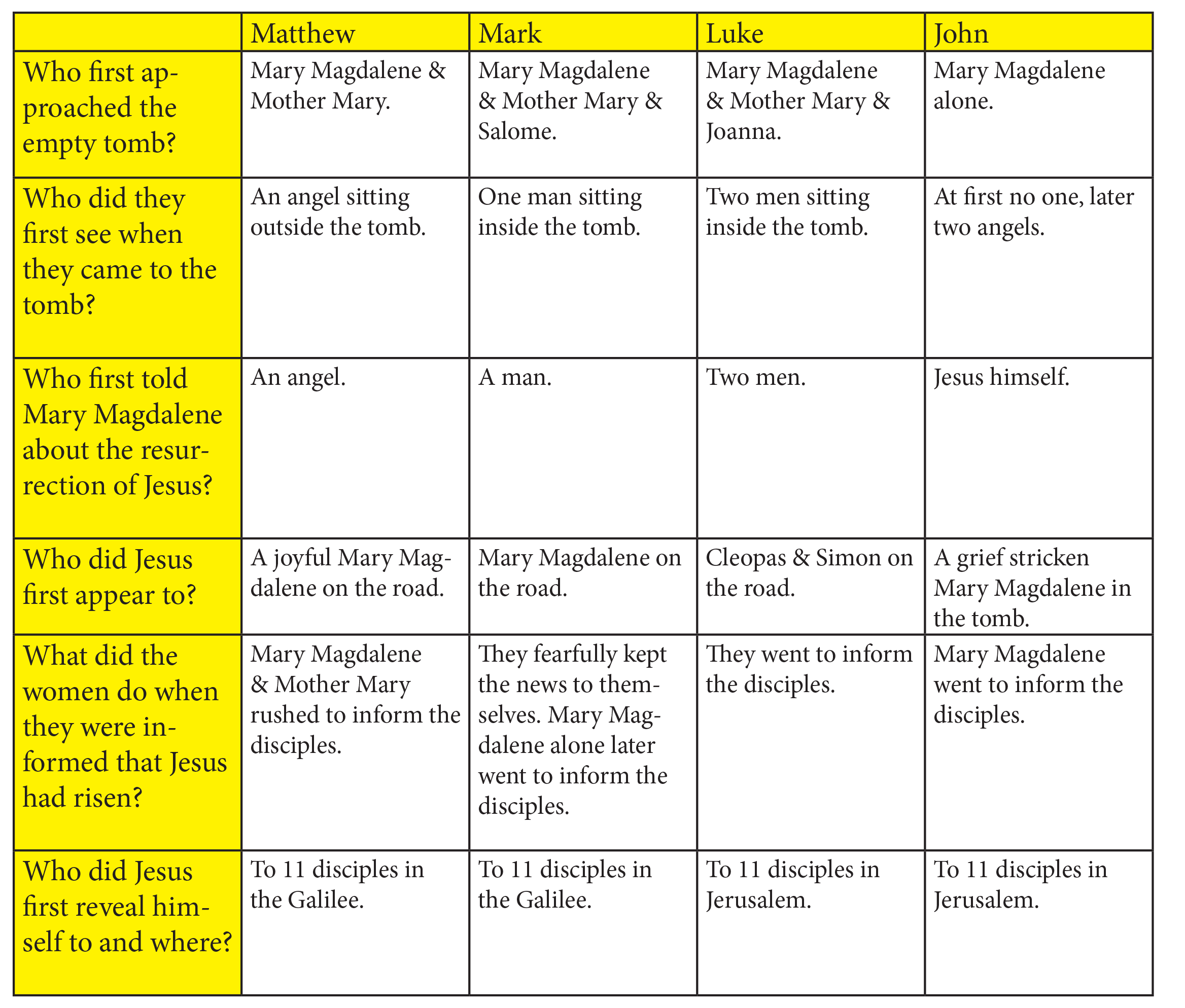
The “Word of God” is uncertain as to how many days Jesus was in his tomb. Jesus prophesized 3 days and 3 nights.

A  Not two full days and not two full nights.

Early on the first day of the week, while it was still dark, Mary Magdalene went to the tomb and saw that the stone had been removed from the entrance.     John 20:1

B  Not two full days and two nights.

Very early on the first day of the week, just after sunrise, they were on their way to the tomb     Mark 16:2

On the first day of the week, very early in the morning, the women took the spices they had prepared and went to the tomb.     Luke 24:1

After the Sabbath, at dawn on the first day of the week, Mary Magdalene and the other Mary went to look at the tomb.    Matthew 28:1

The “Word of God” is uncertain as to whether Roman soldiers guarded Jesus’ tomb.

A  No.

Early on the first day of the week, while it was still dark, Mary Magdalene went to the tomb and saw that the stone had been removed from the entrance.     John 20:1

B  Yes.

The guards were so afraid of him that they shook and became like dead men.     Matthew 28:4

inconsistencies re tomb

The “Word of God” is uncertain as to whether the stone that covered the tomb of Jesus was removed when the women first arrived.

A  No, not removed.

After the Sabbath, at dawn on the first day of the week, Mary Magdalene and the other Mary went to look at the tomb.  There was a violent earthquake, for an angel of the Lord came down from heaven and, going to the tomb, rolled back the stone and sat on it.     Matthew 28:1-2

B  Yes, removed.

Early on the first day of the week, while it was still dark, Mary Magdalene went to the tomb and saw that the stone had been removed from the entrance.     John 20:1

But when they looked up, they saw that the stone, which was very large, had been rolled away.     Mark 16:4

They found the stone rolled away from the tomb,     Luke 24:2

The “Word of God” is uncertain as to how many people approached the tomb Sunday morning.

A  One.    Mary Magdalene.    

   (Sunday early dawn)

Early on the first day of the week, while it was still dark, Mary Magdalene went to the tomb and saw that the stone had been removed from the entrance.     John 20:1

B  Two.    Mary Magdalene and the “other Mary.” 

   (Sabbath, still dark, before Sunrise)

After the Sabbath, at dawn on the first day of the week, Mary Magdalene and the other Mary went to look at the tomb.     Matthew 28:1

C  Three.   Two Marys and Salome.   

   (at the rising of the Sun)

When the Sabbath was over, Mary Magdalene, Mary the mother of James, and Salome bought spices so that they might go to anoint Jesus’ body.     Mark 16:1

D  Five or more….  Two Marys, Joanna, and the other women.

Now upon the first day of the week, very early in the morning, they came unto the sepulchre, bringing the spices which they had prepared, and certain others with them.     Luke 24:1

It was Mary Magdalene, Joanna, Mary the mother of James, and the others with them who told this to the apostles.     Luke 24:10

When did the women (or woman) arrive at the sepulchre?

While it was still dark.

The first day of the week cometh Mary Magdalene early, when it was yet dark, unto the sepulchre, and seeth the stone taken away from the sepulchre. John 20:1

At sunrise.

As it began to dawn toward the first day of the week, came Mary Magdalene and the other Mary to see the sepulchre. Matthew 28:1

And when the sabbath was past, Mary Magdalene, and Mary the mother of James, and Salome, had bought sweet spices, that they might come and anoint him. And very early in the morning the first day of the week, they came unto the sepulchre at the rising of the sun. Mark 16:1-2

The “Word of God” is uncertain as to whom the women at the tomb greeted and where they greeted them (inside or outside?)

A  By no one at all.

Early on the first day of the week, while it was still dark, Mary Magdalene went to the tomb and saw that the stone had been removed from the entrance. 2 So she came running to Simon Peter and the other disciple, the one Jesus loved, and said, “They have taken the Lord out of the tomb, and we don’t know where they have put him!”     John 20:1-2

B  By one man sitting inside the tomb.

As they entered the tomb, they saw a young man dressed in a white robe sitting on the right side, and they were alarmed.     Mark 16:5

C  By two men standing inside the tomb.

While they were wondering about this, suddenly two men in clothes that gleamed like lightning stood beside them.     Luke 24:4

D  By one angel sitting outside the tomb.

There was a violent earthquake, for an angel of the Lord came down from heaven and, going to the tomb, rolled back the stone and sat on it.     Matthew 28:2,

The angel said to the women, “Do not be afraid, for I know that you are looking for Jesus, who was crucified.     Matthew 28:5

Two angels sitting inside the tomb

And seeth two angels in white sitting, the one at the head, and the other at the feet, where the body of Jesus had lain.        John 20:12

The “Word of God” is uncertain as to how many angels appeared at the tomb.

A  Two.

and saw two angels in white, seated where Jesus’ body had been, one at the head and the other at the foot.     John 20:12

B  One.

There was a violent earthquake, for an angel of the Lord came down from heaven and, going to the tomb, rolled back the stone and sat on it.     Matthew 28:2,

The angel said to the women, “Do not be afraid, for I know that you are looking for Jesus, who was crucified.     Matthew 28:5

The “Word of God” is uncertain as to if the angel or angels told the Marys that Jesus was “risen.”

A    One angel told two Marys.

He is not here; he has risen, just as he said. Come and see the place where he lay.     Matthew 28:6

B   The two angels were not present to tell Mary Magdalene.

So she came running to Simon Peter and the other disciple, the one Jesus loved, and said, “They have taken the Lord out of the tomb, and we don’t know where they have put him!”      John 20:2

The “Word of God” is uncertain as to whether the angels tell Mary that Jesus would appear in Galilee.

A  Yes.  One angel told two Marys.

Then go quickly and tell his disciples: ‘He has risen from the dead and is going ahead of you into Galilee. There you will see him.’ Now I have told you.”      Matthew 28:7

“Don’t be alarmed,” he said. “You are looking for Jesus the Nazarene,who was crucified. He has risen! He is not here. See the place where they laid him.      Mark 16:6

 In their fright the women bowed down with their faces to the ground, but the men said to them, “Why do you look for the living among the dead?      Luke 24:5

B  No  One Mary saw two angels but they didn’t say anything.

and saw two angels in white, seated where Jesus’ body had been, one at the head and the other at the foot.     John 20:12

C  They talked to her.

They asked her, “Woman, why are you crying?”  “They have taken my Lord away,” she said, “and I don’t know where they have put him.”     John 20:13

The “Word of God” is uncertain as to where and to whom did the “risen” Jesus reveal himself.

A  To Mary Magdalene, at the tomb.

Early on the first day of the week, while it was still dark, Mary Magdalene went to the tomb and saw that the stone had been removed from the entrance.     John 20:1

Now Mary stood outside the tomb crying. As she wept, she bent over to look into the tomb 12 and saw two angels in white, seated where Jesus’ body had been, one at the head and the other at the foot.13 They asked her, “Woman, why are you crying?”  “They have taken my Lord away,” she said, “and I don’t know where they have put him.” 14 At this, she turned around and saw Jesus standing there, but she did not realize that it was Jesus.      John 20:11-14

B  To Mary Magdalene on the way to the Galilee.

But go, tell his disciples and Peter, ‘He is going ahead of you into Galilee. There you will see him, just as he told you.’”     Mark 16:7

When Jesus rose early on the first day of the week, he appeared first to Mary Magdalene, out of whom he had driven seven demons.     Mark 16:9

C  To two Marys on the way to Jerusalem.

From then on Judas watched for an opportunity to hand him over.     Matthew 26:16

D  To Cleopas and another, at Emmaus.

And, behold, two of them went that same day to a village called Emmaus.... And the one of them, whose name was Cleopas, answering said unto him, Art thou only a stranger in Jerusalem, and hast not known the things which are come to pass there in these days? ... And it came to pass, as he sat at meat with them, he took bread, and blessed it, and brake, and gave to them. And their eyes were opened, and they knew him; and he vanished out of their sight.    Luke 24:13-31

E.  To Cephas (Peter) at an unknown location.

And that he was buried, and that he rose again the third day according to the scriptures: And that he was seen of Cephas, then of the twelve     1 Cor. 15:4-5

The “Word of God” is uncertain as to who Mary received word from an angel of the resurrection.

A  No.  She was told by Jesus.

Early on the first day of the week, while it was still dark, Mary Magdalene went to the tomb and saw that the stone had been removed from the entrance. 2 So she came running to Simon Peter and the other disciple, the one Jesus loved, and said, “They have taken the Lord out of the tomb, and we don’t know where they have put him!”     John 20:1-2

B  Yes.  She was told by an angel.

He is not here; he has risen, just as he said. Come and see the place where he lay.     Matthew 28:6

The “Word of God” is uncertain as to whether Jesus told Mary he would appear in Galilee.

A  Yes. 

   Both Marys informed the disciples they were to meet in Galilee

When Jesus heard this, he was amazed and said to those following him, “Truly I tell you, I have not found anyone in Israel with such great faith.      Matthew 8:10

B  No.

   Mary saw Jesus but thought he was a gardener.  Jesus identified himself but said nothing of Galilee.

At this, she turned around and saw Jesus standing there, but she did not realize that it was Jesus. 15 He asked her, “Woman, why are you crying? Who is it you are looking for?” Thinking he was the gardener, she said, “Sir, if you have carried him away, tell me where you have put him, and I will get him.” 16 Jesus said to her, “Mary.” She turned toward him and cried out in Aramaic, “Rabboni!” (which means “Teacher”). 17 Jesus said, “Do not hold on to me, for I have not yet ascended to the Father. Go instead to my brothers and tell them, ‘I am ascending to my Father and your Father, to my God and your God.’” 18 Mary Magdalene went to the disciples with the news: “I have seen the Lord!” And she told them that he had said these things to her.    John 20:14-18

The “Word of God” is uncertain as to Mary Magdalene recognizing Jesus after he first appeared to her.

Yes, she recognized him.

And as they went to tell his disciples, behold, Jesus met them, saying, All hail. And they came and held him by the feet, and worshipped him. Matthew 28:9

No, she didn't recognize him.

And when she had thus said, she turned herself back, and saw Jesus standing, and knew not that it was Jesus. John 20:14

Jesus didn't appear to her; she had a vision of angels who told her that he was alive.

And when they found not his body, they came, saying, that they had also seen a vision of angels, which said that he was alive. Luke 24:23

The “Word of God” is uncertain as to Mary Magdalene’s state of mind when Jesus first appeared to her after his death

A  Grief stricken.

Mary [Magdalene] stood without at the sepulchre weeping: and as she wept, she stooped down, and looked into the sepulchre, And seeth two angels in white sitting, the one at the head, and the other at the feet, where the body of Jesus had lain. And they say unto her, Woman, why weepest thou? She saith unto them, Because they have taken away my LORD, and I know not where they have laid him. And when she had thus said, she turned herself back, and saw Jesus standing, and knew not that it was Jesus. Jesus saith unto her, Woman, why weepest thou?      John 20:11-15    

B  Joy filled.

So the women hurried away from the tomb, afraid yet filled with joy, and ran to tell his disciples. 9 Suddenly Jesus met them. “Greetings,” he said. They came to him, clasped his feet and worshiped him.     Matthew 28:8-9

The “Word of God” is uncertain as to if the women immediately told the disciples when they first learned Jesus had “risen.”

A  They fold no one.

Trembling and bewildered, the women went out and fled from the tomb. They said nothing to anyone, because they were afraid.     Mark 16:8

B  They rushed to inform the disciples.

When they came back from the tomb, they told all these things to the Eleven and to all the others.     Luke 24:9

 So the women hurried away from the tomb, afraid yet filled with joy, and ran to tell his disciples.    Matthew 28:8

The “Word of God” is uncertain as to how Mary Magdalene reported the news to the disciples.

A  She described her visitation by “risen” Jesus.

Mary Magdalene went to the disciples with the news: “I have seen the Lord!” And she told them that he had said these things to her.     John 20:18

B She described what she had been told by two men.

When they came back from the tomb, they told all these things to the Eleven and to all the others.     Luke 24:9

The “Word of God” is uncertain as to who Mary met after seeing the angels.

A  Jesus.

   John  Mark  Matthew say

B  The disciples.

 While they were wondering about this, suddenly two men in clothes that gleamed like lightning stood beside them. 5 In their fright the women bowed down with their faces to the ground, but the men said to them, “Why do you look for the living among the dead? 6 He is not here; he has risen! Remember how he told you, while he was still with you in Galilee: 7 ‘The Son of Man must be delivered over to the hands of sinners, be crucified and on the third day be raised again.’ ” 8 Then they remembered his words. 9 When they came back from the tomb, they told all these things to the Eleven and to all the others. 10 It was Mary Magdalene, Joanna, Mary the mother of James, and the others with them who told this to the apostles.         Luke 24:4-10

Was it OK to touch the risen Jesus before his ascension?

Jesus didn't let people touch him before his ascension.

Jesus saith unto her, Touch me not; for I am not yet ascended to my Father.     John 20:17

Jesus permitted people to touch him before his ascension.

And as they went to tell his disciples, behold, Jesus met them, saying, All hail. And they came and held him by the feet, and worshipped him.     Matthew 28:9

Behold my hands and my feet, that it is I myself: handle me.      Luke 24:39

And after eight days again his disciples were within, and Thomas with them: then came Jesus, the doors being shut, and stood in the midst, and said, Peace be unto you. Then saith he to Thomas, Reach hither thy finger, and behold my hands; and reach hither thy hand, and thrust it into my side.     John 20:26-27

The “Word of God” is uncertain as to how many disciples were present when Jesus appeared to them.

B  Ten.  Thomas was not present.

Now Thomas (also known as Didymus), one of the Twelve, was not with the disciples when Jesus came.     John 20:24    (Judas was dead by this time.     See Matthew 27:5)

A  Eleven.  Judas was dead.

 Then the eleven disciples went away into Galilee, into a mountain where Jesus had appointed them. And when they saw him,they worshipped him: but some doubted.      Matthew 28:16-17

 Later Jesus appeared to the Eleven as they were eating; he rebuked them for their lack of faith and their stubborn refusal to believe those who had seen him after he had risen.     Mark 16:14

And they rose up the same hour, and returned to Jerusalem, and found the eleven gathered together, and them that were with them, ... And as they thus spake, Jesus himself stood in the midst of them, and saith unto them, Peace be unto you. But they were terrified and affrighted, and supposed that they had seen a spirit.      Luke 24:33-37

C  Twelve

   (Even though they don’t account for Judas being dead at that time !!!).

 So Judas threw the money into the temple and left. Then he went away and hanged himself.     Matthew 27:5

With the payment he received for his wickedness, Judas bought a field; there he fell headlong, his body burst open and all his intestines spilled out.     Acts 1:18

 and that he appeared to Cephas, and then to the Twelve.      1 Corinthians 15:5

The “Word of God” is uncertain as to how many times Jesus appeared after he was “risen.”

A  Four.

At this, she turned around and saw Jesus standing there, but she did not realize that it was Jesus. 15 He asked her, “Woman, why are you crying? Who is it you are looking for?” Thinking he was the gardener, she said, “Sir, if you have carried him away, tell me where you have put him, and I will get him.” 16 Jesus said to her, “Mary.” She turned toward him and cried out in Aramaic, “Rabboni!” (which means “Teacher”). 17 Jesus said, “Do not hold on to me, for I have not yet ascended to the Father. Go instead to my brothers and tell them, ‘I am ascending to my Father and your Father, to my God and your God.’”      John 20:14-17

 On the evening of that first day of the week, when the disciples were together, with the doors locked for fear of the Jewish leaders, Jesus came and stood among them and said, “Peace be with you!” 20 After he said this, he showed them his hands and side. The disciples were overjoyed when they saw the Lord. 21 Again Jesus said, “Peace be with you! As the Father has sent me, I am sending you.” 22 And with that he breathed on them and said, “Receive the Holy Spirit. 23 If you forgive anyone’s sins, their sins are forgiven; if you do not forgive them, they are not forgiven.”    John 20:19-23

A week later his disciples were in the house again, and Thomas was with them. Though the doors were locked, Jesus came and stood among them and said, “Peace be with you!”     John 20:26

 Afterward Jesus appeared again to his disciples, by the Sea of Galilee.[a] It happened this way: ….  14 This was now the third time Jesus appeared to his disciples after he was raised from the dead.      John 21:1-23

B  Three.

When Jesus rose early on the first day of the week, he appeared first to Mary Magdalene, out of whom he had driven seven demons.      Mark 16:9

Afterward Jesus appeared in a different form to two of them while they were walking in the country.      Mark 16:12  

Later Jesus appeared to the Eleven as they were eating; he rebuked them for their lack of faith and their stubborn refusal to believe those who had seen him after he had risen. 15 He said to them, “Go into all the world and preach the gospel to all creation. 16 Whoever believes and is baptized will be saved, but whoever does not believe will be condemned. 17 And these signs will accompany those who believe: In my name they will drive out demons; they will speak in new tongues; 18 they will pick up snakes with their hands; and when they drink deadly poison, it will not hurt them at all; they will place their hands on sick people, and they will get well.”

 Later Jesus appeared to the Eleven as they were eating; he rebuked them for their lack of faith and their stubborn refusal to believe those who had seen him after he had risen. 15 He said to them, “Go into all the world and preach the gospel to all creation. 16 Whoever believes and is baptized will be saved, but whoever does not believe will be condemned. 17 And these signs will accompany those who believe: In my name they will drive out demons; they will speak in new tongues; 18 they will pick up snakes with their hands; and when they drink deadly poison, it will not hurt them at all; they will place their hands on sick people, and they will get well.”     Mark 16:14-18

C  Two.

   Luke 24:13-31

   Luke 24:36-51

D  Two.

Suddenly Jesus met them. “Greetings,” he said. They came to him, clasped his feet and worshiped him.    Matthew 28:9

When they saw him, they worshiped him; but some doubted. 18 Then Jesus came to them and said, “All authority in heaven and on earth has been given to me. 19 Therefore go and make disciples of all nations,baptizing them in the name of the Father and of the Son and of the Holy Spirit, 20 and teaching them to obey everything I have commanded you. And surely I am with you always, to the very end of the age.”      Matthew 28:17-20

E  One.

     1 Corinthians 15:5, 6, 7, 7, 8

The “Word of God” is uncertain as to what city Jesus appeared in after he was “risen.”

A  All were in Jerusalem

    Luke 24:13-53

B  All were in Galilee

    Matthew 28:7-20

Jesus First Appeared to the Eleven Disciples in a Room at Jerusalem or on a Mountain in Galilee???

Room at Jerusalem

And they rose up the same hour and returned to Jerusalem, and found the eleven gathered together. . . . And as they spake, Jesus himself stood up in the midst of them. . . . But they were terrified and affrighted, and supposed that they had seen a spirit. (Luke 24:33, 36, 37.)

The same day, at evening, being the first day of the week, when the doors were shut, where the disciples were assembled, . . . came Jesus and stood in the midst. (John 20:19.)

Mountain in Galilee

Then the eleven disciples went away into Galilee, unto a mountain where Jesus had appointed. And when they saw him they worshipped him, but some doubted. (Matt. 28:16, 17.)

The Disciples were Commanded Immediately after the Resurrection to go into Galilee or to Tarry at Jerusalem???

Galilee

Then said Jesus unto them, Be not afraid; go tell my brethren that they go into Galilee, and there shall they see me. (Matt. 28:10.)

But go your way, tell his disciples and Peter that he goeth before you into Galilee: there shall ye see him, as he said unto you.      Mark 16:7

Tarry in Jerusalem

But tarry ye in Jerusalem until ye be endued with power from on high.     Luke 24:49

And, being assembled together with them, commanded them that they should not depart from Jerusalem, but wait for the promise of the Father, which, saith he, ye have heard of me.      Acts 1:4

The “Word of God” is uncertain as to if Mary was permitted to touch Jesus after he had “risen.”

A  Yes.  By his feet.

Suddenly Jesus met them. “Greetings,” he said. They came to him, clasped his feet and worshiped him.      Matthew 28:9

B  Yes.   By handling his hands and feet.

Look at my hands and my feet. It is I myself! Touch me and see; a ghost does not have flesh and bones, as you see I have.”     Luke 24:39

In the beginning was the Word, and the Word was with God, and the Word was God.   John 1:1

C  No.  Jesus said “Touch me not…”

Jesus said, “Do not hold on to me, for I have not yet ascended to the Father. Go instead to my brothers and tell them, ‘I am ascending to my Father and your Father, to my God and your God.’”      John 20:17

Did Jesus forewarn the apostles of his death and resurrection?

Yes, he did.

From that time forth began Jesus to shew unto his disciples, how that he must go unto Jerusalem, and suffer many things of the elders and chief priests and scribes, and be killed, and be raised again the third day. Matthew 16:21

Behold, we go up to Jerusalem; and the Son of man shall be betrayed unto the chief priests and unto the scribes, and they shall condemn him to death, And shall deliver him to the Gentiles to mock, and to scourge, and to crucify him: and the third day he shall rise again. Matthew 20:18-19

Jesus ... said unto his disciples, Ye know that after two days is the feast of the passover, and the Son of man is betrayed to be crucified. Matthew 26:1-2

Then saith Jesus unto them, All ye shall be offended because of me this night: for it is written, I will smite the shepherd, and the sheep of the flock shall be scattered abroad. But after I am risen again, I will go before you into Galilee. Matthew 26:31-32

And he began to teach them, that the Son of man must suffer many things, and be rejected of the elders, and of the chief priests, and scribes, and be killed, and after three days rise again. Mark 8:31

Saying, Behold, we go up to Jerusalem; and the Son of man shall be delivered unto the chief priests, and unto the scribes; and they shall condemn him to death, and shall deliver him to the Gentiles: And they shall mock him, and shall scourge him, and shall spit upon him, and shall kill him: and the third day he shall rise again. Mark 10:33-34

But after that I am risen, I will go before you into Galilee. Mark 14:28

Then he took unto him the twelve, and said unto them, Behold, we go up to Jerusalem, and all things that are written by the prophets concerning the Son of man shall be accomplished. For he shall be delivered unto the Gentiles, and shall be mocked, and spitefully entreated, and spitted on: And they shall scourge him, and put him to death: and the third day he shall rise again. Luke 18:31-33

No, he did not.

For as yet they knew not the scripture, that he must rise again from the dead. John 20:9


Teaser Image
crucifiction

Cruci-fiction

The Crucifixion

crucifiction

Cruci-Fiction

------> Crucifiction Timeline ----->

Pilate starts Crucifixion 

14 Now it was the day of Preparation of the Passover (Friday). It was about the sixth hour. He said to the Jews, “Behold your King!”   John 19:14

16 Then Pilate handed him over to be crucified, and they took Jesus away.    John 19:16

Jesus was crowned with thorns, Jesus walked a long way to skull hill carrying his cross, the Roman soldiers nailed him to the cross, cross was raised, Jesus was on the cross for three?? hours .... and he died before sunset.

34 At three o’clock, Jesus cried out with a loud voice, “Eloi, eloi, lema sabachthani?” (which means, “My God, my God, why have you forsaken me?”)    Mark 15:34

46 About three o’clock, Jesus cried out with a loud voice, “Eli, eli, lema sabachthani?”, which means, “My God, my God, why have you forsaken me?”     Matt 27:46

Jesus was God ... he should have known why he forsakened himself !!!

Jesus died before sunset Friday afternoon (before start of Sabbath)

31 Since it was the Preparation Day, the Jewish leaders did not want to leave the bodies on the crosses during the Sabbath, because that was a particularly important Sabbath.  John 19:31

Wait ... Didn't Jesus Eat the Passover Meal with his Disciples on Passover Day???

12 On the first day of the Festival of Unleavened Bread, when the Passover lamb is sacrificed, Jesus’ disciples asked him, “Where do you want us to go and make preparations for you to eat the Passover meal?”   Mark 14:12

17 On the first day of the Festival of Unleavened Bread, the disciples approached Jesus and asked, “Where do you want us to make preparations for you to eat the Passover meal?”     Matt 26:17

7 Then the day of the Festival of Unleavened Bread came, on which the Passover lamb was to be sacrificed. 8 So Jesus sent Peter and John, saying, “Go and make preparations for us to eat the Passover meal.”     Luke 22:7-8

19 The disciples did as Jesus had told them and prepared the Passover meal. 20 When it was evening, Jesus and the twelve disciples sat down to eat. 21 During the meal Jesus said, “I tell you, one of you will betray me.”      Matt 26:19-21

What??? The Clock Rolls Back to get the Crucifixion Events In ???

God's word says Jesus was crucified Friday mid-morning (9 AM);

25 And it was the third hour when they crucified him.      Mark 15:25

Jesus was crowned with thorns, Jesus walked a long way to skull hill carrying his cross, the Roman soldiers nailed him to the cross, cross was raised ... all this before 9 AM

Evidently Jesus hung on the cross from the third hour (9 AM) to 12 noon (three hours) then the darkness started and lasted another 3 hours to the 9th hour or 3 PM when he "gave up his spirit" (to himself-god).

And when Jesus had cried out again in a loud voice, he gave up his spirit.    Matt 27:50

Jesus-god-in-the-flesh Can’t Count

In Matthew Chapter 12 the Pharisees asked Jesus for a sign. He answered that like Jonah being in the stomach of a whale, so shall he be in the earth three days and three nights.

As for Jonah was three days and three nights in the belly of the whale, so shall the son of man (Didn't God write that Jesus was the Son of God) be three days and three nights in the heart of the earth.     Matthew 12:30-4

Dankness fell from sixth hour to the ninth hour.  Jesus died around the 9th hour or 3PM.

45 Now from the sixth hour there was darkness over all the land until the ninth hour.    Matt 27:45

44 It was now about the sixth hour, and there was darkness over the whole land until the ninth hour,    Luke 23:44

33 And when the sixth hour was come, there was darkness over the whole land until the ninth hour.     Mark 15:33

Dead Jesus was taken off the cross Friday afternoon before sunset.

After the Sabbath, at dawn on the first day of the week, Mary Magdalene and the other Mary went to look at the tomb.       Matthew 28:1

Mary Magdalene and the other Mary(???) rested on the Sabbath as seen above in Matthew 28:1

Jesus was allegedly resurrected Sunday morning at dawn.

After the Sabbath, at dawn on the first day of the week, Mary Magdalene and the other Mary went to look at the tomb. Matthew 28:1

Early on the first day of the week, while it was still dark, Mary Magdalene went to the tomb and saw that the stone had been removed from the entrance. John 20:1

   Conclusion = NOT "three" days ...  and NOT "three" nights.

John says; Not even Two full days and not even Two complete nights!!!

Early on the first day of the week [Sunday], while it was still dark, Mary Magdalene went to the tomb and saw that the stone had been removed from the entrance. John 20:1.

Matthew, Mark, & Luke say not even two full days; dawn after the Sabbath

After the Sabbath, at dawn on the first day of the week, Mary Magdalene and the other Mary went to look at the tomb.   Matthew 28:1

2 Very early on the first day of the week, when the sun had just come up, they were going to the tomb.     Mark 16:2

24 But at early dawn on the first day of the week, they went to the tomb, taking the spices they had prepared.     Luke 24:1

With Jesus eating the Passover meal with his disciples at the start of the Sabbath ... this whole story gets to the level of a miracle to believe it ....


HOW​?

Christians state the the PROOF of Jesus being the “son of god”, a deity, is the story about his resurrection from the dead.  The Christian credibility and veracity is based on the facts of the story of Jesus having “risen.”  In their New Testament, which they claim is the  “Word of God”, they even refer to the resurrection in a verse saying,

“For as yet they did not know the Scripture that he [Jesus] must again rise from the dead,”  John 20:9.

However there is NO such Scripture in the Torah (the Old Testament), the Books of the Prophets, or anything anywhere else even closely resembling that statement.  But it sure sounds good to people who blindly believe.

Was Jesus taken to Caiaphas or Annas first?

Caiaphas

And they that had laid hold on Jesus led him away to Caiaphas the high priest, where the scribes and the elders were assembled.       Matthew 26:57

And they led Jesus away to the high priest: and with him were assembled all the chief priests and the elders and the scribes.      Mark 14:53

Then took they him, and led him, and brought him into the high priest's house.       Luke 22:54

Annas

And led him away to Annas first; for he was father in law to Caiaphas, which was the high priest that same year.       John 18:13

When did Jesus receive his beating?

Before Pilate ordered his crucifixion.

And the soldiers platted a crown of thorns, and put it on his head, and they put on him a purple robe, And said, Hail, King of the Jews! and they smote him with their hands.
...
Then delivered he him therefore unto them to be crucified. And they took Jesus, and led him away.     John 19:2-3, 16

After Pilate ordered his crucifixion.

Then released he Barabbas unto them: and when he had scourged Jesus, he delivered him to be crucified.      Matthew 27:26

And so Pilate, willing to content the people, released Barabbas unto them, and delivered Jesus, when he had scourged him, to be crucified.      Mark 15:15

1  The “Word of God” is uncertain as to which day Jesus was crucified on.

A  Day Before Passover

On the day before Passover, the fourteenth day of Nissan.  John 13:1, 13:29, 18:28, 19:14

B  First Day of Passover

On the first day of Passover, the fifteenth day of Nissan  Mark 14:17-25, Luke 22:14-23, Matthew 26:20-30

2  The “Word of Go​d” is uncertain as to what time Jesus was crucified.

A  The Third hour, 9 AM

 It was nine in the morning when they crucified him.     Mark 15:25  NIV

B  The Sixth hour, 12 PM Noon

And it was the preparation of the passover, and about the sixth hour; and he saith unto the Jews, Behold your king. . . . Shall I crucify your king?     John 19:14, 15

C.  The Nineth hour, 3 PM

34 And at three in the afternoon Jesus cried out in a loud voice, “Eloi, Eloi, lema sabachthani?” (which means “My God, my God, why have you forsaken me?”).     Mark 15:33

The “Word of God” is uncertain as to who carried the cross to Golgatha prior to the crucifixion.

A  Jesus himself

Carrying his own cross, he went out to the place of the Skull (which in Aramaic is called Golgotha).   John 19:17

B  Simon, a Cyrenian

A certain man from Cyrene, Simon, the father of Alexander and Rufus,was passing by on his way in from the country, and they forced him to carry the cross.    Mark 15:21

 As they were going out, they met a man from Cyrene, named Simon, and they forced him to carry the cross.    Matthew 27:32

As the soldiers led him away, they seized Simon from Cyrene, who was on his way in from the country, and put the cross on him and made him carry it behind Jesus.     Luke 23:26

4  The “Word of God” is uncertain as to whether the two crucified with Jesus believed in Jesus.

A  One did.

And one of the malefactors which were hanged railed on him. . . . But the other answering rebuked him, saying, Dost thou not fear God, seeing thou art in the same condemnation?    Luke 23:39-41

B  Neither believed in him.

In the same way the rebels who were crucified with him also heaped insults on him.  Matthew 27:44

5  The “Word of God” is uncertain as to what were the last words of Jesus.

A  “It is finished”

When he had received the drink, Jesus said, “It is finished.” With that, he bowed his head and gave up his spirit.     John 19:30

B  “Eloi, Eloi, lama shabachthani

   (translated is “My God, My God, why have You forsaken me?”)

And at three in the afternoon Jesus cried out in a loud voice, “Eloi, Eloi, lema sabachthani?” (which means “My God, my God, why have you forsaken me?”)     Mark 15:34

About three in the afternoon Jesus cried out in a loud voice, “Eli, Eli,[a]lema sabachthani?” (which means “My God, my God, why have you forsaken me?”).     Matthew 27:46

C  “Father, into Your hands I commit my spirit.”

 Jesus called out with a loud voice, “Father, into your hands I commit my spirit.”[a] When he had said this, he breathed his last.     Luke 23:46

Blood and Water from a Dead Body???

But one of the soldiers pierced His side with a spear, and immediately blood and water came out.     John 19:34

and, as another scripture says, "They will look on the one they have pierced."      John 19:37

Not Possible!!!

ICC New Testament Commentary says that a flow of blood from a dead body, when pierced with a spear, is abnormal and for that reason, various physical explanations have been offered. One suggestion (W. Stroud) is that the death of Jesus had been caused by rupture of the heart, and that the “blood and water” were the separated clot and serum of the escaped blood in the pericardial sac, which the lance had pierced. The commentary says this assumes that the wound was on the left side, of which there is no evidence, tradition (whatever it be worth) indicating the right side. Furthermore, Stroud’s arguments have not approved themselves to all physicians. Dr. C. Creighton (and others) object that “the blood escaping into a serum cavity from rupture of a great organ” does not show any tendency to separate into clot and serum, “but remains thick dark-red blood.” On the basis of expert advice, this does not seem a plausible explanation for what John describes.

It was Only Symbolic???

Michael R. Cosby (Portraits of Jesus, page 185) says that the attempts by some modern doctors to provide physiological explanations for how water could be separated from the blood in Jesus' heart are no doubt sincere, but they fail to recognize the symbolic nature of the witness in John 19:34-37.

Another "Gnostic" Explanation

Elizabeth Danna (From Gethsemane to Pentecost, page 95) believes that this account was included by John's author to counter an emerging Gnostic tradition that Jesus was not crucified in the flesh, it being only a phantom of Jesus that appeared to be on the cross. An alternative theological explanation is also provided in this answer.

What Did the Sign that was put on the Cross Say?

THIS IS JESUS THE KING OF THE JEWS

And set up over his head his accusation written, THIS IS JESUS THE KING OF THE JEWS.       Matthew 27:37

THE KING OF THE JEWS

And the superscription of his accusation was written over, THE KING OF THE JEWS.       Mark 15:26

THIS IS THE KING OF THE JEWS

And a superscription also was written over him in letters of Greek, and Latin, and Hebrew, THIS IS THE KING OF THE JEWS.       Luke 23:38

JESUS OF NAZARETH THE KING OF THE JEWS

And Pilate wrote a title, and put it on the cross. And the writing was JESUS OF NAZARETH THE KING OF THE JEWS.            John 19:19

My God, my God, why hast thou forsaken me?

And about the ninth hour Jesus cried with a loud voice, saying, Eli, Eli, lama sabachthani? that is to say, My God, my God, why hast thou forsaken me? ... Jesus, when he had cried again with a loud voice, yielded up the ghost. Matthew 27:46-50

Father, into thy hands I commend my spirit.

And when Jesus had cried with a loud voice, he said, Father, into thy hands I commend my spirit: and having said thus, he gave up the ghost. Luke 23:46

It is finished.

When Jesus therefore had received the vinegar, he said, It is finished: and he bowed his head, and gave up the ghost. John 19:30

What did the Soldiers give Jesus to Drink?

Vinegar and gall

They gave him vinegar to drink mingled with gall.    Matthew 27:34

Wine and myrrh

They gave him to drink wine mingled with myrrh.    Mark 15:23

Vinegar

And one ran and filled a spunge full of vinegar, and put it on a reed, and gave him to drink.     Mark 15:36

And the soldiers also mocked him, coming to him, and offering him vinegar.     Luke 23:36

Vinegar and hyssop

Now there was set a vessel full of vinegar: and they filled a sponge with vinegar, and put it upon hyssop, and put it to his mouth.     John 19:29

Who Carried  Jesus' Cross?

Jesus carried his own cross.

And he bearing his cross went forth into a place called the place of a skull.    John 19:17

Simon the Cyrenian carried Jesus's cross.

And as they came out, they found a man of Cyrene, Simon by name: him they compelled to bear his cross.    Matthew 27:32

And they compel one Simon a Cyrenian, who passed by, coming out of the country, the father of Alexander and Rufus, to bear his cross.     Mark 15:21

And as they led him away, they laid hold upon one Simon, a Cyrenian, coming out of the country, and on him they laid the cross, that he might bear it after Jesus.     Luke 23:26

Did Both Thieves Revile Jesus? 

Both thieves reviled Jesus.

And they that were crucified with him reviled him.     Mark 15:32

The thieves also, which were crucified with him, cast the same in his teeth.      Matthew 27:44

Only one thief reviled Jesus.

And one of the malefactors which were hanged railed on him, saying, If thou be Christ, save thyself and us. But the other answering rebuked him, saying, Dost not thou fear God, seeing thou art in the same condemnation? And we indeed justly; for we receive the due reward of our deeds: but this man hath done nothing amiss. And he said unto Jesus, Lord, remember me when thou comest into thy kingdom.       Luke 23:39-42

What Color was Jesus' Robe

Scarlet

And they stripped him, and put on him a scarlet robe.     Matthew 27:28

Purple

And they clothed him with purple, and platted a crown of thorns, and put it about his head.      Mark 15:17

And the soldiers platted a crown of thorns, and put it on his head, and they put on him a purple robe.     John 19:2

Who Put the Robe on Jesus

Herod's soldiers

And Herod with his men of war set him at nought, and mocked him, and arrayed him in a gorgeous robe, and sent him again to Pilate. Luke 23:11

Pilate's soldiers

Then the soldiers of the governor took Jesus into the common hall, and gathered unto him the whole band of soldiers. And they stripped him, and put on him a scarlet robe.       Matthew 27:27-28

And so Pilate, willing to content the people, released Barabbas unto them, and delivered Jesus, when he had scourged him, to be crucified. And they clothed him with purple.        Mark 15:15-17

Then Pilate therefore took Jesus, and scourged him. And the soldiers platted a crown of thorns, and put it on his head, and they put on him a purple robe.        John 19:1-2

What did the Centurion call Jesus when he died?

The Son of God.

And when the centurion, which stood over against him, saw that he so cried out, and gave up the ghost, he said, Truly this man was the Son of God.      Mark 15:39

Now when the centurion, and they that were with him, watching Jesus, saw the earthquake, and those things that were done, they feared greatly, saying, Truly this was the Son of God.     Matthew 27:54

A righteous man.

Now when the centurion saw what was done, he glorified God, saying, Certainly this was a righteous man.      Luke 23:47

 Where did the women watching the crucifixion stand?

They stood far away.

And many women were there beholding afar off.     Matthew 27:55

There were also women looking on afar off.      Mark 15:40

And the women that followed him from Galilee, stood afar off, beholding these things.      Luke 23:49

They stood near the cross.

Now there stood by the cross of Jesus his mother, and his mother's sister, Mary the wife of Cleophas, and Mary Magdalene.      John 19:25

Who Buried Jesus? 

Joseph of Arimathaea

When the even was come, there came a rich man of Arimathaea, named Joseph, who also himself was Jesus' disciple: He went to Pilate, and begged the body of Jesus. Then Pilate commanded the body to be delivered. And when Joseph had taken the body, he wrapped it in a clean linen cloth, And laid it in his own new tomb, which he had hewn out in the rock: and he rolled a great stone to the door of the sepulchre, and departed.     Matthew 27:57-60

Joseph of Arimathaea ... took him down, and wrapped him in the linen, and laid him in a sepulchre.      Mark 15:43-46

Joseph ... of Arimathaea ... took it down, and wrapped it in linen, and laid it in a sepulchre.      Luke 23:50-53

Joseph of Arimathaea and Nicodemus

Joseph of Arimathaea ... took the body of Jesus. And there came also Nicodemus.... Now in the place where he was crucified there was a garden; and in the garden a new sepulchre, wherein was never man yet laid. There laid they Jesus....      John 19:38-42

The Jews and their rulers

For they that dwell at Jerusalem, and their rulers, because they knew him not, nor yet the voices of the prophets which are read every sabbath day, they have fulfilled them in condemning him. And though they found no cause of death in him, yet desired they Pilate that he should be slain. And when they had fulfilled all that was written of him, they took him down from the tree, and laid him in a sepulchre.       Acts 13:27-29

When did the Temple curtain tear?

Before Jesus died.

And the sun was darkened, and the veil of the temple was rent in the midst. And when Jesus had cried with a loud voice, he said, Father, into thy hands I commend my spirit: and having said thus, he gave up the ghost.     Luke 23:45-46

After Jesus died.

Jesus, when he had cried again with a loud voice, yielded up the ghost. And, behold, the veil of the temple was rent in twain from the top to the bottom; and the earth did quake, and the rocks rent.      Matthew 27:50-51

And Jesus cried with a loud voice, and gave up the ghost. And the veil of the temple was rent in twain from the top to the bottom.       Mark 15:37-38

 Did Jesus drink on the cross?

Yes

Now there was set a vessel full of vinegar: and they filled a spunge with vinegar, and put it upon hyssop, and put it to his mouth. When Jesus therefore had received the vinegar, he said, It is finished: and he bowed his head, and gave up the ghost.       John 19:29-30

No

And they gave him to drink wine mingled with myrrh: but he received it not.      Mark 15:23

They gave him vinegar to drink mingled with gall: and when he had tasted thereof, he would not drink.      Matthew 27:34

Teaser Image
trial of jesus

Trial of Jesus

Trial of Jesus

trial of jesus

NOT Believable ...

JOHN SAYS NO TRIAL

According to John there was no trial of Jesus.  One man “advised” the Jewish leaders to kill him.

and brought him first to Annas, who was the father-in-law of Caiaphas, the high priest that year.

Caiaphas was the one who had advised the Jewish leaders that it would be good if one man died for the people.       John 18:13- 14

MARK AND MATTHEW DESCRIBE A TRIAL.

64 But Jesus remained silent and gave no answer. Again the high priest asked him, “Are you the Messiah, the Son of the Blessed One?”

62   “I am,” said Jesus. “And you will see the Son of Man sitting at the right hand of the Mighty One and coming on the clouds of heaven.”

63  The high priest tore his clothes. “Why do we need any more witnesses?” he asked.

64  “You have heard the blasphemy. What do you think?” They all condemned him as worthy of death.      Matthew 26:63-66

63 But Jesus remained silent. The high priest said to him, “I charge you under oath by the living God: Tell us if you are the Messiah, the Son of God.”

64 “You have said so,” Jesus replied. “But I say to all of you: From now on you will see the Son of Man sitting at the right hand of the Mighty One and coming on the clouds of heaven.”

65 Then the high priest tore his clothes and said, “He has spoken blasphemy! Why do we need any more witnesses? Look, now you have heard the blasphemy.

66 What do you think?” “He is worthy of death,” they answered.      Mark 14:61-64

Jesus claiming to be Christ, or the anointed one, or the Messiah is NOT, NOT Blasphemy under Jewish law.  Jesus said several times that he was the “son of man.”  Even if he said he was the son of God, isn’t every male on the planet the son of God?   But more to the point, every anointed King of Israel was bestowed the honorary title of “The son of God.”  Psalm 2:7.  This title is NOT a claim of deity.

This alleged crime of blasphemy was no real crime (deserving the death penalty?).  The eastern provinces swarmed with self proclaiming Christs (anointed ones) and claimed Messiahs.  They would call themselves son of God and would announce the end of the world has come and was imminent.  Not one person was ever executed for blasphemy.

Trial against Jewish Law

The two “Christian” gospels of Jesus having the described trial would be blatantly against Jewish law.  It is stated that the trial occurred in a private residence.  The Sanhedrin was prohibited from trying a criminal case outside the Temple grounds.  The Sanhedrin conducted trials in the Hall of Hewn Stones in the Temple.  The trials had to commence and finish during the day time (No night trials as alleged with Jesus).  Jewish law prohibits capital convictions on self-incriminating statements.  The Jewish law requires two fully qualified witnesses.  No exceptions.  The Gospels claim Jesus was convicted solely on his testimony alone which clearly violates Jewish law.  The creative forgers of the Gospels were not familiar with Sanhedrin law.

Romans Crucified Jesus but Jews were Responsible???

Notice how the Constantine New Testament made sure to blame the Jews for the death of “the Savior of mankind”, instead of the real crucifier in the story – the Romans.  Just another Christian contradiction.

pilot<strong>Pontius Pilate</strong>

Pontius Pilate, a Roman judge, heard the accusations and said he finds no fault deserving the death penalty.  But then the New Testament wants people to believe that this Roman judge was so intimidated by this mob that he went against his judgement and handed over this “Roman judge deemed innocent man” to an angry mob so they can kill him.  But then the Romans decided to kill him.  This is not even good fiction.

To make as real the trial the Christian forgers produced a book “The Acts of Pilate” (AKA  the Gospel of Nicodemus) This detailed out the trial and what was said.  At first it was deemed canonical, but after it was realized that the story was based from dramatic passages and scenes from the 24 book of Iliad, it was then deemed “spurious” (opinion rather than inspired by God). The fictitious nature of the writing is obvious.

 NEW TESTAMENT SAYS JEWS WERE NOT PERMITTED TO EXECUTE A PERSON?

Not so New Testament writers.  The Jews did not have to turn over a person to the Romans to be executed as stated in  Mark 14:64, 15:1, 11-13; Matthew 27:1, 2, 20 .

The New Testament writers themselves later cite executions by Jews during that period as permissible.

1  The high priest tried, convicted, and executed Stephen.  Acts 6:12 15, 7:59.

2  A woman about to be executed in the Temple, John 8:2-11.

3  Paul didn’t want a Jewish trial so he insisted on a Roman trial.  Acts 25:11,15

4  Paul stated that the High Priest gave him authority to put to death the saints by “I cast my vote against them.  Acts 26:10

5  King Herod, a King of the Jews, executed John the Baptist.  Mark 6:27

6  King Herod executed James, the son of Zebedee.  Acts 12:2

7  Historian Josephus reported Jews condemned to death by the Sanhedrin during the Roman occupation.

8  Josephus also revealed that the Sanhedrin could actually execute Roman citizens for entering the sanctuary of the Temple.    Antiquites of the Jews, 14:9:3;    and Wars of the Jews, 6:2:4, both by Josephus.

Was It Lawful for the Jews to put to Death Jesus?

Yes.

The Jews answered him, We have a law, and by our law he ought to die. (John 19:7.)

No.

The Jews therefore said unto him, It is not lawful for us to put any man to death. (John 18:31.)

Age of Jesus when He Died

There was bitter debates by the church fathers as to the age of Jesus when he died.  Irenaeus, who was highly educated and established much church doctrine (helped canonize the gospels), insisted that Jesus was at least 50 years of age when he was crucified.  His peers position was that Jesus was 30 to 33 years of age at his death.  Irenaeus flatly denied this position and labeled it heresy to say the age of Jesus’s death was around 30 years of age.

By the third century there were at least 25 writings circulating that had many different accounts of the death of Jesus.  Some had Jesus not put to death at all, some had him revived back to life, and some had him living to an old age and dying in Egypt.

Blood Cleansing

The New Testament —

In fact, the law requires that nearly everything be cleansed with blood, and without the shedding of blood there is no forgiveness.   Hebrews 9:22

Totally false.  The only law I can think of is Leviticus 17:11 which deals with the prohibition of the consumption of blood.

There are many examples in the Old Testament where sins were forgiven without any “shedding of blood”; the story of Jonah, the story of the golden calf, the story of David and Bathsheba.  Aaron used incense to atone for sin and a plague.  The poor could bring fine flour to atone for sin.  But blood sacrifices at the Temple was only used for the atonement of unintentional sin.  Blood did not atone for intentional sin.

Did Jesus bear witness of himself?

No

If I bear witness of myself, my witness is not true. John 5:31

Yes

Though I bear record of myself, yet my record is true. John 8:14

I am one that bear witness of myself. John 8:18

Was Jesus silent during his trial before Pilate?

He was silent.

He answered nothing, not a single word.

And when he was accused of the chief priests and elders, he answered nothing. Then said Pilate unto him, Hearest thou not how many things they witness against thee? And he answered him to never a word; insomuch that the governor marveled greatly. Matthew 27:12-14

The chief priests accused him of many things: but he answered nothing. And Pilate asked him again, saying, Answerest thou nothing? behold how many things they witness against thee. But Jesus yet answered nothing; so that Pilate marvelled. Mark 15:3-5

He spoke many words on his own behalf.

Then Pilate entered into the judgment hall again, and called Jesus, and said unto him, Art thou the King of the Jews?

Jesus answered him, Sayest thou this thing of thyself, or did others tell it thee of me?

Pilate answered, Am I a Jew? Thine own nation and the chief priests have delivered thee unto me: what hast thou done?

Jesus answered, My kingdom is not of this world: if my kingdom were of this world, then would my servants fight, that I should not be delivered to the Jews: but now is my kingdom not from hence.

Pilate therefore said unto him, Art thou a king then?

Jesus answered, Thou sayest that I am a king. To this end was I born, and for this cause came I into the world, that I should bear witness unto the truth. Every one that is of the truth heareth my voice. John 18:33-37

How did Jesus respond when questioned by the high priest?

He did not answer directly.

I adjure thee by the living God, that thou tell us whether thou be the Christ, the Son of God. Jesus saith unto him, Thou hast said. Matthew 26:63-64

Then said they all, Art thou then the Son of God? And he said unto them, Ye say that I am. Luke 22:70

He answered directly by saying, "I am."

Again the high priest asked him, and said unto him, Art thou the Christ, the Son of the Blessed? And Jesus said, I am. Mark 14:62

Was Jesus taken to Caiaphas or Annas first?

Caiaphas

And they that had laid hold on Jesus led him away to Caiaphas the high priest, where the scribes and the elders were assembled. Matthew 26:57

And they led Jesus away to the high priest: and with him were assembled all the chief priests and the elders and the scribes. Mark 14:53

Then took they him, and led him, and brought him into the high priest's house. Luke 22:54

Annas

And led him away to Annas first; for he was father in law to Caiaphas, which was the high priest that same year. John 18:13

Teaser Image
Judas

Judas Story

Judas Story

Judas

The Betrayer

Judas “the betrayer” is mentioned over 30 times in the Christian New Testament. The similarity of the names of "Judas" and "Jews" makes the intention of the story suspect since the Christians classify Jews as evil people in their New Testament which glorifies Christianity as the replacing religion of Judaism.

The specific name was used to put the responsibility of Jesus's death on the Jews in order to negate any doubts concerning their fable that the Jews would raise since they were living in the area and knew that the events never occurred.   Others would see a Jew betraying one of his own.  It also parallels the kingdom of Judah betraying the northern kingdom of Israel.  This would also make others look unfavorably on Jews who would refuse to believe the fabled Christian religion.

Gospel of Judas

The Gospel of Judas portrays Judas as a most trusted disciple and acted according to the wished of Jesus. If Jesus intentionally died for everyone’s sins according to his plan then there was no unintentional death by the betrayal of Judas.

After being lost for nearly 1,700 years, the "Gospel of Judas" was recently restored, authenticated, and translated. The Coptic, or Egyptian Christian, manuscripts were unveiled at National Geographic Society headquarters in Washington, D.C.

Some biblical scholars are calling the Gospel of Judas the most significant archaeological discovery in 60 years.  The only known surviving copy of the gospel was found in a codex, or ancient book, that dates back to the third or fourth century A.D.

The text goes on to describe Judas as Jesus' closest friend, someone who understands Christ's true message and is singled out for special status among Jesus' disciples.

In the key passage Jesus tells Judas, "'you will exceed all of them. For you will sacrifice the man that clothes me.'"

Kasser, the translation-project leader, offers an interpretation: "Jesus says it is necessary for someone to free him finally from his human body, and he prefers that this liberation be done by a friend rather than by an enemy."

Did Judas do it?

NO,

Judas didn’t do it.  The Devil did it. Satan entered into Judas and corrupted him.

As soon as Judas took the bread, Satan entered into him. So Jesus told him, “What you are about to do, do quickly.”     John 13:27

Then Satan entered Judas, called Iscariot, one of the Twelve.     Luke 22:3

Devil was not involved.

Then Judas Iscariot, one of the Twelve, went to the chief priests to betray Jesus to them.      Mark 14:10

When Judas, who had betrayed him, saw that Jesus was condemned, he was seized with remorse and returned the thirty pieces of silver to the chief priests and the elders. 4 “I have sinned,” he said, “for I have betrayed innocent blood.” “What is that to us?” they replied. “That’s your responsibility.” 5 So Judas threw the money into the temple and left. Then he went away and hanged himself. 6 The chief priests picked up the coins and said, “It is against the law to put this into the treasury, since it is blood money.” 7 So they decided to use the money to buy the potter’s field as a burial place for foreigners.8 That is why it has been called the Field of Blood to this day. 9 Then what was spoken by Jeremiah the prophet was fulfilled: “They took the thirty pieces of silver, the price set on him by the people of Israel, 10 and they used them to buy the potter’s field, as the Lord commanded me.”     Matthew 27:3-10

When did the Devil enter into Judas?

YES, BEFORE the Last Supper.

Then entered Satan into Judas, . . . and he went his way and communed with the chief priests and captains, how he might betray him. . . . Then came the day of unleavened bread when the passover must be killed.      Luke 22:3, 4, 7.

YES, AFTER the Last Supper.

And after the sop Satan entered into him.      John 13:27.

Did Judas identify Jesus with a kiss?

Yes.

Judas, one of the twelve, came, and with him a great multitude with swords and staves, from the chief priests and elders of the people. Now he that betrayed him gave them a sign, saying, Whomsoever I shall kiss, that same is he: hold him fast. And forthwith he came to Jesus, and said, Hail, master; and kissed him.       Matthew 26:47-49

And immediately, while he yet spake, cometh Judas, one of the twelve, and with him a great multitude with swords and staves, from the chief priests and the scribes and the elders. And he that betrayed him had given them a token, saying, Whomsoever I shall kiss, that same is he; take him, and lead him away safely. And as soon as he was come, he goeth straightway to him, and saith, Master, master; and kissed him.       Mark 14:43-45

No Kiss

And while he yet spake, behold a multitude, and he that was called Judas, one of the twelve, went before them, and drew near unto Jesus to kiss him. But Jesus said unto him, Judas, betrayest thou the Son of man with a kiss?       Luke 22:47-48

No, Jesus identified himself.

Judas then, having received a band of men and officers from the chief priests and Pharisees, cometh thither with lanterns and torches and weapons. Jesus therefore, knowing all things that should come upon him, went forth, and said unto them, Whom seek ye? They answered him, Jesus of Nazareth. Jesus saith unto them, I am he.       John 18:3-5

Why did Jesus have to be identified at all since he was so well known and famous through out the land.  The deceptive kiss is merely an erotic  literary device used in plays through out ancient times.

Where did the money come from to bribe Judas?

Judas

He was a corrupt treasurer of the disciples.

 Since Judas had charge of the money, some thought Jesus was telling him to buy what was needed for the festival, or to give something to the poor.     John 13:29

The priests.

Then Judas Iscariot, one of the Twelve, went to the chief priests to betray Jesus to them.     Mark 14:10

When Judas, who had betrayed him, saw that Jesus was condemned, he was seized with remorse and returned the thirty pieces of silver to the chief priests and the elders. 4 “I have sinned,” he said, “for I have betrayed innocent blood.” “What is that to us?” they replied. “That’s your responsibility.” 5 So Judas threw the money into the temple and left. Then he went away and hanged himself. 6 The chief priests picked up the coins and said, “It is against the law to put this into the treasury, since it is blood money.” 7 So they decided to use the money to buy the potter’s field as a burial place for foreigners.8 That is why it has been called the Field of Blood to this day. 9 Then what was spoken by Jeremiah the prophet was fulfilled: “They took the thirty pieces of silver, the price set on him by the people of Israel, 10 and they used them to buy the potter’s field, as the Lord commanded me.”     Matthew 27:3-10

Then Satan entered Judas, called Iscariot, one of the Twelve.     Luke 22:3

Jesus named Judas as a betrayer at the last supper.

NO, he didn’t

While they were reclining at the table eating, he said, “Truly I tell you, one of you will betray me—one who is eating with me.”     Mark 14:18

But the hand of him who is going to betray me is with mine on the table. 22 The Son of Man will go as it has been decreed. But woe to that man who betrays him!”     Luke 22:21-22

YES, he did.

Jesus answered, “It is the one to whom I will give this piece of bread when I have dipped it in the dish.” Then, dipping the piece of bread, he gave it to Judas, the son of Simon Iscariot.      John 13:26

Then Judas, the one who would betray him, said, “Surely you don’t mean me, Rabbi?” Jesus answered, “You have said so.”    Matthew 26:25

How did Judas die?

He hanged himself.

And he cast down the pieces of silver into the temple, and departed, and went out and hanged himself.   Matthew 27:5

His stomach burst open

    according to Luke.

And falling headlong he burst asunder in the midst, and all his bowels gushed out.   Acts 1:18

Did Judas repent for what he had done to Jesus before he killed himself?

NO, he didn’t.

beginning from John’s baptism to the time when Jesus was taken up from us. For one of these must become a witness with us of his resurrection.”     Acts 1:22

YES, he did.

   Judas regretted his betrayal.

So Judas threw the money into the temple and left. Then he went away and hanged himself.     Matthew 27:5

Where did Judas die?

At “Blood Acre” 

   According to Luke;       

18 (With the payment he received for his wickedness, Judas bought a field; there he fell headlong, his body burst open and all his intestines spilled out. 19 Everyone in Jerusalem heard about this, so they called that field in their language Akeldama, that is, Field of Blood.)        Acts 1:15-22

Matthew did not know.

So Judas threw the money into the temple and left. Then he went away and hanged himself.     Matthew 27:5

Who bought the land “Blood Acre”?

Judas himself.

Now, this man purchased a field with the reward of iniquity.   Acts 1:18

Judas returned the money.

3 When Judas, who had betrayed him, saw that Jesus was condemned, he was seized with remorse and returned the thirty pieces of silver to the chief priests and the elders. 4 “I have sinned,” he said, “for I have betrayed innocent blood.”     Matt 27:3-7

The Priests bought it.

And the chief priests took the silver pieces, . . . and bought with them the potter’s field.   Matt. 27:6, 7.

What does the name “Blood Acre” Mean?

Judas’s blood death,

    according to Luke.

Everyone in Jerusalem heard about this, so they called that field in their language Akeldama, that is, Field of Blood.)     Acts 1:19

The blood money used to buy the land.

That is why it has been called the Field of Blood to this day.     Matthew 27:8

30 pieces of silver

Jeremiah’s 30 Pieces of Silver?

NOT … Christians claim the verse in Jeremiah prophesized the 30 pieces of silver.

Again, Christians demand that you to “Just Believe”, and don’t think you will check up on them.

And they consulted together and bought with them the potter’s field to bury strangers in. Therefore that field has been called the Field of Blood to this day. Then was fulfilled what was spoken by Jeremiah the prophet, saying, ‘And they took the thirty pieces of silver, the value of Him and who was priced, whom they and the children of Israel priced. And gave them for the potter’s field, as the Lord directed me.’    Matthew 27:7-10 citing Jeremiah 32:6-9

Jeremiah referred to seven shekels and 10 pieces of silver and not to a potter’s field, but to house plots, fields, and vineyards.

Behold, Hanamel, the son of your uncle Shallum, is coming to you to say, ‘Buy yourself my field that is in Anathoth, for upon you is the law of redemption, to buy it … I weighed out the money for him; seven shekels and ten pieces … For thus said Hashem, Master of Legions, God of Israel,; ‘Houses, fields and vineyards will yet be bought in this land.’    Jeremiah 32:6, 32:9 32:15.

Jeremiah land was a land of hope and restoration NOT a negative portrayal of guilt and death. And NO … that is NO 30 pieces of silver.

Zechariah’s 30 Pieces of Silver

10 Then I took my staff called Favor and broke it, revoking the covenant I had made with all the nations.

11 It was revoked on that day, and so the oppressed of the flock who were watching me knew it was the word of theLord.

12 I told them, “If you think it best, give me my pay; but if not, keep it.” So they paid me thirty pieces of silver.

13 And the Lord said to me, “Throw it to the potter”—the handsome price at which they valued me! So I took the thirty pieces of silver and threw them to the potter at the house of the Lord.

14 Then I broke my second staff called Union, breaking the family bond between Judah and Israel.

Zechariah 11:12-13

This is not Jeremiah as Matthew quoted.  It is Zechariah.  It is the only mention of 30 pieces of silver.  And the context is totally different than that is quoted by Matthew as prophesy.

Teaser Image
My Body

This is my Body

This is My Body...

26 While they were eating, Jesus took bread, and when he had given thanks, he broke it and gave it to his disciples, saying, “Take and eat; this is my body.”

27 Then he took a cup, and when he had given thanks, he gave it to them, saying, “Drink from it, all of you. 28 This is my blood of the covenant, which is poured out for many for the forgiveness of sins. 29 I tell you, I will not drink from this fruit of the vine from now on until that day when I drink it new with you in my Father’s kingdom.”        Matthew 26:26

22 While they were eating, Jesus took bread, and when he had given thanks, he broke it and gave it to his disciples, saying, “Take it; this is my body.”

23 Then he took a cup, and when he had given thanks, he gave it to them, and they all drank from it.

24 “This is my blood of the covenant, which is poured out for many,” he said to them. 

25 “Truly I tell you, I will not drink again from the fruit of the vine until that day when I drink it new in the kingdom of God.”       Mark 14:22  

The Roman Catholics state that the Eucharist is the natural body and blood of Christ Jesus verè et realiter.  Protestants agree with the Catholics and state that it is the body of Christ verè et realiter, then add spiritually by grace and efficacy.  ??? What ???

In the following passage Jesus commanded his believers to do a sacrament in rememberance of him: 

19 And he took bread, gave thanks and broke it, and gave it to them, saying, “This is my body given for you; do this in remembrance of me.”   Luke 22:19

20 In the same way, after the supper he took the cup, saying, “This cup is the new covenant in my blood, which is poured out for you.      Luke 22:20

This ritual of making bread wafer and wine (consecrated by a priest of course) into the actual body of a god has gone on for hundreds and thousands of years before the Jesus appointed birthdate.  In this manner, they ate their god.  And the Egyptians, who practiced this exact "sacrament" to Osirus possibly as long ago as 3150 years before any A.D. date.  The Worship of Osiris begins in Pre-Dynastic Period of Egypt. c. 3150 BCE - c. 30 BCE.  The bread and wine was brought to the temple by the worshipers.

Cicero, the greatest orator of Rome, and one of the most illustrious of Rome's statesmen, born in the year 106 B. C., mentions it in his writings his wonderings at the strangeness of the bread/wine rite.

"How can a man be so stupid," says he, "as to imagine that which he eats to be a God?"

From the beginings of the mysteries among the Pagans, the Eucharistia is one of the oldest rites of antiquity.

The followers of the Grand Lama in Tibet and Tartary offer to their god a sacrament of bread and wine.

The first Christian missionary that went to tibet, P. Andrada La Crozius, wrote about his findings in Tibet;

"Their Grand Lama celebrates a species of sacrifice with bread and wine, in which, after taking a small quantity himself, he distributes the rest among the Lamas present at this ceremony."

In the Indian and the Parsee religions, the devotees drink the juice of the Soma, or Haoma plant.  They consider it a god.  Mr. Baring Gould wrote:

"Among the ancient Hindoos, Soma was a chief deity; he is called 'the Giver of Life and of health,' the 'Protector,' he who is 'the Guide to Immortality.' He became incarnate among men, was taken by them and slain, and brayed in a mortar. But he rose in flame to heaven, to be the 'Benefactor of the World,' and the 'Mediator between God and Man.' Through communion with him in his sacrifice, man, (who partook of this god), has an assurance of immortality, for by that sacrament he obtains union with his divinity."

Pythagoras, the renown Grecian philosopher, was born about the year 570 B. C.  He performed this ceremony of the bread/wine sacrament he brought back from a visit to Egypt.

The "King of Righteousness," Melchizedek, "a priest of the Most High God," brought out BREAD and WINE as a sign or symbol of worship to experience God's presence.

Then Melchizedek king of Salem brought out bread and wine. He was priest of God Most High,    Genesis 14:18

The Rev. Dr. Milner stated;

"It was in offering up a sacrifice of bread and wine, instead of slaughtered animals, that Melchizedek's sacrifice differed from the generality of those in the old law, and that he prefigured the sacrifice which Christ was to institute in the new law from the same elements. No other sense than this can be elicited from the Scripture as to this matter; and accordingly the holy fathers unanimously adhere to this meaning."

This is wishful thinking to justify their pagan beliefs.  This bread and wine sacrament was offered to God and eaten before God by Jethro and the elders of Israel, [Exodus 18:12] and some of the mourning Israelites broke bread and drank "the cup of consolation," in remembrance of the departed, "to comfort them for the dead."   

Persia—the religion of Mithra, the Mediator, the Redeemer and Saviour—that we find the sacrament of the Christians, and from which the Christians evidently borrowed from. Those who were initiated into the mysteries of Mithra, or became members, took the sacrament of bread and wine.

M. Renan, writing of Mithraicism, says:

"It had its mysterious meetings: its chapels, which bore a strong resemblance to little churches. It forged a very lasting bond of brotherhood between its initiates: it had a Eucharist, a Supper so like the Christian Mysteries, that good Justin Martyr, the Apologist, can find only one explanation of the apparent identity, namely, that Satan, in order to deceive the human race, determined to imitate the Christian ceremonies, and so stole them."

St. Justin, writes alluding to the bread wine ceremony:

"The apostles, in the commentaries written by themselves, which we call Gospels, have delivered down to us how that Jesus thus commanded them: He having taken bread, after he had given thanks,  said, Do this in commemoration of me; this is my body. And having taken a cup, and returned thanks, he said: This is my blood, and delivered it to them alone. Which thing indeed the evil spirits have taught to be done out of mimicry in the Mysteries and Initiatory rites of Mithra. "For you either know, or can know, that bread and a cup of water (or wine) are given out, with certain incantations, in the consecration of the person who is being initiated in the Mysteries of Mithra."

The Eucharist of the Lord and Saviour, as the Magi called Mithra, the second person in their Trinity, or their Eucharistic sacrifice, was always made exactly and in every respect the same as that of the orthodox Christians.

The Persian Magi introduced the worship of Mithra into Rome.  These mysteries were solemnized in a cave. In the process of initiation there, candidates were also administered the sacrament of bread and wine, and were marked on the forehead with the sign of the cross. 

The ancient Greeks also had their "Mysteries," wherein they celebrated the sacrament of the Lord's Supper. The Rev. Robert Taylor, speaking of this, says:

"The Eleusinian Mysteries, or, Sacrament of the Lord's Supper, was the most august of all the Pagan ceremonies celebrated, more especially by the Athenians, every fifth year,  in honor of Ceres, the goddess of corn, who, in allegorical language, had given us her flesh to eat; as Bacchus, the god of wine, in like sense, had given us his blood to drink. . . . "From these ceremonies is derived the very name attached to our Christian sacrament of the Lord's Supper,—'those holy Mysteries;'—and not one or two, but absolutely all and every one of the observances used in our Christian solemnity. Very many of our forms of expression in that solemnity are precisely the same as those that appertained to the Pagan rite."

Prodicus (a Greek sophist of the 5th century B. C.) says that, the ancients worshiped bread as Demeter (Ceres) and wine as Dionysos (Bacchus);  therefore, when they ate the bread, and drank the wine, after it had been consecrated, they were doing as the Romanists claim to do at the present day, i. e., eating the flesh and drinking the blood of their god.  Mosheim, the celebrated ecclesiastical historian, acknowledges that:

"The profound respect that was paid to the Greek and Roman Mysteries, and the extraordinary sanctity that was attributed to them, induced the Christians of the second century, to give their religion a mystic air, in order to put it upon an equal footing in point of dignity, with that of the Pagans. For this purpose they gave the name of Mysteries to the institutions of the Gospels, and decorated particularly the 'Holy Sacrament' with that title; they used the very terms employed in the Heathen Mysteries, and adopted some of the rites and ceremonies of which those renowned mysteries consisted. This imitation began in the eastern provinces; but, after the time of Adrian, who first introduced the mysteries among the Latins, it was followed by the Christians who dwelt in the western part of the empire. A great part, therefore, of the service of the Church in this—the second—century, had a certain air of the Heathen Mysteries, and resembled them considerably in many particulars." 

These mysteries were, as we have said, also celebrated in honor of Bacchus as well as Ceres. A consecrated cup of wine was handed around after supper, called the "Cup of the Agathodaemon"—the Good Divinity.  Throughout the whole ceremony, the name of the Lord was many times repeated, and his brightness or glory not only exhibited to the eye by the rays which surrounded his name (or his monogram, I. H. S.), but was made the peculiar theme or subject of their triumphant exultation.  

The mystical wine and bread were used during the Mysteries of Adonis, the Lord and Saviour.  In fact, the communion of bread and wine was used in the worship of nearly every important deity. 

The rites of Bacchus were celebrated in the British Islands in heathen times,  and so were those of Mithra, which were spread over Gaul and Great Britain.  We therefore find that the ancient Druids offered the sacrament of bread and wine, during which ceremony they were dressed in white robes,  just as the Egyptian priests of Isis were in the habit of dressing, and as the priests of many Christian sects dress at the present day.

Among some negro tribes in Africa there is a belief that "on eating and drinking consecrated food they eat and drink the god himself." 

The ancient Mexicans celebrated the mysterious sacrament of the Eucharist, called the "most holy supper," during which they ate the flesh of their god. The bread used at their Eucharist was made of corn meal, which they mixed with blood, instead of wine. This was consecrated by the priest, and given to the people, who ate it with humility and penitence, as the flesh of their god.  Lord Kingsborough, in his "Mexican Antiquities," speaks of the ancient Mexicans as performing this sacrament; when they made a cake, which they called Tzoalia. The high priest blessed it in his manner, after which he broke it into pieces, and put it into certain very clean vessels. He then took a thorn of maguery, which resembles a thick needle, with which he took up with the utmost reverence single morsels, which he put into the mouth of each individual, after the manner of a communion.  The writer of the "Explanation of Plates of the Codex Vaticanus,"—which are copies of Mexican hieroglyphics—says:

"I am disposed to believe that these poor people have had the knowledge of our mode of communion, or of the annunciation of the gospel; or perhaps the devil, most envious of the honor of God, may have led them into this superstition, in order that by this ceremony he might be adored and served as Christ our Lord."  The Rev. Father Acosta says: "That which is most admirable in the hatred and presumption of Satan is, that he hath not only counterfeited in idolatry and sacrifice, but also in certain ceremonies, our Sacraments, which Jesus Christ our Lord hath instituted and the holy Church doth use, having especially pretended to imitate in some sort the Sacrament of the Communion, which is the most high and divine of all others." 

He then relates how the Mexicans and Peruvians, in certain ceremonies, ate the flesh of their god, and called certain morsels of paste, "the flesh and bones of Vitzilipuzlti."

"After putting themselves in order about these morsels and pieces of paste, they used certain ceremonies with singing, by means whereof they (the pieces of paste) were blessed and consecrated for the flesh and bones of this idol."

These facts show that the Eucharist is another piece of Paganism adopted by the Christians. The story of Jesus and his disciples being at supper, where the Master did break bread, may be true, but the statement that he said, "Do this in remembrance of me,"—"this is my body," and "this is my blood," was undoubtedly invented to give authority to the mystic ceremony, which had been borrowed from Paganism.

Why should they do this in remembrance of Jesus? Provided he took this supper with his disciples—which the John narrator denies [According to the "John" narrator, Jesus ate no Paschal meal, but was captured the evening before Passover]—he did not do anything on that occasion new or unusual among Jews. To pronounce the benediction, break the bread, and distribute pieces thereof to the persons at table, was, and is now, a common usage of the Hebrews. Jesus could not have commanded born Jews to do in remembrance of him what they already practiced, and what every religious Jew does to this day. The whole story is evidently a myth, as a perusal of it with the eye of a critic clearly demonstrates.

The Mark narrator informs us that Jesus sent two of his disciples to the city, and told them this:

13 So he sent two of his disciples, telling them, “Go into the city, and a man carrying a jar of water will meet you. Follow him. 14 Say to the owner of the house he enters, ‘The Teacher asks: Where is my guest room, where I may eat the Passover with my disciples?’ 15 He will show you a large room upstairs, furnished and ready. Make preparations for us there.”

16 The disciples left, went into the city and found things just as Jesus had told them. So they prepared the Passover.          Mark 14:13-16

It is interesting to note that a man in Jerusalem should have had an unoccupied and properly furnished room just at that time, when two millions of pilgrims sojourned in and around the city. The man, it appears, was not distinguished either for wealth or piety, for his name is not mentioned; he was not present at the supper, and no further reference is made to him. It appears rather that the Mark narrator imagined an ordinary man who had a furnished room to let for such purposes, and would imply that Jesus knew it prophetically. 

The Matthew narrator's account is free from these embellishments, and simply runs thus: Jesus said to some of his disciples—the number is not given —

18 He replied, “Go into the city to a certain man and tell him, ‘The Teacher says: My appointed time is near. I am going to celebrate the Passover with my disciples at your house.’” 19 So the disciples did as Jesus had directed them and prepared the Passover.        Matthew 26:18-19

As early as the second century, however, the seeds were planted, when we find Ignatius, Justin Martyr, and Irenæus advancing the opinion, that the mere bread and wine became, in the Eucharist, something higher— something heavenly —without, however, ceasing to be bread and wine.  After the third century the task of presenting the bread and wine came to be confined to the ministers or priests.  As in Christ Jesus two distinct natures, the divine and the human, were wonderfully combined, so in the Eucharist there was a corresponding union of the earthly and the heavenly.

Transubstantiation is the invisible change of the bread and wine into the body and blood of Christ.  The credulity of the age, with its love for the wonderful and magical, the interest of the priesthood to add lustre, in accordance with the heathens, to a rite which enhanced their own priestly office, resulted in the doctrine of Transubstantiation being declared an article of faith of the Christian Church.  Luther maintained a corporeal, and Calvin a real presence of Christ in the Eucharist; and the opinion of Zuinglius, that it is no more than a spiritual communion, a simple memorial, has slowly prevailed in the reformed churches. 

At the present day, the Greek and Roman Catholics alone hold to the original doctrine of the real presence.  Of all the religious observances among heathens, Jews, or Turks, none has been the cause of more hatred, persecution, outrage, and bloodshed, than the Eucharist. Christians persecuted one another like relentless foes, and thousands of Jews were slaughtered on account of the Eucharist and the Host.

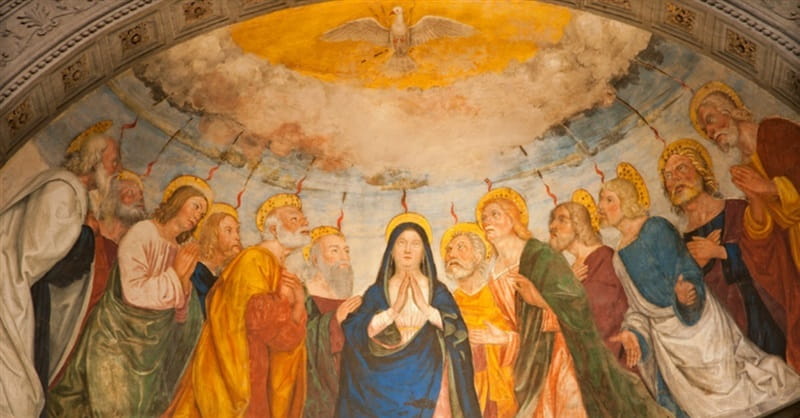
Teaser Image
passover timeline

Passover Timeline

Passover Timeline


The Palm Sunday before Passover ---------------->

Donkey ride 

This is the exact copy of the 2,000 years before any 0 A.D. date, the Egyptian myth of Set riding into the city in triumph.  No man and even "god in the flesh" can ride an ass and her foal at the same time. 

Two, a Donkey and a Colt

The donkey ride into Jerusalem: Jesus rode both a donkey and a colt. 

Tell ye the daughter of Sion, Behold, thy King cometh unto thee, meek, and sitting upon an ass, and a colt the foal of an ass. And the disciples went, and did as Jesus commanded them And brought the ass, and the colt, and put on them their clothes, and they set him thereon.       Matt 21:5-7 

Only the Colt 

And they brought the colt to Jesus, and cast their garments on him; and he sat upon him.      Mark 11:7

And they brought him to Jesus: and they cast their garments upon the colt, and they set Jesus thereon.        Luke 19:35

A Young Ass 

And Jesus, when he had found a young ass, sat thereon; as it is written,      John 12:14

Where is it written???????????????????

Donkey - Who found it? 

Jesus

Jesus "found" the animal himself;

14 And Jesus, when he had found a young ass, sat thereon; as it is written,      John 12:14

Disciples 

the others say the disciples found it according to Jesus' instructions.

2 And saith unto them, Go your way into the village over against you: and as soon as ye be entered into it, ye shall find a colt tied, whereon never man sat; loose him, and bring him.

3 And if any man say unto you, Why do ye this? say ye that the Lord hath need of him; and straightway he will send him hither.

4 And they went their way, and found the colt tied by the door without in a place where two ways met; and they loose him.    Mark 11:2-4

30 Saying, Go ye into the village over against you; in the which at your entering ye shall find a colt tied, whereon yet never man sat: loose him, and bring him hither.

31 And if any man ask you, Why do ye loose him? thus shall ye say unto him, Because the Lord hath need of him.

32 And they that were sent went their way, and found even as he had said unto them.   Luke 19:30-32

Saying unto them, Go into the village over against you, and straightway ye shall find an ass tied, and a colt with her: loose them, and bring them unto me.    Matt 21:2


-------------Passover Timeline ---------------------------------------->

Morning Before Passover

28 Then the Jewish leaders took Jesus from Caiaphas to the palace of the Roman governor. By now it was early morning, and to avoid ceremonial uncleanness they did not enter the palace, because they wanted to be able to eat the Passover.       John 18:28

Noon Before Passover

14 It was the day of Preparation of the Passover; it was about noon.  “Here is your king,” Pilate said to the Jews.
    - John 19:14

The First Day of 

17 On the first day of the Festival of Unleavened Bread, the disciples came to Jesus and asked, “Where do you want us to make preparations for you to eat the Passover?”
    - Matt 26:17 

12 On the first day of the Festival of Unleavened Bread, when it was customary to sacrifice the Passover lamb, Jesus’ disciples asked him, “Where do you want us to go and make preparations for you to eat the Passover?”
    -  Mark 14:12 

7 Then came the day of Unleavened Bread on which the Passover lamb had to be sacrificed.
    - Luke 22:7  

Just Before Passover

13 It was just before the Passover Festival. Jesus knew that the hour had come for him to leave this world and go to the Father. Having loved his own who were in the world, he loved them to the end.     John  13:1

Before Passover

29 Since Judas had charge of the money, some thought Jesus was telling him to buy what was needed for the festival, or to give something to the poor.     John  13:29

Crucified Before Passover Meal!

C.  THE NINETH HOUR, 3 PM

34 And at three in the afternoon Jesus cried out in a loud voice, “Eloi, Eloi, lema sabachthani?” (which means “My God, my God, why have you forsaken me?”).     Mark 15:33

31 Now it was the day of Preparation [Day before Passover], and the next day was to be a special Sabbath [High Holiday falls on Saturday]. Because the Jewish leaders did not want the bodies left on the crosses during the Sabbath, they asked Pilate to have the legs broken and the bodies taken down.     John 19:31

Crucified Before Passover Meal!

41 At the place where Jesus was crucified, there was a garden, and in the garden a new tomb, in which no one had ever been laid. 
42 Because it was the Jewish day of Preparation [Day before Passover] and since the tomb was nearby, they laid Jesus there.      - John 19:41-42

"Evening Meal in Progress"

2 The evening meal was in progress [Passover], and the devil had already prompted Judas, the son of Simon Iscariot, to betray Jesus. 
John 13:2

During Passover Meal (wait, wasn't Jesus dead then?)

14 Say to the owner of the house he enters, ‘The Teacher asks: Where is my guest room, where I may eat the Passover with my disciples?’ 15 He will show you a large room upstairs, furnished and ready. Make preparations for us there.”16 The disciples left, went into the city and found things just as Jesus had told them. So they prepared the Passover.17 When evening came, Jesus arrived with the Twelve. 18 While they were reclining at the table eating [Passover], he said, “Truly I tell you, one of you will betray me—one who is eating with me.”
Mark 14:14

22 While they were eating, Jesus took bread, and when he had given thanks, he broke it and gave it to his disciples, saying, “Take it; this is my body.”
23 Then he took a cup, and when he had given thanks, he gave it to them, and they all drank from it.
24 “This is my blood of the covenant, which is poured out for many,” he said to them. 
Mark 14:22-24

Jesus at Passover Meal Verified by Matthew

18 He replied, “Go into the city to a certain man and tell him, ‘The Teacher says: My appointed time is near. I am going to celebrate the Passover with my disciples at your house.’” 
19 So the disciples did as Jesus had directed them and prepared the Passover.
20 When evening came, Jesus was reclining at the table with the Twelve. 
21 And while they were eating [Passover], he said, “Truly I tell you, one of you will betray me.”
Matthew 26:18-21

26 While they were eating [Passover], Jesus took bread, and when he had given thanks, he broke it and gave it to his disciples, saying, “Take and eat; this is my body.”
27 Then he took a cup, and when he had given thanks, he gave it to them, saying, “Drink from it, all of you. 
28 This is my blood of the covenant, which is poured out for many for the forgiveness of sins.
Matt 26:26-27

Jesus at Passover Meal Verified by Luke

14 When the hour came [Sunset], he took his place at the table, and the apostles with him. 15 He said to them, “I have eagerly desired to eat this Passover with you before I suffer;        Luke 22:14

After Passover Meal

27 And after the sop [Passover] Satan entered into him. Then said Jesus unto him, That thou doest, do quickly.        John 13:27

After the Meal ... to Gethsemane to Pray

26 While they were eating, Jesus took a loaf of bread, and after blessing it he broke it, gave it to the disciples, and said, “Take, eat; this is my body.” 27 Then he took a cup, and after giving thanks he gave it to them, saying, “Drink from it, all of you;

30 And when they had sung an hymn, they went out into the mount of Olives.      Matthew 26:26-30

36 Then cometh Jesus with them unto a place called Gethsemane, and saith unto the disciples, Sit ye here, while I go and pray yonder.      Matthew 26:36

Jesus Arrested

47 While he was still speaking, Judas, one of the Twelve, arrived. With him was a large crowd armed with swords and clubs, sent from the chief priests and the elders of the people.     Matthew 26:47

Off to See Caiaphas the High Priest

57 Those who had arrested Jesus took him to Caiaphas the high priest, where the teachers of the law and the elders had assembled.       Matthew 26:57

After Caiaphas ... to see the Governor Pilate

1 Early in the morning, all the chief priests and the elders of the people made their plans how to have Jesus executed. 2 So they bound him, led him away and handed him over to Pilate the governor.     Matthew 27:1-2

11 And Jesus stood before the governor: and the governor asked him, saying, Art thou the King of the Jews? And Jesus said unto him, Thou sayest.        Matthew 27:11

Turned over after Jesus was Crucified

A  AT 9 AM, THE THIRD HOUR

 It was nine in the morning when they crucified him.     Mark 15:25  NIV

B  AFTER 12 NOON, THE SIXTH HOUR

And it was the preparation of the passover, and about the sixth hour; and he saith unto the Jews, Behold your king. . . . Shall I crucify your king?  John 19:14, 15

45 Now from the sixth hour there was darkness over all the land unto the ninth hour. 

46 And about the ninth hour Jesus cried with a loud voice, saying, Eli, Eli, lama sabachthani? that is to say, My God, my God, why hast thou forsaken me?   

50 And when Jesus had cried out again in a loud voice, he gave up his spirit.       Matthew 27:45-50